Category: Fire

  • Berniard Law Firm Takes Legal Action for Families Displaced by the Smitty’s Supply Fire

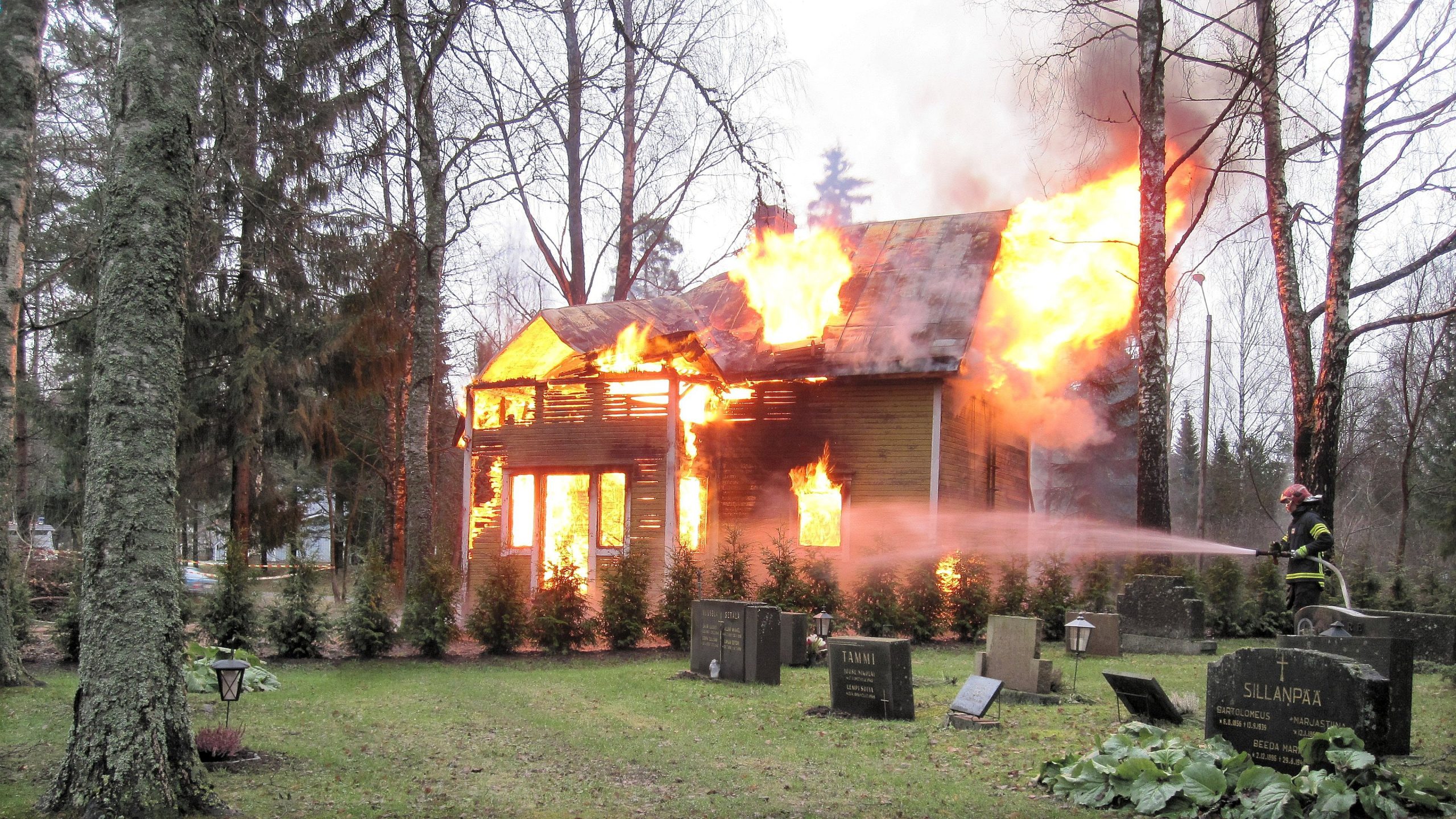
    Thick smoke and flames rising from the Smitty’s Supply lubricant plant in Roseland, Tangipahoa Parish, after the August 22, 2025 explosion and fire.When the Smitty’s Supply facility erupted in flames on August 22, 2025, residents within a one-mile radius were ordered to evacuate. Families were forced from their homes, many for several days, unsure of when it would be safe to return. In the aftermath, thick soot, oily residue, and chemical contamination settled on homes, vehicles, and property—leaving long-term damage and raising serious questions about insurance coverage.

    The Berniard Law Firm has filed a class action lawsuit against Smitty’s Supply, Inc. seeking justice for affected residents. The petition alleges negligence, gross negligence, nuisance, trespass, and strict liability, arguing that Smitty’s failure to properly store and manage dangerous chemicals directly caused the disaster.

    Residents have reported:

    • Difficulty cleaning soot and ash from their homes and vehicles.

    • Property losses and decreased home values.

    • Health effects such as headaches, stomach aches, respiratory irritation, and anxiety.

    • Out-of-pocket expenses for relocation, cleanup, and repairs.

    While many homeowners will turn to insurance for relief, coverage disputes are likely. Insurers may attempt to minimize payouts or deny claims by pointing to exclusions for chemical damage, pollution, or industrial accidents. The lawsuit filed by the Berniard Law Firm seeks to ensure that residents are not left carrying the financial burden of Smitty’s negligence.

    Our legal team is actively investigating claims and working to protect the rights of those affected. If you or someone you know was displaced or suffered losses from the Smitty’s fire, you should understand both your legal and insurance rights.

    For a free consultation, contact the Berniard Law Firm today at (504) 521-6000 or online at GetJeff.com

  • Community Concerns After the Smitty’s Supply Explosion in Tangipahoa Parish

    Thick smoke and flames rising from the Smitty’s Supply lubricant plant in Roseland, Tangipahoa Parish, after the August 22, 2025 explosion and fire.The Smitty’s Supply plant explosion and fire in Roseland, Louisiana on August 22, 2025 has left the Tangipahoa Parish community shaken. Families were forced to evacuate, businesses were disrupted, and questions remain about the long-term impact of the disaster.

    While officials report that the fire is largely contained, many residents are still facing uncertainty—about their health, their homes, and their future.


    What Residents Experienced

    • Evacuations: Homes, schools, and businesses within a one-mile radius were evacuated immediately.

    • Environmental Fallout: Thick smoke and oily rainfall blanketed the area, leaving behind property damage and health concerns.

    • Lingering Worry: Even after the fire was 90% contained, many locals expressed concerns about possible chemical exposure and contamination of soil or water.


    Why This Matters

    Large-scale industrial accidents don’t just end when the flames go out. They can cause:

    • Respiratory or health issues from chemical exposure.

    • Property damage that requires costly repairs or cleanup.

    • Financial hardship due to missed work, medical bills, or temporary displacement.

    • Stress and uncertainty for families forced to leave their homes.

    These are not just inconveniences—they can have long-lasting effects.


    Do You Have Legal Options?

    If negligence played a role in the Smitty’s Supply fire, those responsible may be held accountable. Victims of this disaster may have legal claims for:

    • Medical expenses

    • Property cleanup or repair costs

    • Lost income

    • Emotional distress

    • Wrongful death claims (in the most tragic cases)


    Our Commitment to Tangipahoa Parish

    As a Louisiana-based law firm, we care deeply about protecting the rights of our neighbors. Our attorneys are already reviewing the situation at Smitty’s Supply and are prepared to investigate potential claims on behalf of affected families and workers.

    We will work tirelessly to:

    • Identify responsible parties

    • Secure fair compensation for victims

    • Provide compassionate support during this difficult time


    Contact Us for Help

    If you or someone you love was impacted by the Smitty’s Supply explosion in Tangipahoa Parish, don’t wait to get answers.

    📞 Call us today at 504-521-6000 or fill out our [contact form] for a free consultation.

    You don’t have to face this alone—we are here to stand by you.

  • Expert Witnesses Key To Establishing Damages From Industrial Fire

    In a world where news headlines often feature calamitous industrial disasters, it’s hardly surprising to find legal battles trailing in their wake. The following case involves multiple individuals who filed lawsuits against the owner of a facility in Iberia Parish, Louisiana, that had a large fire. 

    A fire at a facility owned by Multi-Chem Group caused multiple explosions, which released chemicals. Following the fire and explosions, multiple people filed lawsuits against Multi-Chem and others, alleging they had been exposed to hazardous materials. The multiple lawsuits were consolidated into three groups based on the distance the injured party was located from the fire source. At trial, the parties presented expert testimony about whether the plaintiffs were exposed to hazardous materials from the Multi-Chem fire and if they suffered damages due to the exposure. The trial court held that the plaintiffs had established exposure and awarded damages to the three groups. The damages included medical expenses, general damages, and mental anguish related to the fear of developing cancer. Multi-Chem filed an appeal. 

    On appeal, Multi-Chem argued the trial court erred in admitting and excluding certain expert testimony. Article 702 of the Louisiana Code of Evidence governs expert testimony. At trial, the trial court evaluated the expert witnesses’ relevant credentials when deciding whether and to what extent to credit the expert witnesses’ testimony. The court also analyzed the underlying data the experts used as the basis for their opinions. Therefore, the appellate court found Multi-Chem’s argument that the trial court erred in which expert testimony it admitted and excluded lacked merit. 

    Multi-Chem also argued the plaintiffs did not establish their exposure caused their damages. Mutli-Chem claimed the expert acknowledged that sampling of the air did not reveal hazardous chemical levels. However, the expert also testified the chemicals could have caused harm by adhering to and absorbing into the particulate matter from the fire. The expert also testified some of the at-issue chemicals could cause future injuries, including cancer. Based on the expert witness’s testimony, the appellate court concluded the trial court did not err in finding the plaintiffs established general causation.

    Multi-Chem also argued the trial court awarded excessive and unsupported damages. When appellate courts review a trial court’s award of general damages, it considers whether the trial court abused its discretion when assessing and awarding damages. See Purvis v. Grant Parish Sch. Bd. The appellate court reviewed testimony from witnesses in the different groups of plaintiffs about what they had suffered due to the fire and related chemical exposure. The appellate court deferred to the trial court’s determinations that these witnesses’ testimony was credible and held the trial court’s award of damages was supported by the record. However, the appellate court did reverse damages awarded to certain plaintiffs for fear of developing cancer because the relevant witnesses did not testify about their fear of developing cancer, so there was a lack of supporting evidence. 

    When dealing with a complex lawsuit, a good lawyer can advise you on needed expert testimony and help identify qualified expert witnesses. As seen here, testimony from the expert witnesses was essential for the plaintiffs to prevail on their claims and support the damages they were awarded on appeal.

    Additional Sources: Robert J. Broussard, et al. v. Multi-Chem Group, LLC

    Article Written By Berniard Law Firm

    Additional Berniard Law Firm Article on Expert Witnesses: Exposure to Radioactive Materials: Substantiating Injury Claims with Evidence and Expert Witnesses

  • Louisiana Appellate Court Cannot Review Merits Of Case Without Final Valid Judgment

    Mistakes are inevitable in human experiences, but some mistakes can have significant legal consequences. Just like regular folks, courts are infallible and make mistakes as well. What happens when a court fails to include all required information in a judgment? Such a failure creates confusion and can impede the appeals process and delay justice for the parties involved, as seen in the following case.

    Unfortunately, a house fire occurred at the home where Thomas Bayer and Laura Kelley resided. The fire resulted from a gas explosion that occurred while employees of Cimarron Underground were working on a gas meter on the property. They cut a gas line, resulting in a fire. As a result of the fire, Bayer and Kelly had to vacate their property for several weeks while the house underwent repairs. 

    Bayer and Kelly filed a lawsuit against Cimarron Underground, their insurance company Starr Indemnity & Liability, and others, claiming the defendant’s negligence caused the fire and resulting injuries and inconvenience. Cimarron Underground filed a summary judgment motion. The trial court held a hearing, where it orally granted Cimarron Underground’s summary judgment motion. 

    However, the trial court’s written judgment stated that it was denying Bayer’s summary judgment motion. The trial court subsequently signed an order setting aside its written motion, noting it mistakenly said plaintiffs instead of defendants and indicated a judgment opposite of its oral ruling. The trial court also issued an amended judgment to correct the errors in its original judgment. Bayer then filed a motion for a new trial, which the trial court denied. Bayer then appealed. 

    On appeal, the court first had to consider whether there was a valid final judgment such that it had jurisdiction to hear the appeal. To be valid, a judgment must be precise, definite, and certain and must explicitly indicate the outcome. See Urquhart v. Spencer. Specifically, the final judgment must: (1) name the party in whose favor the court ruled; (2) name the party against whom the court ruled; and (3) specifically state the relief granted or denied. See Freeman v. Phillips 66 Co.

    The trial court’s judgment did not specifically identify the defendants in whom favor it was granting summary judgment. The judgment also did not state the specific relief it was granting. For example, the judgment did not specifically state which claims or issues were being disposed of. Therefore, there was no valid final judgment, so the appellate court did not have jurisdiction to review the case on its merits. 

    The appellate court noted in some situations where the judgment on appeal is not final and appealable, it has converted the appeal to an application for supervisory writs. However, the appellate court declined to do so here. Therefore, the appellate court dismissed the appeal and sent it back to the trial court until there was a final appealable judgment. 

    This case highlights the vital importance of precision and completeness in court judgments. A failure to include all required information creates confusion and can impede the appeals process and delay justice for the parties involved. When engaged in a lawsuit, seeking the guidance of a skilled attorney becomes crucial to ensure that any proposed final judgment meets the requirements to be considered valid and appealable. Legal professionals can play a pivotal role in safeguarding your rights and interests, navigating the complexities of the legal system, and striving for a just and conclusive resolution.

    Additional Sources: Thomas D. Bayer and Laura D. Kelley v. Starr International Co., et al.

    Article Written By Berniard Law Firm

    Additional Berniard Law Firm Article on Final Judgments: Trial Courts Must Use Clear, Definite Language For a Final Judgment to be Valid and Appealable

  • Grilling for a Cause: The Importance of Safety and Liability in Fundraising Events

    When preparing for a fundraiser, you understandably have lots on your mind. You have to coordinate food, RSVPs, and plan the event. However, if you are using something potentially dangerous, such as a propane barbecue, you also need to ensure you take reasonable steps to inspect it for any potential defects. Otherwise, you could be liable for injuries you or others suffer.

    John Palir III was a pastor at Topsy United Pentecostal Church. A week before the church’s barbecue fundraiser, he and a deacon at the church were trying to light the barbecue pit on a barbecue trailer the church owned. When the deacon pressed the pilot button, Palir lit it with a lighter wand. That resulted in a ball of fire that blew Palir out of the trailer, where he hit the deacon’s grandson, who was standing nearby at the time of the explosion. Palir filed a lawsuit against the church and its insurer, GuideOne Insurance Company. 

    At trial, Palir moved to exclude any instruction to the jury about him being liable for the explosion. The trial court allowed the church to present evidence of Palir’s negligence but not about whether Palir knew or should have known the barbecue trailer was defective or hazardous under La. C.C. art. 2317.1. At trial, the jury held Palir was 50% at fault, and the church was also 50% at fault. The jury also found the barbecue trailer was in the Church’s custody, it presented an unreasonable risk of harm to Palir, and the church knew or should have known about its defect. Palir appealed, arguing the jury erred in assigning him 50% of the fault. 

    The appellate court noted at trial witnesses had testified no one else had previously experienced any issues with the barbecue trailer. No church member was responsible for maintaining the barbecue trailer, although people would clean it and fill its propane tank as needed. 

    An expert in propane delivery systems testified the barbecue trailer did not comply with applicable codes and was deteriorating. There appeared to be a lack of maintenance. Palir testified if he had known or had an idea anything was wrong with the barbecue trailer, he would not have used it. He also admitted he did not have expertise in propane delivery systems. 

    The appellate court found the evidence supported the jury’s assignment of 50% of the fault to Palir because a jury could conclude Palir should have had the barbecue trailer regularly inspected and serviced. The appellate court noted Palir had been the assistant pastor at the church when the barbecue trailer was gifted to the church decades ago, so he was aware of the age. It was reasonable to find Palir negligent for having failed to have it inspected. His expert testified that even someone without propane system expertise could have noticed the barbecue trailer’s poor condition.  

    When organizing a fundraiser or any event involving potentially dangerous elements, such as a propane barbecue, ensuring safety measures are in place is paramount. The case of John Palir III and the barbecue trailer explosion is a stark reminder of the importance of diligent inspection and maintenance. The appellate court’s ruling, affirming the jury’s allocation of fault, emphasizes the duty of event organizers to take reasonable steps in preventing potential hazards. Seeking legal counsel in such unfortunate incidents can provide valuable guidance and help navigate potential liability issues. Prioritizing safety and proactively identifying and addressing risks are crucial to protect yourself, your guests, and your organization from potential harm and legal consequences.

    Additional Sources: John Palir, III v. GuideOne Insur. Co., et al.

    Article Written By Berniard Law Firm 

    Additional Berniard Law Firm Article on Defective Products: Cleaning Grandma’s Roof Turns from Chore to Lawsuit as Ouachita Resident Falls from Ladder

  • Can a State Fire Marshall be liable for Inspector Negligence in a Wrongful Death Lawsuit in Louisiana?

    People rely on public services daily, from fire departments to police officers. But what happens if a public entity is responsible for an injury? Can they be held liable for negligence? A recent case out of Grand Isle, Louisiana, shows how public entities can be shielded from liability for negligent conduct in some circumstances. It also helps answer the question; Can a state fire marshall be liable for inspector negligence in a wrongful death lawsuit in Louisiana?

    In 2012 a fire in the Willow Creek Apartments in Grand Isle, Louisiana, killed two occupants, Belle Christin Brandl, and Timothy Joseph Foret. Brandl’s three children filed a wrongful death lawsuit against the apartment’s owners, Steven Caruso and Willow Creek, L.L.C., their insurers, and the State of Louisiana through the Department of Public Safety and Corrections, Office of the State Fire Marshal (SFM) and its inspector. The plaintiffs argued Marchiafava as an inspector, failed to properly look into reports of fire hazards that caused the fire, failed to notify the building owners of any hazard and resolve the hazard, and falsified reports regarding his inspection of the Willow Creek building. SFM and the inspector denied the allegations arguing the inspector did investigate an unverified public complaint at the building, which revealed no serious life hazards. Further, the residents of the building did not have any further complaints of hazards. 

    SFM and the inspector filed an exception of no cause of action on the grounds SFM and the inspector did not owe a legal obligation, otherwise known as a duty, to the plaintiffs. The trial judge granted the exception. Then SFM and the inspector filed a motion to dismiss the complaint, which was granted, and the plaintiffs filed an appeal. 

    Upon review, the courts agreed even if the inspector failed to inspect the building properly, that would not be enough evidence to support a negligence claim. La. R.S. 9:2798.1 protects public entities from liability when their employees act under their own discretion. This is because the courts do not want to impose on legislative policy formation by imposing liability on public entities for discretionary decisions. 

    In this case, SFM is a public entity that is shielded from any liability for the negligence of its employees so long as the employee had a legal obligation to the general public rather than a specific individual. Dufrene v. Guarino. The court found the inspector was acting under his discretion per La. R.S. 40:1563(C). That law provides a fire marshal may, at his discretion, report any complaint from a citizen to the appropriate fire prevention bureau, and the fire marshal may conduct a joint inspection with the fire prevention bureau. In this case, the inspector used his discretion to contact the Grand Isle Fire Chief to conduct a fire inspection of the apartment building. 

    Further, the court disagreed the inspector’s falsified records were a negligent act that led to the fire. The court reasoned facts demonstrate the inspector had falsified his records to show he did a second inspection of the apartment only after the fire happened. Meaning the inspector’s misconduct could not have led to the fire because he made the false report after it had already happened. 

    This case demonstrates public entities tend to be protected from negligence liability. Especially so when their employees act with discretion and owe a general legal obligation to the public. Conversely, public entities are more likely to be liable for negligence cases when they owe a legal obligation to a specific person, which is a higher standard to meet for a plaintiff. A complex case with complex legal issues such as this requires a skilled lawyer.

    Additional Sources: CLAIRE COCHRAN, ET AL VERSUS STEVEN CARUSO, WILLOW CREEK, L.L.C., LOUISIANA DEPARTMENT OF PUBLIC SAFETY AND CORRECTIONS, OFFICE OF THE STATE FIRE MARSHALL, NUNZIO MARCHIAFAVA, AND WESTERN HERITAGE INSURANCE CO. 

    Written by Berniard Law Firm

    Other Berniard Law Firm Articles on Wrongful Death Cases: Court Increases Damages Award in Wrongful Death and Survival Action Lawsuit

  • Where There’s Smoke, There’s a Lawsuit: Determining Liability for a Car Accident Resulting from a Marsh Fire

    The phrase, “where there’s smoke, there’s fire,” is often used to describe situations where one thing almost certainly indicates the presence of another. However, establishing a contributing factor to a car accident and liability for negligence does not always follow so direct a relationship.

    Shortly before Tropical Storm Lee reached the marshlands of Oak Island just outside of New Orleans in September 2011, an employee of the LPC (“Little Pine”), the entity that owns Oak Island, saw traces of smoke and reported it to the Fire Department (NOFD). NOFD investigated the scene and found a fire, but the area from which the smoke was coming was not accessible to fire crews. The onset of Tropical Storm Lee made it even more difficult for NOFD, which had called in the Louisiana Army National Guard — to reach the source of the smoke. Helicopter water drops were used to treat the fire, but access by boat or other means remained impossible. The fire continued to burn for months under the daily monitoring of NOFD.

    On the morning of December 29, 2011, drivers traveling on Interstate 10 past the Oak Island marshlands suddenly encountered thick, dense fog and smoke clouds, resulting in nearly zero visibility. Scott Lowe, a passenger in one of the vehicles traveling on I-10, was involved in a multi-car accident caused by poor visibility conditions. Lowe filed a lawsuit against Little Pine, arguing that it acted negligently by allowing the marsh fire to burn for months after it began, allowing smoke to obstruct visibility along a major roadway, and failing to exercise due care regarding the safety of others. Little Pine filed a motion for summary judgment, arguing that there was no genuine issue of material fact about whether Little Pine was liable for an “unavoidable Act of God/force majeure.” In addition, Little Pine asserted it owed no duty to Lowe to extinguish the marsh fire. The trial court granted Little Pine’s motion for summary judgment, and Lowe appealed.

    Louisiana’s Court of Appeal for the First Circuit began with a review of the duty-risk analysis under state law. The five elements under the analysis include: (1) whether there was a duty to conform to a specific standard, (2) whether the duty was breached by failure to conform to the standard, (3) whether the standard conducted was a cause-in-fact of the resulted injury, (4) whether the conduct was within the scope of protection for a legal cause of action for the injury, and (5) whether there was actual harm or damage. See La. C. C. art. 2315. On the application of the first element to the question of whether Little Pine had a legal duty to extinguish or otherwise control the marsh fire, the Court referenced Louisiana state law that vests in a fire protection officer the sole authority, command, and control over a situation that develops which the services of fire safety personnel are summoned. See La. R. S. art 22:1971.

    In the Court’s view, once Little Pine reported the fire to NOFD and NOFD responded, there was no further legal duty owed to Lowe (or any other person) by Little Pine. Therefore, Little Pine had no duty to extinguish the marsh fire, and its failure did not constitute negligence under Louisiana law. As a result, the Court of Appeal affirmed the trial court’s grant of summary judgment in favor of Little Pine, and Lowe could not recover for his injuries in the accident.

    This case demonstrates the need to take care when driving through smoke-filled air. Unfortunately for Lowe, his lawsuit did not end as he would have liked. It is essential to retain a skilled attorney in cases such as this.

     Additional Sources: LOWE v. LITTLE PINE ISLAND CORP. 

     Written by Berniard Law Firm Blog Writer: Gina McKlveen

     Additional Berniard Law Firm Articles on Negligence: Man Injured in the Back of Police Cruiser Loses in Negligence Suit; Appellate Court Rejects Appeal from Transportation Company Regarding Comparative Fault and Award; Court Allows Lawsuit Against Casino Involving Fall on Escalator to Proceed

  • Careful Review of Home Insurance Policy Crucial


    It is extremely important to review your home insurance policy to determine what types of damages the policy will actually cover, especially in areas prone to suffer from hurricane damages. Under Louisiana law, the insured individual is required to first prove that the insurance policy covers the cause of the claim. For example, if the policy only covers certain types of causes of damage, such as wind and hail, then the insured must prove that the damage was in fact caused by either wind or hail. Once the insured has done this, then the insurance company can argue that the incident is not covered by the policy. Therefore, it is extremely important that the insured take the time to determine the cause of the damage in order to prove that the policy covers their claim.


    A case arising from Lake Charles, Louisiana illustrates this point. In this case, a homeowner suffered roof damage that they believed was caused by Hurricane Ike around September 13, 2008. Four shingles were missing and the insured claimed that this resulted in leakage in several rooms of the home. However, State Farm, the homeowner’s insurance company, determined that the leakage was not caused by Hurricane Ike and reclassified the claim as a “non-hurricane” claim.


    State Farm, using several experts, determined that the leakage resulted from normal wear and tear on the roof, and therefore the homeowner’s insurance policy did not cover the leakage damage. Instead, State Farm concluded that only the four missing shingles were the result of wind and that they were the only damages that State Farm should reimburse to the insured; State Farm did not reimburse the insured for the damages caused by the leakage, but just the replacement value of the four damaged or missing shingles. The total damages that State Farm paid were under $500.00.


    The insured had damages that were estimated at $9,385.00 by one expert and $204,717.78 by another expert. However, while these experts estimated what the cost of the leakage damage and repairing the roof would be, neither expert determined the actual cause of the damages. One of the insured’s experts thought that the wind had lifted the house’s flat roofing, which allowed water to enter the home. However, the expert could not explain why the nails on the flat roofing were still in place if the wind had lifted it. The State Farm expert, on the other hand, determined that the wind damage only included those four damaged or missing shingles and the leakage was actually caused by normal wear and tear. The State Farm expert concluded that there was “no evidence of roof damage that would be caused by severe weather . . . . The roofs, both asbestos shingle and built up roofs and all associated flashings are past their life cycle and are in need of replacement.”


    The insured’s policy did not cover “poor workmanship; wear, tear, deterioration, or latent defect; settling, cracking, or expansion of walls, roofs, or ceilings; or leakage of water from air conditioning systems, household appliances, or plumbing.” Since the State Farm expert determined that the cause of the damage was from normal wear and tear, there was no way that the insured could satisfy the requirement to prove that the policy covered his claim. As such, the court granted State Farm summary judgment.


    The court will grant summary judgment where one party cannot meet their required burden as a matter of law at trial. Summary judgment allows the court to avoid costly trials where there is one clear winner before the trial even begins. In this case, where the insured had no evidence that all of the damage he was claiming was caused by an occurrence included in the insurance policy, the court determined that summary judgment was appropriate. If the insured had employed experts that specifically testified as to the cause of the leakage damage, then the court may have allowed the case to proceed to trial. Further, the insured could have made a more diligent effort to report leakage as it occurred, which would help prevent the damage from spreading in the long run.


    This case illustrates several very important points for the average homeowner. First, you should carefully read your policy so that you know what type of damage is covered. Second, if necessary, you may need to acquire experts that can explain what caused the damage to your home. Lastly, report damages immediately so that you can avoid costly repairs later on.  (more…)
  • Third Circuit Affirms Dismissal of Product Liability and Contract Breach from Truck Fire

    The case of American Zurich Insurance v. Caterpillar arose from a truck fire that took place in Natchitoches Parish on April 7, 2010. American Zurich insured the truck and Caterpillar manufactured the truck’s engine. American Zurich opened up a loss file on the truck the day of the fire. American Zurich paid out almost $77,000 dollars to the insured.

    On April 26, 2010, Zurich was informed of a possible defect in the engine by an inspection agency they hired to look into the claim. A year later, on April 26, 2011, American Zurich filed suit against Caterpillar in West Baton Rouge Parish seeking reimbursement for the costs they incurred, but the case was subsequently moved to Natchitoches Parish in June 2011. On November 10, 2011, the trial court granted Caterpillar’s peremptory exception of prescription and their motion for summary judgment and dismissed American Zurich’s claims. American Zurich appealed the trial court’s decision and the case made its way to the Third Circuit Court of Appeal. While you read the rest of this case summary, keep the dates mentioned above in mind.

    So why does keeping these dates straight in our minds matter, and what is a peremptory exception of prescription? Actions brought under the Louisiana Products Liability Act, or LPLA, must be filed within one year “from the day injury or damage is sustained.” This one year time period is known as a prescriptive period. A peremptory exception of prescription is a defense motion arguing that the plaintiff has no case because they failed to file their case in the required prescriptive period of time. So one of the major issues in this case became on what date did that prescriptive period begin? Caterpillar claimed it started on April 7, 2010, the day of the fire. American Zurich claimed it began on April 26, 2010, which was the day their investigators told them about the engine defect.

    The court noted that “prescription begins to run when the defect manifests itself, not on the date the underlying cause of the defect is found.” In other words, the court said that the one year prescriptive period began on the day of the fire, April 7, 2010. The court points out that American Zurich knew about the fire the day it occurred, and therefore, American Zurich had no basis for arguing that the prescriptive date should have started on April 26, 2010. Thus the court holds that American Zurich did not file their case within the one year prescriptive period required under the LPLA which ran out on April 7, 2011.

    The court also quickly dispatched a breach of contract claim by American Zurich. American Zurich claimed that by building a defective engine, Caterpillar had failed to perform under their service contract. In Louisiana, the LPLA is the sole remedy against a manufacturer of a defective product. There is one exception to this rule, and that applies when the damage, or part of the damage, is caused exclusively by a breach of contract, and not the defective product itself. So it was important for American Zurich to argue this exception applied in this case because a breach of contract claim has a prescriptive period of ten years in Louisiana.

    The court found American Zurich’s argument unpersuasive since the damage was solely attributable to the defective engine, and their claims were not related to the service contract itself. The exception mentioned above was not applicable, and therefore the LPLA was controlled this case. As mentioned above, the prescriptive period had run out before American Zurich filed their case against Caterpillar, and the court affirmed the trial court’s dismissal of American Zurich’s claims.
    This case shows the vital importance of taking timely action when engaged in legal matters.

    (more…)

  • Insurance Dispute With Steel Company Exposes Liability Apportionment, Terms

    In a recent case, the Fifth Circuit Court of Appeals reviewed the lower court’s application of the “law-of-the-case” and “waiver” doctrines. Both of these doctrines are important rules that express the ultimate power of an appellate court in reviewing issues of law. Generally, an issue of law is a question regarding the application of law to a case. Therefore, in pursuing any civil suit, it is imperative to understand the implications and ramifications of an appellate court’s power to change the ruling in your case.

    In Bayou Steel Corp. v. National Union Fire Insurance Company of Pittsburgh, Pennsylvania, the Fifth Circuit Court reviewed an insurance dispute that concerned the apportionment of liability for a severe leg injury that was suffered by a worker who was unloading steel bundles. In a complicated fact scenario, Ryan Campbell was injured, in 2002, while unloading steel bundles owned by Bayou Steel Corp. on a barge that was owned by Memco Barge Lines, Inc. Shortly before this incident occurred, Bayou Steel Corp. had contracted with Memco to transport the steel from LaPlace, Louisiana, to Chicago, Illinois. At the time of his injury, Ryan Campbell was working for Kindra Marine Terminal, a stevedoring company that was assigned to unload the steel bundles in Chicago. After the suit involving Ryan Campbell was settled, Bayou Steel Corp. brought suit seeking a declaration of coverage and reimbursement from National Union Fire Insurance.

    After a series of appeals, the district court used the law-of-the-case doctrine to determine that Kindra was not a sub-contractor of Bayou Steel. Therefore, Campbell’s injuries fell within the language of the insurance policy that Bayou Steel held. Thus, the lower court entered summary judgment for National Union Fire Insurance Company of Pittsburgh, Pennsylvania.

    According to the law-of-the-case doctrine, “when a court decides upon a rule of law, that decision should continue to govern the same issue in subsequent stages in the same case.” Thus, an issue of law “decided on appeal may not be reexamined by the district court on remand or by the appellate court on a subsequent appeal.” Accordingly, the Fifth Circuit agreed with the district court that that fact that Campbell did not fall within the exclusion in the policy held by Bayou Steel was part of the law of the case and subsequently held that this issue had been resolved on an earlier appeal.

    The waiver doctrine “holds that an issue that could have been raised on appeal but is forfeited and may not be revisited by the district court on remand.” Id. Like the law-of-the-case doctrine, the waiver doctrine “serves judicial economy by forcing parties to raise issues whose resolution might spare the court and parties later rounds of remands and appeals.” However, the waiver doctrine “arises as a consequence of a party’s inaction, [and] not as a consequence of a decision on [the part of the Court of Appeals].” Thus, the Court of Appeals agreed that Bayou had waived their argument about the language of the policy by failing to raise it on remand after the first appeal or during the second appeal … “[b]ecause they failed to raise it during that period, the issue could not [have been] revisited by the district court on remand.”

    In its decision, the Fifth Circuit ruled that the lower court had properly applied the law-of-the-case and waiver doctrines and that summary judgment in favor of National Union Fire Insurance Company of Pittsburgh, Pennsylvania, was appropriate.

    All of these matters are inherently complicated and show that knowledge of the exact law is necessary to reach a successful outcome. While questions and issues of law must be decided by the court, your legal representative should be aware of the foregoing doctrines and should be able to adequately present your case.

    (more…)