
Category: General Hurricane Dispute Information

  • Louisiana Court Upholds Insurer’s Position in Uninsured Motorist Claim Dispute

    In a recent ruling, the Louisiana Court of Appeal, Third Circuit, affirmed a trial court’s decision denying Amanda Bertrand’s claim for penalties and attorney fees against her underinsured/uninsured motorist (UM) insurer, Progressive Security Insurance Company. The case stemmed from a dispute over the timeliness of Progressive’s payment following Ms. Bertrand’s demand for the limits of her UM coverage.

    Ms. Bertrand was injured in a car accident in 2012. The at-fault driver’s insurance company, Farm Bureau, tendered its policy limits of $15,000 in early 2013. Subsequently, Ms. Bertrand notified Progressive, her UM insurer, of the accident and demanded payment of her $15,000 UM policy limits.

    Progressive received Ms. Bertrand’s demand letter but requested an additional medical record from her treating physician. Upon receiving this record, Progressive promptly issued payment. However, due to a communication issue, Ms. Bertrand’s attorney indicated that the payment had not been received, leading Progressive to stop the initial payment and reissue it.

    Ms. Bertrand’s attorney then raised concerns about the language on the reissued check and accompanying release document, suggesting they constituted a conditional tender rather than the unconditional tender required by law. Progressive assured Ms. Bertrand’s counsel that the tender was unconditional.

    Ms. Bertrand eventually negotiated the check but later filed a lawsuit against Progressive, claiming they failed to issue an unconditional tender within the statutory timeframe and seeking penalties, attorney fees, and costs.

    The Court of Appeal focused on two key issues:

    1. Satisfactory Proof of Loss: The court determined that Progressive did not receive a satisfactory proof of loss until it received the additional medical record from Ms. Bertrand’s physician. This record was crucial in confirming the extent of Ms. Bertrand’s injuries and their relation to the accident.

    2. Unconditional Tender: The court concluded that Progressive’s subsequent communication clarifying the unconditional nature of the payment constituted an unconditional tender.

    Furthermore, the court addressed procedural objections raised by Ms. Bertrand regarding the evidence presented by Progressive. It determined that Progressive’s submissions complied with the relevant legal requirements.

    Based on its analysis, the Court of Appeal affirmed the trial court’s judgment, dismissing Ms. Bertrand’s claims against Progressive. It held that Ms. Bertrand failed to prove that Progressive’s actions were arbitrary, capricious, or without probable cause, which is necessary to recover penalties and attorney fees.

    This case highlights the importance of clear communication and complete documentation in insurance claims, particularly when dealing with UM coverage. It emphasizes the insurer’s right to request additional information to assess the claim’s validity and the insured’s obligation to provide a satisfactory proof of loss. Additionally, the ruling underscores the necessity of demonstrating an insurer’s bad faith to recover penalties and attorney fees.

    Additional Sources:AMANDA BERTRAND VERSUS PROGRESSIVE SECURITY INSURANCE COMPANY

    Written by Berniard Law Firm

    Other Berniard Law Firm Articles on Bad Faith Insurance Lawsuits: Court of Appeals Awards Bad Faith Damages Against Insurance Company Who Refused to Pay and Bad Faith Insurance Claim Dismissed Due To Waiting Too Long To File

  • Fifth Circuit Court of Appeal Rules on Reasonableness of Forum Selection Clause

    Most of us get into contracts, not fully understanding all the ins and outs of what we are signing. Similarly, the multiple provisions that can slither their way into contracts can include things like forum selection clauses which can be easily overlooked. But when a lawsuit erupts, can you argue a provision isn’t applicable? The United States Court of Appeals for the Fifth Circuit addresses this question in the following case.

    Al Copeland Investments, L.L.C. owned a food manufacturing facility in Louisiana. In October and December of 2015, there was some property damage to the facility, and they submitted a reimbursement claim under an insurance policy. Their insurance was held with First Specialty Insurance Corporation (“First Specialty”). They denied this claim, and AI Copeland sued in the Eastern District of Louisiana, believing they were entitled to recover from the costs and damages of the property. First Specialty asked the court to dismiss the case because the policies forum selection clause requires litigation in New York State court, not Louisiana. 

    A forum selection clause is a section in a contract that states how all disputes must be litigated in a specific court in a jurisdiction that the parties agreed to. 

    The specific policy in this case stated that:

    The laws of the State of New York, without regard to any conflict of laws rules that would cause the application of the laws of any other jurisdiction, shall govern the construction, effect, and interpretation of this insurance agreement.

    The parties irrevocably submit to the exclusive jurisdiction of the Courts of the State of New York, and to the extent permitted by law, the parties expressly waive all rights to challenge or otherwise limit such jurisdiction.

    The district court ruled in favor of First Specialty and dismissed the case based on forum non conveniens. AI Copeland then appealed the case to the Court of Appeals for the Fifth Circuit, believing the district court erred in denying their motion to recover the costs from First Specialty. 

    A forum non conveniens motion is similar to venue rules where the court decides where the case can be heard, and it allows a court to decline to hear a case if there is a more appropriate forum in which the case could and should be heard instead. 

    The appellate court explained that a forum selection clause would only be unreasonable and, therefore, not allowed for a few circumstances. (1) The incorporation of the forum-selection clause into the agreement was the product of fraud or overreaching; (2) the party seeking to escape enforcement will, for all practical purposes, be deprived of his day in court because of the grave inconvenience or unfairness of the selected forum; (3) the fundamental unfairness of the chosen law will deprive the plaintiff of a remedy; or (4) enforcement of the clause would contravene a strong public policy of the forum state. Haynsworth v. The Corporation

    AI Copeland relied on Louisiana Revised Statute § 22:868, which states that no insurance contract in Louisiana can have any condition that does not allow the courts of Louisiana any jurisdiction to review the case against the insurer. 

    The court explained there are two distinct definitions between the words “venue” and “jurisdiction.” 

    They disagreed with AI Copeland’s reliance on § 22:868 because it specifically stated that provisions in an insurance contract are not allowed only when it would deprive Louisiana courts of jurisdiction. A forum selection clause, which First Specialty had in their contract, deals specifically with venue

    AI Copeland’s first defense was how prior courts used the terms ‘forum’ or ‘venue’ interchangeably instead of the word ‘jurisdiction.’ However, the appellate court explained that this still does not answer the question as to whether § 22:868 prevents forum-selection clauses in insurance contracts.

    AI Copeland’s second contention was the district court did not correctly rely on Shelter Mutual Insurance Co. v. Rimkus Consulting Group, Inc. Copeland argued the statutes in the Shelter forbid forum selection clauses in certain contracts and are not limited to just those examples put forth in that case. In other words, AI Copeland argued there are many reasons why a forum selection clause should not be allowed. The appellate court disagreed with AI Copeland and stated that Shelter does not deal with interpreting § 22:868, as the court did here. 

    The Court of Appeals for the Fifth Circuit agreed that First Specialty made a case to keep the forum selection clause because AI Copeland’s reliance on § 22:868 did not apply. 

    Contracts are complicated enough even without the problems with clauses that affect where your case can be tried. Ensuring that you are fully and justly compensated for injuries caused by the fault of others requires the assistance of the very best attorneys.

    Additional Sources: AL COPELAND INVESTMENTS, L.L.C.; DIVERSIFIED FOODS & SEASONINGS, L.L.C., V. FIRST SPECIALTY INSURANCE CORPORATION

    Written by Berniard Law Firm Writer Brianna Saroli

    Other Berniard Law Firm Articles on Forum Selection Clauses & Contracts: Jefferson Parish Maritime Case: Are Forum Selection Clauses in Employment Contracts Enforceable in Louisiana? Upholding Contractual Obligations: Legal Remedies for Noncompliance

  • City Cannot Claim Immunity For Hurricane Damage When Alleged Misconduct Predated Hurricane

    Hurricanes can result in significant property damage, including flooding with contaminated water. When faced with such a situation, homeowners may wonder if they have a viable lawsuit against the responsible parties, such as the company responsible for the contaminants or the city involved in managing the wastewater system. The following case sheds light on the legal considerations surrounding property damage caused by contaminated floodwater and the potential liability of the responsible entities.
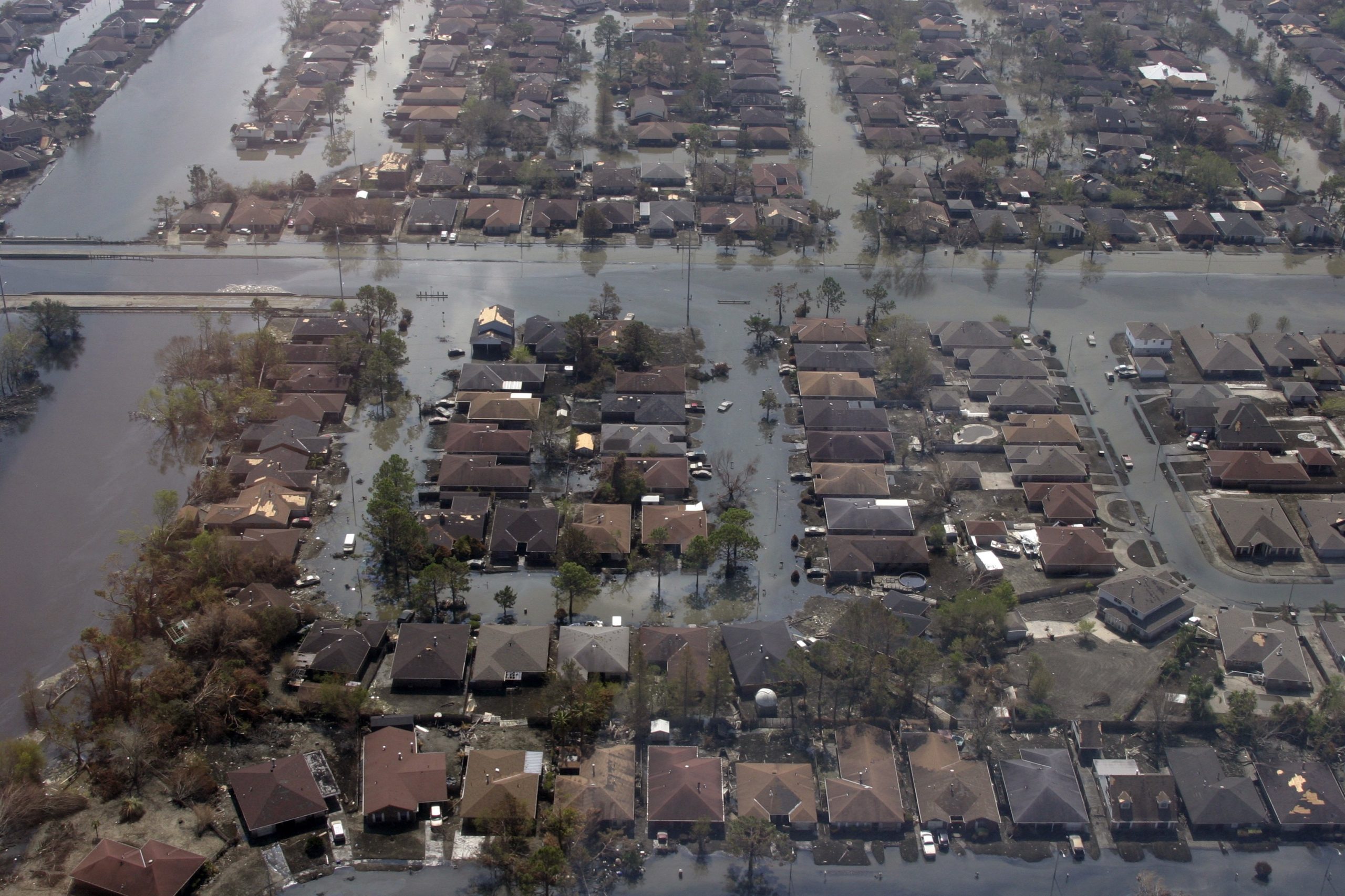
    Ronald and Virginia Colson owned property in Pineville, Louisiana, that was damaged by Hurricane Gustav. They claimed their property was flooded with water contaminated with contaminates from Colfax Treating Company’s wood-treating facility. As a result, they claimed they were evicted from their home. 

    Colfax had a permit to dispose of materials in Pineville’s wastewater system. The Colsons filed a lawsuit against Colfax and the City of Pineville. The Colsons claimed the City of Pineville did not timely activate pumps for evacuating waste and stormwater, failed to properly maintain or inspect these pumps, and improperly allowed Colfax to dispose of the contaminates at above-legal limits. 

    The City of Pineville filed a summary judgment motion, claiming it was immune from liability under La. R.S. 29:721-39, the Louisiana Homeland Security and Emergency and Disaster Assistance Act. They filed a second summary judgment motion the same day, arguing the City was not liable for flooding because other entities were solely responsible for flood control in the City of Pineville. The trial court granted summary judgment in favor of the City of Pineville for the flooding issue but not the immunity issue. An appeal by the City followed.

    Appellate courts review a trial court’s decision to grant a summary judgment motion de novo, meaning they use the same criteria as the trial court to determine if summary judgment is appropriate. Summary judgment is appropriate when there are no genuine issues of material fact. See La. C.C.P. art. 966.

    On appeal, the City of Pineville argued the trial court erred in only granting summary judgment with respect to the flooding. The appellate court found the trial court properly denied the City of Pineville’s summary judgment motion, arguing it was immune under the Louisiana Homeland Security and Emergency and Disaster Assistance Act. Specifically, there were genuine issues of material fact about whether the Act applied here. 

    Under La. R.S. 29:735, the state and cities cannot be held liable for actions undertaken as part of emergency preparedness unless it involves willful misconduct. In order to succeed in its claim of immunity, the city needed to show the applicable events occurred during the emergency. In support, the City of Pineville provided a copy of the applicable emergency declaration related to Hurricane Gustav. Here, the appellate court found there were genuine issues of material fact about the alleged actions and inactions involving the City of Pineville prior to Hurricane Gustav. 

    Furthermore, the appellate court found there were genuine issues of material fact about which entity was responsible for the town’s flood control structures. As a result, the appellate court affirmed the trial court’s grant of summary judgment in favor of the City of Pineville for flood damage but did not find the City of Pineville was immune from liability.

    If your property has been damaged by contaminated floodwater in the aftermath of a hurricane, pursuing a lawsuit against the responsible parties may be a viable option. However, success in such a lawsuit depends on various factors, including establishing causation, proving negligence or wrongful conduct, and understanding the legal immunities or defenses that may apply. 

    Consulting with a skilled attorney experienced in property damage and environmental law is crucial to navigating these complex issues effectively. A knowledgeable attorney can assess the specific circumstances of your case, advise you on the legal actions available, and help you pursue the appropriate parties for compensation.

    Additional Sources: Ronald Colson and Virginia Colson, et al. v. Colfax Treating Co. LLC et al.

    Written By a Berniard Law Firm Writer

    Additional Berniard Law Firm Article on Hurricane Damage: St. John the Baptist Parish Enjoys Absolute Immunity from Residents’ Class Action Lawsuit for Damages Sustained in Hurricane Isaac

  • Hurricane Katrina Victim Finds Favor in the Louisiana Courts

    Hurricanes do not discriminate. Regardless of age, wealth, gender, health, or race, hurricanes are merciless to all they come in contact with. Such was the case for Ms. Taylor, who experienced the wrath of Hurricane Katrina in 2005. 

    Ms. Taylor had been in the care of Touro Infirmary when Hurricane Katrina struck the state of Louisiana in 2005. Taylor was 82 and had undergone radiation therapy for her lung cancer three days before Hurricane Katrina’s landfall. After radiation, Taylor complained of nausea and vomiting. Staff diagnosed her with hematemesis, nausea, vomiting, dehydration, digoxin toxicity, COPD, and lung cancer.

    When Hurricane Katrina struck, the City of New Orleans experienced severe infrastructure damage, expansive power outages, and a lack of clean water. Touro also experienced generator failure, causing the building to become unbearably hot. After 72 hours, it evacuated its patients to UT Southwestern Hospital in Dallas, TX. When the patients arrived, medical staff struggled to care for them because pieces of their medical charts were missing. 

    The morning after arrival at UT Southwestern, Taylor went to a radiological consult, where the medical staff discovered that her lung cancer had metastasized to her brain. UT staff recommended she undergo palliative radiation therapy to the brain. Fifteen days later, Taylor was discharged from UT Southwestern in “guarded” condition and was placed in a hospice facility. Twenty-eight days later, Taylor died at the hospice facility. 

    Taylor was survived by her daughter, Ms. Ainsworth, who filed a timely lawsuit against Touro. Ainsworth alleged that the conditions at Touro during Hurricane Katrina caused or contributed to the injuries Taylor sustained while under its care. The trial court granted summary judgment in favor of Touro and their insurance provider, Healthcare Casualty Insurance Limited. Ainsworth appealed this summary judgment ruling to the Fourth Circuit Court of Appeals. The parties disputed whether expert testimony was required to establish whether the conditions created by Touro contributed to or caused the death of Taylor. 

    On appeal, the Fourth Circuit used the de novo standard of review. Klutz v. New  Orleans Pub. Facility Mgmt., Inc. The court also applied  La. C.C.P. art. 966(A)(3), which required the court to give“opportunity for adequate discovery.” Once this opportunity for adequate discovery is given, “a motion for summary judgment shall be granted if the motion, memorandum, and supporting documents show that there is no genuine issue as to material fact and that the mover is entitled to judgment as a matter of law.” La. C.C.P. art. 966(A)(3)

    The Fourth Circuit Court of Appeals reversed the trial court’s summary judgment ruling because it found that expert testimony was necessary to determine whether Touro contributed to or caused the death of Taylor. Since Ainsworth had not yet had an opportunity to obtain an expert, the case was remanded back to the trial court. The Fourth Circuit Court of Appeals also noted that the circumstances surrounding Hurricane Katrina and its aftermath should be considered when determining whether a party has been given an opportunity for adequate discovery. 

    Hurricane recovery is difficult enough without adding in the loss of a loved one. Attorneys can help pick up the pieces by holding others accountable for their actions and ensuring you get what you deserve. 

    Additional Sources: Ainsworth, on behalf of Taylor v. American Home Ins. Co., Healthcare Casualty Ins. Ltd., and Touro Infirmary 

    Written by Berniard Law Firm Writer Riley Calouette

    Additional Berniard Law Firm Article on Expert Testimony: Tragic Loss: Lawsuit Highlights the Importance of Expert Testimony in Medical Malpractice Cases

  • Careful Review of Home Insurance Policy Crucial


    It is extremely important to review your home insurance policy to determine what types of damages the policy will actually cover, especially in areas prone to suffer from hurricane damages. Under Louisiana law, the insured individual is required to first prove that the insurance policy covers the cause of the claim. For example, if the policy only covers certain types of causes of damage, such as wind and hail, then the insured must prove that the damage was in fact caused by either wind or hail. Once the insured has done this, then the insurance company can argue that the incident is not covered by the policy. Therefore, it is extremely important that the insured take the time to determine the cause of the damage in order to prove that the policy covers their claim.


    A case arising from Lake Charles, Louisiana illustrates this point. In this case, a homeowner suffered roof damage that they believed was caused by Hurricane Ike around September 13, 2008. Four shingles were missing and the insured claimed that this resulted in leakage in several rooms of the home. However, State Farm, the homeowner’s insurance company, determined that the leakage was not caused by Hurricane Ike and reclassified the claim as a “non-hurricane” claim.


    State Farm, using several experts, determined that the leakage resulted from normal wear and tear on the roof, and therefore the homeowner’s insurance policy did not cover the leakage damage. Instead, State Farm concluded that only the four missing shingles were the result of wind and that they were the only damages that State Farm should reimburse to the insured; State Farm did not reimburse the insured for the damages caused by the leakage, but just the replacement value of the four damaged or missing shingles. The total damages that State Farm paid were under $500.00.


    The insured had damages that were estimated at $9,385.00 by one expert and $204,717.78 by another expert. However, while these experts estimated what the cost of the leakage damage and repairing the roof would be, neither expert determined the actual cause of the damages. One of the insured’s experts thought that the wind had lifted the house’s flat roofing, which allowed water to enter the home. However, the expert could not explain why the nails on the flat roofing were still in place if the wind had lifted it. The State Farm expert, on the other hand, determined that the wind damage only included those four damaged or missing shingles and the leakage was actually caused by normal wear and tear. The State Farm expert concluded that there was “no evidence of roof damage that would be caused by severe weather . . . . The roofs, both asbestos shingle and built up roofs and all associated flashings are past their life cycle and are in need of replacement.”


    The insured’s policy did not cover “poor workmanship; wear, tear, deterioration, or latent defect; settling, cracking, or expansion of walls, roofs, or ceilings; or leakage of water from air conditioning systems, household appliances, or plumbing.” Since the State Farm expert determined that the cause of the damage was from normal wear and tear, there was no way that the insured could satisfy the requirement to prove that the policy covered his claim. As such, the court granted State Farm summary judgment.


    The court will grant summary judgment where one party cannot meet their required burden as a matter of law at trial. Summary judgment allows the court to avoid costly trials where there is one clear winner before the trial even begins. In this case, where the insured had no evidence that all of the damage he was claiming was caused by an occurrence included in the insurance policy, the court determined that summary judgment was appropriate. If the insured had employed experts that specifically testified as to the cause of the leakage damage, then the court may have allowed the case to proceed to trial. Further, the insured could have made a more diligent effort to report leakage as it occurred, which would help prevent the damage from spreading in the long run.


    This case illustrates several very important points for the average homeowner. First, you should carefully read your policy so that you know what type of damage is covered. Second, if necessary, you may need to acquire experts that can explain what caused the damage to your home. Lastly, report damages immediately so that you can avoid costly repairs later on.  (more…)

  • Hurricane Lawsuits Demonstrate Value of Proper Representation

    In the aftermath of Hurricanes Katrina and Rita, the Louisiana legislature set deadlines for the filing of claims for damages resulting from the hurricanes. These dates were September 1, 2007 for claims of damage resulting from Hurricane Katrina and October 1, 2007 for claims of damage resulting from Hurricane Rita. Any claims filed beyond these dates would be subject to the exception of prescription, meaning that any legal remedies stemming from such damages would be extinguished. Under certain circumstances, however, Louisiana law allows for the suspension of prescription. For members of an ongoing class action in Louisiana state court, the deadline to file individual claims based on the same damages is suspended.

    The countdown for the valid filing of individual claims begins to run again when a class member elects to be excluded from the class action or is notified that he or she has been excluded from the action, or is notified that the action has been dismissed. Once the countdown starts to run again, it resumes with how much time was left before the commencement of the class action. For instance, if there were two months remaining to file an individual claim of damages at the time a class action was started, the countdown for a class member’s individual claim would resume with two months remaining upon the member’s exclusion or the dismissal of the class action. This would hold true no matter how much time had elapsed since the class action’s commencement. However, it is crucial to note that such suspension of prescription is only allowed for class actions in Louisiana state court.

    In a recent Louisiana Supreme Court case, a couple in Harvey, LA filed an individual claim for property damages resulting from Hurricanes Katrina and Rita more than two years after the deadline set by the legislature. Because the couple were members of a recently dismissed class action in federal court seeking the same damages, they argued that the countdown for the filing of their individual claim had been suspended. The Louisiana Supreme Court ruled, however, that only class actions filed in Louisiana state court (rather than federal class actions, or class actions in another state’s court system) could suspend the deadline for filing claims under Louisiana law. This meant that the couple’s individual claim had long expired unless they could prove membership in a class action in Louisiana state court for the same damages during that period.

    This case underscores the importance of having an attorney capable of managing individual and class action lawsuits. If handled improperly, plaintiffs may exhaust both the option for class action and individual relief, and be left with no way to recover for damages.

  • An Examination of Interlocutory Appeals and Collateral Order Doctrine

    In April 2010, an offshore drilling rig, the Deepwater Horizon, exploded and sank into the Gulf of Mexico. Eleven workers died and crude oil from the well spilled into the Gulf for months after the accident. The result was a mass of litigation involving multiple defendants. In order to deal with the extensive facts and individuals involved in this case, like many other cases, the parties can appeal just one issue of the case if the lower court denies or grants a judgment on that particular issue.

    Normally, a decision must be a final one in order to be appealed. That generally means that the case has concluded and the lower court has rendered a judgment. That way, the appeals court considers all of the facts involved, but can still allow the lower court to do most of the fact analysis. However, there are some occasions where an appeal on just one issue is allowed. This is known as an interlocutory appeal, and it falls under the collateral order doctrine. The collateral order doctrine assumes that some decisions are “final in effect although they do not dispose of the litigation.”

    In order to use the collateral order doctrine, the lower court must have 1) conclusively determined the disputed question, 2) resolved an important issue that is completely separate from the final decision in the case, and 3) the issue must also be effectively unreviewable on appeal in a final judgment. “Effectively unreviewable” means that the court of appeals will have no way to review the decision of the lower court once the lower court makes a decision on this particular issue. Generally, if the decision could be appealed in some other way than the interlocutory appeal, then the court will not use the interlocutory appeal.

    In the oil spill case, parties assumed that one worker in particular held a great deal of information because he was the BP Well Site Leader on duty aboard the rig at the time of the accident. However, the Site Leader had an undisclosed medical condition that prohibited him from testifying or answering written questions. The Site Leader explained his medical condition to the judge on two separate occasions, but did not disclose the information to the parties.

    Since the parties believed that he was such a valuable witness, they really wanted to obtain information from him. As such, another judge ordered an independent doctor to examine him and ordered the Site Leader to produce his medical records to the independent doctor. The Site Leader protested because he was concerned about sharing his personal information. This order is a discovery decision, and discovery decisions are appealable after the final decision of the court based on the use of inadmissible evidence.

    One of the Site Leader’s major arguments, however, was that releasing his personal medical information would cause a great deal of harm to him personally, and there is no method on appeal to reverse that type of harm. Nonetheless, the court determined that district courts can “burden litigants in ways that are only imperfectly reparable by appellate reversal of the final district court judgment.” Therefore, even though there may be harm that cannot be reversed for the Site Leader, the court will still allow the medical information to come in because the final verdict could change on appeal if the information is removed later. To use another example, the court explains that even if the information is privileged, that does not make it appropriate for an interlocutory appeal.

    The court only briefly considered the rights of the Site Leader and his concern about protecting his personal information. In that discussion, they explain that they weighed the costs of sharing his information with the benefits of having his testimony at trial and determined that the benefits outweighed the costs.

    As result, the court determined that it could not use the collateral order doctrine and that the interlocutory appeal was inappropriate. Therefore, the court dismissed the appeal and allowed the bulk of the case to continue in the lower court.

    Civil procedure issues can be a delicate balance between protecting the case and protecting the individuals involved in the case.

    (more…)

  • Experts a Valuable Resource in Hurricane Damage Insurance Litigation

    Years after Hurricane Rita, which hit in September 2005, those who have had their homes damaged are still dealing with cleaning up the wreckage and rebuilding. Litigation involving insurance companies is still particularly prominent. One couple from Lake Charles, Louisiana knows about this type of litigation all too well.

    The couple had homeowners insurance through State Farm and made a claim for damage to their home as result of the storm. State Farm paid them for the damages and they began to rebuild. However, after the claims were settled, the couple found that significant damage to the home’s rafters in the attic. An adjuster came right over and paid the couple for damage to three windows. The rafters, on the other hand, were a different question. There was a separation between the center beam and the rafters that connected to the center beam to support the roof; the center beam was essential to the strength and integrity of the home’s overall structure. State Farm explained that the couple needed to have the opinion of an engineer to support their claim for damage to the rafters.

    In Louisiana, like many other states, lay people are generally not allowed to offer their opinions at trial. Instead, they are supposed to supply facts and the jury or judge is supposed to provide their opinion, resulting in the outcome of the trial. The witness should not substitute their opinion for that of the factfinder. However, if the witness is certified as an expert in a particular area, then they can give their opinion to the court.

    Testimony of expert witnesses is particularly useful in highly technical trials. For example, if an individual is suing for a personal injury, it may be helpful to have a doctor come in to explain the injury and state how he or she thinks the plaintiff acquired the injury. If you can only acquire the injury a certain way, then the fact finder should know that information so they can provide an accurate final verdict.

    In this case, the couple had their contractor come in to testify. Their contractor built the home and testified as to his opinion of how the damage occurred. He was a valuable witness because he could tell the judge that when he built the home, the center beam and rafters were not separated as they are now. He explained that if they were separated like that, then the house would not have been up to code and the couple could not have lived there.

    The couple also employed an engineer to testify at the trial regarding the cause of the split in the rafters. The engineer looked at the house after the storm and, using his experience, explained that only extremely high winds could have created that kind of damage in the time between when the house was built and shortly after Hurricane Rita hit. He also stated that the home’s structure would have continued to get worse if the attic frame was not properly restored.

    State Farm argued that the contractor was not an appropriate expert because he was not trained to be an expert regarding causation of the movement in the rafters. Because he was not an engineer, he could not compute the effect of the wind speed on the house nearly as well as an engineer could. However, State Farm did not like the engineer that the couple used either. In fact, they argued, the contractor did not even use the correct wind speed when he calculated the effect of the wind, so his testimony should be entirely discredited.

    The court determined that both the contractor’s and the engineer’s testimony would remain in evidence. First, it concluded that the contractor was not retained as an expert for the trial, so he did not need to be qualified as an expert. Instead, he spoke about the before and after affects regarding the rafters. Louisiana law allows witnesses who are not experts to testify about their inferences and opinions if they are “rationally based upon the perception of the witness and helpful to a clear understanding of [the] testimony or determination of the fact at issue.” In addition, the court kept the engineer’s testimony because they determined that even though he had used the incorrect wind speed in his calculations, the correct wind speed would not have changed the outcome of his opinion.

    Witnesses can make or break a case, and expert witnesses are particularly important to explain technical concepts that the average person may not understand. Those technical concepts are usually essential to the case.

    (more…)

  • Plain Language of the Insurance Policy Trumps Follow Form Rules

    “An insurance policy is a contract between the parties and should be construed using the general rules of interpretation of contracts set forth in Civil Code.” As such, the courts generally try to confine their analysis of an insurance agreement to the language within the contract. They try to determine the common intent of the parties when they entered the contract, and do not want to make the contract any more inclusive than it was intended to be. That is exactly what happened with a New Orleans School Board sued under an insurance contract regarding flood insurance.

    The School Board argued that two of their insurance carriers had flood coverage because they were “follow form” policies. That is, they “followed” the form of another insurance carrier, the primary insurance company, which the school also used. Follow form policies are designed to be very similar to the primary insurance company, but cover large loss amounts that the primary insurance company may not cover. For example, if the first insurance company covers only $100 of loss, then the secondary, or excess, insurance company may cover the an additional $50 of the same type of loss. Generally, they cover the same things, but the amounts may be larger or specifically state that they will cover above a certain amount that the primary insurance company covers.

    It is not uncommon for large structures to have several insurance companies. The School Board in this case actually had five insurance policies that built upon one another and covered various hazards. The school had already settled their complaints with their other three insurance companies. The major concern in this case, however, was flood damage relating to Hurricane Katrina. Even in mid-2012, individuals and insurance companies were still dealing with the complications that Katrina created.

    In this case, the policy that the excess insurance companies followed had some flood coverage, specifically for electronic media, so the school argued that these other carriers also offered flood coverage. In addition, the policy also had a coverage for “fungus, wet rot, dry rot, and bacteria” that may imply partial coverage for flood insurance.

    However, the two other insurance carriers’ polices specifically stated that they did not offer any flood coverage. Therefore, although some of the language in the contract may have appeared to offer some coverage, the contract negated that appearance by specifically stating that no flood insurance was provided. An excess carrier is allowed to include extra exclusions that do not completely follow from the primary insurer.

    The court concluded that where the insurance company specifically stated that it did not cover flood, the court would not create that inclusion: “We decline to create flood coverage out of an exclusion to an exception.” The court notes that although the “fungus” provision may look like it covers flood slightly, it also specifically states that the fungus, wet rot, dry rot, and bacteria can only be a result of hazards that are covered in the insurance policy, namely, not flood.

    The plain language of the contract won in this case, which gave the school less coverage than they may have anticipated. It is important to read through your insurance contracts so that you are aware what they do and do not cover.

    (more…)

  • Insurance Company Lawsuit Involving Healthcare Providers Illustrates Class Certification Rules

    A group of healthcare providers sued a number of insurance companies alleging that their worker’s compensation bills were discounted under a preferred provider agreement without notice as required by Louisiana state law. When the judge was deciding whether or not to certify the group of healthcare providers as a class, allowing them to bring one lawsuit all together instead of each having to pursue a suit individually, the insurance companies claimed the providers had no right to bring the case at all. The judge did not address the issue and certified the class. The insurers appealed the decision.

    The insurers argued that healthcare providers are barred by Louisiana law from directly suing insurance companies because the law does not allow contract claims and the claim the healthcare providers brought was a contract case. The healthcare providers argued that their claim was not contractual but of a breach of a statutory duty, which is a duty created by a specific law. A party has standing, which means they are allowed to bring a case, when they have a legally protectable stake in a litigated matter. This case stems from a case against a party insured by the insurance companies. The healthcare providers settled with the insured party but retained the right to sue the insurance companies.

    Louisiana law does not allow the providers to sue the insurance companies independently but they do have a right to sue the insurance companies if they have a substantive case against the insured party. The fact that the healthcare providers settled with the insured party does not automatically mean they can no longer sue the insurance companies. The appeals court decided that the healthcare providers could sue the insurance companies because their claim was a violation of a statutory duty, not a contract dispute, and because they had specifically retained their right to sue the insurance companies in their settlement agreement with the insured party.

    The appeals court then went on to review whether the class certification was proper. An appeals court is always deferential to a trial court’s decision to certify a class and will only overturn the decision if there was manifest error, or the decision was obviously wrong. In order to be certified as a class the group of plaintiffs must meet these requirements: 1) The group must be so large that treating each plaintiff as an individual would be too complicated 2) The questions of law and fact in the case must be the same for all the plaintiffs 3) the plaintiffs who take the lead in the case must have claims typical of all the class members 4) the plaintiffs who take the lead, and their lawyers, must adequately and fairly represent the interests of everyone in the class. If these requirements are met the case can go forward as a class action.

    The trial court found that the class representative was adequate to represent the class and the appeals court agreed. The trial and appeals court also agreed that common issues predominated over individual issues. The defendant insurance companies insured the same insured party on which the claims were based, the claim for all the providers was the same, that their bills were illegally discounted, this is definitely enough commonality and typicality for a class certification. The appeals court upheld the trial courts decision and sent the case back to the trial court to continue the case.

    Even preliminary legal issues, such as standing to sue, are highly complicated and very important aspects of a case.

    (more…)