
Category: Insurance Company Delays

  • Fifth Circuit Court of Appeal Rules on Reasonableness of Forum Selection Clause

    Most of us get into contracts, not fully understanding all the ins and outs of what we are signing. Similarly, the multiple provisions that can slither their way into contracts can include things like forum selection clauses which can be easily overlooked. But when a lawsuit erupts, can you argue a provision isn’t applicable? The United States Court of Appeals for the Fifth Circuit addresses this question in the following case.

    Al Copeland Investments, L.L.C. owned a food manufacturing facility in Louisiana. In October and December of 2015, there was some property damage to the facility, and they submitted a reimbursement claim under an insurance policy. Their insurance was held with First Specialty Insurance Corporation (“First Specialty”). They denied this claim, and AI Copeland sued in the Eastern District of Louisiana, believing they were entitled to recover from the costs and damages of the property. First Specialty asked the court to dismiss the case because the policies forum selection clause requires litigation in New York State court, not Louisiana. 

    A forum selection clause is a section in a contract that states how all disputes must be litigated in a specific court in a jurisdiction that the parties agreed to. 

    The specific policy in this case stated that:

    The laws of the State of New York, without regard to any conflict of laws rules that would cause the application of the laws of any other jurisdiction, shall govern the construction, effect, and interpretation of this insurance agreement.

    The parties irrevocably submit to the exclusive jurisdiction of the Courts of the State of New York, and to the extent permitted by law, the parties expressly waive all rights to challenge or otherwise limit such jurisdiction.

    The district court ruled in favor of First Specialty and dismissed the case based on forum non conveniens. AI Copeland then appealed the case to the Court of Appeals for the Fifth Circuit, believing the district court erred in denying their motion to recover the costs from First Specialty. 

    A forum non conveniens motion is similar to venue rules where the court decides where the case can be heard, and it allows a court to decline to hear a case if there is a more appropriate forum in which the case could and should be heard instead. 

    The appellate court explained that a forum selection clause would only be unreasonable and, therefore, not allowed for a few circumstances. (1) The incorporation of the forum-selection clause into the agreement was the product of fraud or overreaching; (2) the party seeking to escape enforcement will, for all practical purposes, be deprived of his day in court because of the grave inconvenience or unfairness of the selected forum; (3) the fundamental unfairness of the chosen law will deprive the plaintiff of a remedy; or (4) enforcement of the clause would contravene a strong public policy of the forum state. Haynsworth v. The Corporation

    AI Copeland relied on Louisiana Revised Statute § 22:868, which states that no insurance contract in Louisiana can have any condition that does not allow the courts of Louisiana any jurisdiction to review the case against the insurer. 

    The court explained there are two distinct definitions between the words “venue” and “jurisdiction.” 

    They disagreed with AI Copeland’s reliance on § 22:868 because it specifically stated that provisions in an insurance contract are not allowed only when it would deprive Louisiana courts of jurisdiction. A forum selection clause, which First Specialty had in their contract, deals specifically with venue

    AI Copeland’s first defense was how prior courts used the terms ‘forum’ or ‘venue’ interchangeably instead of the word ‘jurisdiction.’ However, the appellate court explained that this still does not answer the question as to whether § 22:868 prevents forum-selection clauses in insurance contracts.

    AI Copeland’s second contention was the district court did not correctly rely on Shelter Mutual Insurance Co. v. Rimkus Consulting Group, Inc. Copeland argued the statutes in the Shelter forbid forum selection clauses in certain contracts and are not limited to just those examples put forth in that case. In other words, AI Copeland argued there are many reasons why a forum selection clause should not be allowed. The appellate court disagreed with AI Copeland and stated that Shelter does not deal with interpreting § 22:868, as the court did here. 

    The Court of Appeals for the Fifth Circuit agreed that First Specialty made a case to keep the forum selection clause because AI Copeland’s reliance on § 22:868 did not apply. 

    Contracts are complicated enough even without the problems with clauses that affect where your case can be tried. Ensuring that you are fully and justly compensated for injuries caused by the fault of others requires the assistance of the very best attorneys.

    Additional Sources: AL COPELAND INVESTMENTS, L.L.C.; DIVERSIFIED FOODS & SEASONINGS, L.L.C., V. FIRST SPECIALTY INSURANCE CORPORATION

    Written by Berniard Law Firm Writer Brianna Saroli

    Other Berniard Law Firm Articles on Forum Selection Clauses & Contracts: Jefferson Parish Maritime Case: Are Forum Selection Clauses in Employment Contracts Enforceable in Louisiana? Upholding Contractual Obligations: Legal Remedies for Noncompliance

  • Dealing with Flood Damaged Property? Be Prepared to Show Causation

    The story of an underdog seeking justice against a powerful corporation is a familiar legal narrative. And while we may be inclined to root for the little guy, that does not relieve him from proving he has a valid case.
    In Louisiana, a plaintiff will not see his case go to trial if it lacks support to overcome a motion for summary judgment. The opposing side will look for holes in the plaintiff’s claim, posing the question: if you have not produced facts suggesting I committed this offense, how will you obtain the requisite evidence to prove it at trial? Accordingly, every “essential element” of a claim requires factual support to serve as a basis for deliberation at trial. La. C.C.P. art 996(c)(2).

    The Mitchells, owners of a Shapes Gym in the Parish of Ascension, faced this “make it or break it” moment of summary judgment in their case against neighboring businesses, Wal-Mart, and Aaron’s. The Mitchells alleged that the neighbors’ improperly designed and maintained stormwater drainage systems were to blame for six inches of rainwater that flooded the gym in 2009 and again during litigation of the first flood claim in 2014. 

    In response, Walmart and Aaron’s filed motions for summary judgment, which the trial court ultimately granted. The defendants prevailed because the Mitchells did not adequately support the foundation of their claim, negligent stormwater management. The Mitchells had relied on testimony from a Professional Engineer regarding the substandard quality of the drainage system, but her findings failed to show causation: how did the performance of the drainage system cause Shapes Gym to flood?

    When the case came before Louisiana’s First Circuit Court of Appeal, the propriety of granting summary judgment was re-examined. This involved a two-part inquiry:

    1. Do the facts support an inference that poor stormwater management caused the flooding of Shapes Gym? (In legal parlance, does res ipsa loquitor apply?)
    2. Is the expert testimony sufficient to establish that some act or omission by Wal-Mart/Aaron’s created the conditions that resulted in flooding?

    First, for a res ipsa loquitor argument to hold, the proposed inference must be the most probable explanation for an injury, having no equally reasonable alternative. Boudreaux. The Court of Appeals found that the flooding of Shapes Gym could have been due to another cause, and it was Mitchell’s responsibility to provide evidence that it would not have occurred without Wal-Mart/Aaron’s negligence. 

    In response to the second question, the Court of Appeals found that Mitchell’s engineering reports were inadequate for showing causation between the performance and maintenance of Walmart/Aaron’s drainage systems and the gym flooding. The engineer concluded that the systems were undersized and improperly maintained, and the resulting sediment buildup was causing the overflow to discharge into Shapes Gym. However, this conclusory statement lacked supporting details: the specific amount of sedimentation in the drainage areas, the evaluation criteria for determining if that amount would cause overflow, or any additional documentation like photographs depicting site conditions around the time of flooding.

    Mitchell’s case against Wal-Mart et al. demonstrates the importance of performing due diligence during the pre-trial phases of litigation. A good claim relies on a thorough investigation to uncover the details courts demand, especially when a powerful adversary is prepared to challenge every issue. If you’re dealing with a “make it or break it moment” like this one, call the team at Berniard Law to get your case on the right track.

    Additional Sources: Mitchells vs. Aaron’s et al

    Written by Berniard Law Firm Blog Writer: Emily Toto

    Additional Berniard Law Firm Articles on Res ipsa loquitur: New Orleans Lawsuit Answers the Question of Who is Liable in Fire that Spreads Case

  • The Role of Expert Witnesses in Accident Claims: Resolving Conflicting Testimony

    If you have been involved in a motorcycle or car accident, you might not know how an expert witness could help support your claim in court. What happens if there is conflicting testimony from each party’s expert witness about the cause of the accident?

    Robert Murphy was driving his motorcycle along Louisiana Highway 538 in Shreveport, Louisiana, while Shauntal Savannah was driving her car in the opposite direction. When Savannah turned left in front of Murphy, Murphy’s motorcycle hit Savannah’s passenger-side door in the lane Murphy had been in before the collision. 

    Murphy and his wife, Pamela Murphy, filed a lawsuit against Savannah, her automobile insurer State Farm, and the State of Louisiana through the Department of Transportation and Development (“DOTD”). They claimed DOTD was at fault because it did not warn motorists about the dangerous condition or remedy the intersection’s deadly design. DOTD responded and denied knowing about any unsafe conditions. The Murphys settled with Savannah and State Farm. 

    DOTD later filed a summary judgment motion, claiming Savannah was solely responsible for the accident and the Murphys did not have any evidence against DOTD. As evidence, DOTD provided deposition transcripts from Murphy and Savannah and affidavits from a DOTD engineer and an expert engineer. 

    The Murphys claimed the intersection’s angle of construction made it unreasonably dangerous. The Murphys provided an affidavit from an engineer supporting their argument. The trial court granted summary judgment in favor of DOTD. The Murphys appealed, arguing the trial court erred in granting summary judgment in favor of DOTD because there were genuine factual issues about whether the intersection’s design caused the accident.

    An appellate court reviews a trial court’s decision to grant a summary judgment motion de novo, meaning it does not have to defer to the trial court’s judgment. Under La. C.C.P 966, a motion for summary judgment should be granted if there are no genuine issues of material fact. An expert can testify in the form of an opinion when the expert’s specialized knowledge will help the trier of fact understand the evidence or determine a factual issue. See La. C.E. art. 702. To defeat a summary judgment motion, the expert’s opinion must be more than just a conclusory assertion about the case’s ultimate legal here. 

    In support of the DOTD’s summary judgment motion, the DOTD’s expert claimed Savannah was solely responsible for the accident. He testified that the at-issue intersection was not unreasonably dangerous. In contrast, the Murphys’ expert claimed the intersection’s layout contributed to the accident. Because of this conflicting expert testimony regarding causation, it was improper for the trial court to grant summary judgment. Therefore, the appellate court reversed the trial court’s grant of summary judgment in favor of DOTD.

    Expert witnesses are critical in accident claims, providing specialized knowledge and opinions to assist the trier of fact. When expert testimonies conflict, they become a significant factor in determining the outcome of a case. If you have been involved in a motorcycle or car accident, it is crucial to seek the guidance of a skilled attorney who can advise you on the evidence required to support your claim, including the potential testimony of expert witnesses. Their expertise can help strengthen your case and increase your chances of a favorable outcome in court.

    Additional Sources: Robert G. Murphy and Pamela Murphy v. Shauntal Savannah; State Farm Mutual Automobile Ins. Co, AKA State Farm; State of Louisiana, through the Department of Transportation and Development

    Additional Berniard Law Firm Article on Expert Witnesses: Outcome of Edgerly Case Dependent On Qualification and Use of Expert Witnesses

  • Can Uninsured/Underinsured Motorist Coverage be Applied To a Temporary Substitute Vehicle?

    One of the joys of adulthood is figuring out insurance coverage for your vehicles. Selecting the right coverage can be incredibly challenging when you own a small business because there are unclear lines between personal and company vehicles. This can be especially challenging if an accident occurs when driving a different vehicle than you usually drive. Can your insurance policy cover you when driving a different vehicle because your regular vehicle is out of commission and needs repairs? The subsequent lawsuit helps answer this question.

    Gerald Arceneaux owned Gerald’s Towing. Axis Plus Insurance sold him an insurance policy for the garage that included uninsured/underinsured motorist coverage. On the first day, the policy was in effect, Arceneaux got in a car accident in his Ford F250 while driving home from work. He claimed he was “on call” when the accident occurred, and his truck included tools and equipment sufficient to respond to service requests made to his towing company. He said he drove the Ford F250 when the accident occurred because the Ford F450 that Gerald’s Towing owned needed to be repaired. 

    Axis filed a summary judgment motion, arguing the insurance policy did not provide uninsured/underinsured motorist coverage to Arceneaux for the claim under La. R.S.22:1295. Axis argued they didn’t cover the accident because it was Arcenaux’s personal vehicle, and he was not on call for Gerald’s Towing. The trial court granted Axis’s summary judgment motion. Arceneaux appealed. 

    On appeal, Arceneaux argued his Ford F250 was a temporary substitute vehicle such that the insurance uninsured/underinsured motorist coverage applied. Axis argued the Ford F250 was Arceneaux’s personal vehicle, so Arceneaux was not entitled to uninsured/underinsured motorist coverage under La. R.S.22:1295. However, the insurance policy language stated that coverage applied to a “temporary substitute” for a covered auto when the covered auto is out of service because of a repair, breakdown, service, or other similar issue. Arceneaux provided an affidavit that the Ford F450 was out of service at the time of the accident because it needed repairs. 

    The appellate court disagreed the evidence showed the Ford F250 was not a temporary substitute vehicle because Arceneaux regularly used it for business purposes. Based on the information in Arceneaux’s affidavit, the appellate court also found it was reasonable to conclude Arceneaux was “on call” for his company at the time of the accident. The appellate court held the vehicle Arceneaux was driving at the time of the accident was a temporary substitute vehicle, so the trial court erred in granting Axis’ summary judgment motion. Therefore, for purposes of ruling on Axis’s summary judgment motion, Arceneaux was insured.

    The case of Gerald Arceneaux highlights the complexities that arise when determining vehicle insurance coverage, particularly for small business owners. When an accident occurs while driving a different vehicle due to the regular vehicle being out of commission, the question of whether insurance coverage applies becomes crucial. It is essential for individuals facing similar insurance claim issues to consult with a knowledgeable attorney who can help navigate the intricacies of their policy, identify applicable coverage, and provide guidance on the evidence required to support their claim.

    Additional Sources: Gerald Arceneaux v. Mark Joseph Turner et al.

    Article Written By Berniard Law Firm 

    Additional Berniard Law Firm Article on Uninsured Motorist Policies: Court Finds Uninsured Motorist Coverage Waiver Valid, Denies Coverage for Injured Worker Injured

  • Employee-Injury Exclusion Precludes Insurance Coverage For Injured Stunt Performer

    Even if you have a unique job like a stunt performer, you can still get brought down to Earth by the complexities of determining what your insurance policies do and do not cover if you are involved in an insurance coverage dispute. In that case, it is important to understand the plain language of your insurance contract, how different provisions in the policy interact, and how courts interpret insurance policies. 

    Joshua Petrozziello worked as a professional stunt performer at Flypaper Productions. He was injured when a piece of equipment malfunctioned while performing a stunt as part of a movie product. As a result, he filed a lawsuit against Noway, Inc., who had manufactured and operated the equipment, and Employers Fire Insurance Company, who issued Flypaper’s primary and excess general liability policies. 

    The parties settled all claims except Petrozziellos’ lawsuit against the excess liability policy from Employers Fire Insurance Company. That insurance policy had an exclusion for injuries sustained by an “employee of any insured” during and during employment. The Petrozziellos argued that this employee-injury exclusion had to be interpreted harmoniously with the “Separation of Insureds” policy provision. They claimed because Petrozziollo was not an employee of Noway, the exclusion did not apply. The trial court agreed with this argument and granted summary judgment in their favor. 

    Insurance policies should be interpreted like other contracts and the parties’ intent, according to La. C.C. art. 2045. A court cannot interpret an insurance policy in an unreasonable or strained manner. 

    The Court of Appeal First Circuit pointed to the language in the excess liability policy, which stated it did not apply for bodily injuries to an “employee of any insured” occurring during their employment. The appellate court explained this was not ambiguous. The appellate court also rejected Petrozziellos’ argument the “Separation of Insureds” section altered the application of the employee-injury exclusion because their interpretation of that section would lead to unreasonable results. 

    The appellate court also held no explicit language suggesting that it was the only insured under the insurance policy once Noway was sued. This would contradict other provisions in the insurance policy, such as endorsements that addressed the possibility of multiple insureds. For example, the “Cross Suits” provision anticipated potential lawsuits by one insured against another insured, which necessarily requires there to be multiple insured. Therefore, because the phrase “any insured” was clear and explicit on its face, based on the insurance policy’s language, the excess liability policy did not cover the injuries Petrozziello suffered during his employment with Flypaper. As a result, the appellate court held the trial court erred in granting the Petrozziellos’ summary judgment motion. 

    Determining what insurance policies cover and don’t cover requires carefully examining the policy’s language, the interaction between different provisions, and how courts interpret insurance contracts. In Petrozziello’s case, the appellate court emphasized the importance of clear and explicit language in insurance policies, ultimately ruling in favor of the insurance company based on employee-injury exclusion. 

    This ruling by the court highlights the need for individuals involved in insurance disputes to thoroughly understand their policy’s terms and seek legal guidance to navigate the complexities of insurance coverage. If you find yourself in a similar situation, consulting with an experienced attorney can help ensure you fully comprehend your rights and the limitations of your insurance policy, enabling you to make informed decisions and protect your interests.

    Additional Sources: Joshua Petrozziello and Jennifer Petrozziello v. Thermadyne Holdings Co., Thermadyne Industries Inc., Victor Equipment Co, Noway, Inc., and Employers Fire Insur. Co.

    Additional Berniard Law Firm Article on Insurance Coverage: Accident While Driving Your Car On The Job: You may not be covered!

  • Seeking Liability for Water Damage: A Case Study on Responsibility and Legal Remedies

    Mardi Gras, a time of joyous celebration, took an unexpected turn for a store near a French Quarter hotel when a sprinkler head malfunctioned, resulting in significant water damage. Despite the storeowner’s insurance covering the damages, a lawsuit ensued to determine the hotel’s liability for the losses incurred. This case highlights the complexities of determining responsibility and legal remedies in property damage cases, emphasizing the importance of seeking legal counsel to navigate such situations effectively.

    Hotel Management of New Orleans (“HMNO”) owned and operated the French Market Inn. A sprinkler head located in the hotel was triggered during Mardi Gras, which caused a water leak and flooding in the store two floors below. The storeowner claimed water leaked into its store for approximately two hours. During that time, HMNO did not try to turn off the sprinkler but instead waited for the fire department to turn off the sprinkler. This caused damage to the store.

    State Farm insured the storeowner and paid the storeowner approximately $41k under its policy. State Farm then filed a lawsuit against HMNO and its insurer, Companion Property, and Casualty Insurance Company, seeking repayment of the $41k it paid to the storeowner under its policy. The trial court found in favor of State Farm and ordered HMNO and Companion to pay the stipulated damages of $41k. HMNO and Companion appealed, arguing that the trial court erred in finding that HMNO knew or should have known the sprinkler was defective, HMNO employees were negligent, and denying HMNO’s motion for involuntary dismissal. 

    In civil cases such as this, an appellate court cannot set aside a factual finding unless the trial court’s finding is clearly wrong or manifestly erroneous. An appellate court also applies the manifest error standard in reviewing a motion for involuntary dismissal. Under La. C.C. art. 2316, a person is responsible for damage caused by their negligence. 

    Here, there was no dispute that the water that leaked from HMNO’s sprinkler damaged the store. The parties also agreed to damages of $42k. In Louisiana, a business does not have a duty to protect nearby buildings from water from a fire sprinkler system. However, there is a duty to use reasonable care to avoid injuring others. Here, the evidence showed that HMNO’s employees followed the appropriate procedure in requiring the fire department to turn off the activated sprinkler. State Farm did not present any evidence that requiring the fire department to turn off the sprinkler created an unreasonable risk of harm. Further, there was no evidence that the sprinkler was defective. Therefore, the appellate court found that State Farm did not establish HMNO was negligent. 

    HMNO and its insurer also argued that the trial court erred in denying their motion for involuntary dismissal. Under La. C.C.P art. 1672(B), a defendant can move for an involuntary dismissal following a bench trial where the plaintiff has not shown a right to relief. Because the appellate court found the trial court committed manifest error in finding in favor of State Farm, it was also not entitled to an involuntary dismissal. 

    In the case of State Farm v. Hotel Management of New Orleans, the appellate court reversed the trial court’s ruling and found that the hotel, HMNO, was not negligent for the water damage suffered by the store. While the hotel’s sprinkler malfunctioned during Mardi Gras, causing water leakage and subsequent damage, the evidence demonstrated that HMNO’s employees followed standard procedures by waiting for the fire department to handle the situation. 

    Moreover, there was no evidence of a defective sprinkler or any unreasonable risk of harm created by the hotel’s actions. As a result, the appellate court found in favor of HMNO and its insurer, Companion Property, and Casualty Insurance Company, denying the repayment of damages sought by State Farm. When faced with property damage, seeking the guidance of a knowledgeable attorney can help you understand your legal options and pursue appropriate remedies to recover for the losses you have suffered.

    Additional Sources: State Farm Fire and Casualty Co. v. Hotel Management of New Orleans, LLC

    Written by Berniard Law Firm

    Additional Berniard Law Firm Article on Liability for Water Leaks: Homeowners Recover Full Amount of Wood Floor Damages, and Home Insurance Company is Sanctioned for Delay

  • Louisiana Court excludes coverage for a woman severely injured by an elderly caregiver’s negligent loading of her wheelchair.

    Most adults fear the day that they will need to rely on the care of another to function. Unfortunately, the rampant negligence and mistreatment only exasperate this fear throughout the nursing home and hospice industry. Small mistakes by caregivers are normal and almost expected, yet, Shirley Marzell faced severe injuries after her caregivers improperly secured her to a wheelchair lift.
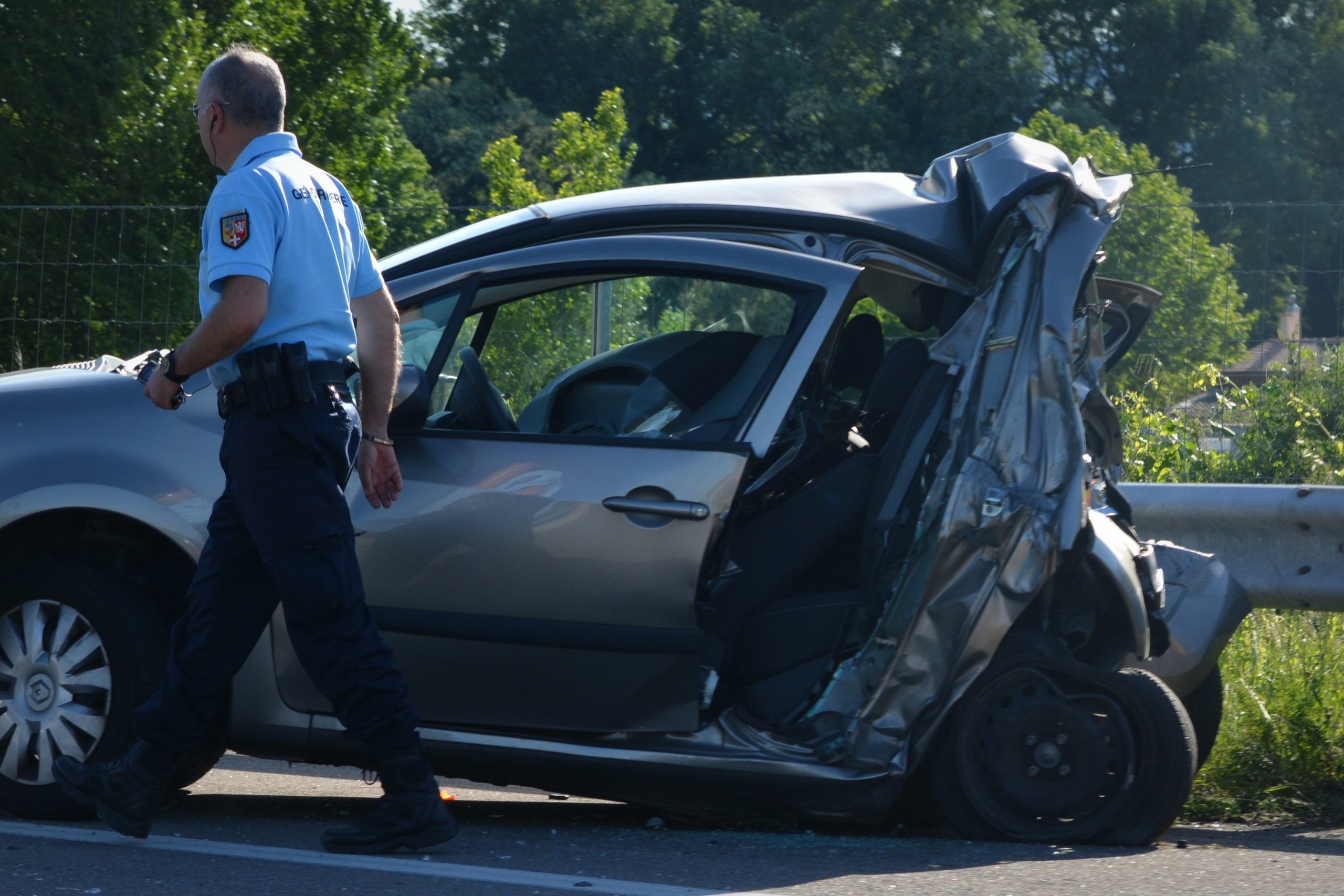
    Marzell was a resident at Charlyn Rehabilitation Center in Tallulah, Louisiana, at the time of her accident. In 2010, Marzell was loaded onto a wheelchair lift for the lift van operated by Charlyn. During this process, Marzell and her wheelchair rolled off the platform. This mistake caused Marzell to strike her head on the pavement, causing severe injuries. This case reached the Second Circuit Court of Appeals after Marzell and her daughters appealed the summary judgment ruling of the trial court. 

    During the trial, the Marzells argued that Charlyn’s insurance carrier should pay for Shirley’s injuries. The insurance policy held by Charlyn, however, included an automobile exclusion. This provision shielded the insurance company from liability whenever Charlyn owned or operated an automobile. Operation was defined to include “loading and unloading”. The summary judgment ruling made by the trial court hinged on whether or not “loading or unloading” encompassed the loading of human cargo. The trial court held that it did, dismissing the case in favor of Charlyn and their insurance company.

    Due to the exclusion, Marzells argued the care rendered by Charlyn was negligent, constituting medical malpractice. After hearing arguments, the trial court applied the “substantial factor” and “flow from use” test laid out in Carter v. City Parish Gov’t of E. Baton Rouge, 423 So. 2d 1080 (La. 1982) and Edwards v. Horstman, 96-1403 (La. 1997), 687 So. 2d 1007. The Court utilizes these tests in cases of claimed negligent supervision or entrustment to absolve homeowners or insurance carriers of liability. Ultimately, the trial court held that loading or unloading a patient into the van was a “common and essential element in each theory of liability,” constituting “use” of the automobile. 

    On appeal to the Second Circuit, the Marzells maintained their position that Charlyn was negligent, constituting malpractice. The Marzells also urged, as a matter of public policy, the court should read insurance policies to extend coverage rather than deny it. Unfortunately, the Second Circuit continued to maintain the loading of Shirley into the van via the wheelchair lift was normal use of the automobile. Since the accident arose out of automobile use and the Marzells introduced no summary judgment evidence, the Second Circuit ruled in favor of Charlyn, dismissing the case. 

    Finding an excellent elderly caregiver is never easy and requires lots of trial and error. If you or your loved one ends up injured through trial and error, you should contact an attorney immediately. Quick action could be the difference between a favorable verdict or dismissal of your case. 

    Additional Sources: Shirley Ann Marzell, Jacqueline R. Marzell, and Monique P. Marzell v. Charlyn Enterprises, LLC, d/b/a Charlyn Rehabilitation & Nursing Center and The Hanover American Insurance Company 

    Written by Berniard Law Firm Writer Riley Calouette

    Additional Berniard Law Firm Article on Wheelchair Accidents: Passenger Injured on St. Bernard Urban Rapid Transit Bus in His Wheelchair Seeks Increased Award from Louisiana Appeals Court

  • Insurance Provider Fails to Cancel Customer’s Coverage after NonPayment, Must Pay Damages

    Complex insurance issues can add more hassle to the damage from a car accident. What happens if you’re in an automobile accident after failing to pay your insurance premium? Can you still get coverage for your claims? The following case out of Baton Rouge shows why insurance companies must follow proper procedure and offer evidence of cancellation or suffer consequences.
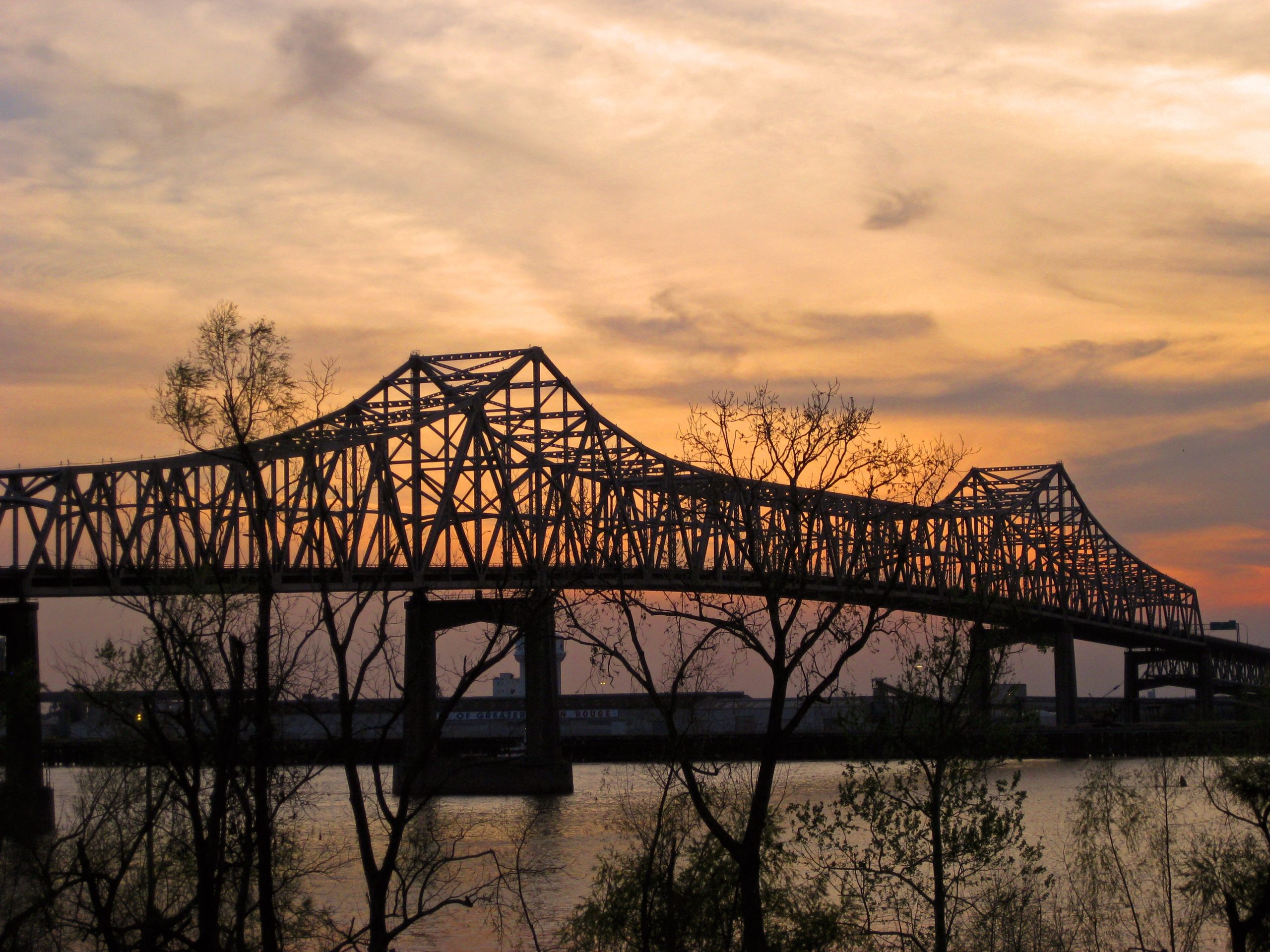
    On July 27, 2010, Beverly Smith and Darlene Shelmire were involved in a vehicle collision in Baton Rouge when Shelmire entered an intersection without yielding. Smith sustained injuries due to the accident and filed a claim against Shelmire and her insurer, Gramercy Insurance Company. The insurance company asked the court for summary judgment, claiming that Shelmire did not have insurance coverage at the time of the accident due to the cancellation of her policy for nonpayment. The court held a hearing on the motion and denied it.

    The legal entity representing Gramercy Insurance Company, GoAuto, filed a new motion for summary judgment, asserting the same claim that Shelmire’s policy had been canceled before the accident. The trial court again denied this motion. In a bench trial, GoAuto filed a motion for involuntary dismissal, which the court denied. During the trial, the court heard evidence that Shelmire had paid her insurance premium on the afternoon of the accident and reported the accident a few hours later. GoAuto paid Shelmire for the damage to her vehicle the next day, despite their claim at trial that her insurance policy had been canceled by that point. Therefore, the trial ordered GoAuto to pay $15,000 in damages to Smith. GoAuto appealed this judgment. 

    GoAuto alleged that the trial court erred on two grounds: 1. In dismissing its motion for involuntary dismissal and 2, in determining that Shelmire had insurance coverage at the time of the accident. 

    On the second allegation of error, GoAuto claimed that Shelmire’s insurance policy had been canceled at the time of the accident. In Louisiana, the insurer has the burden of proof when claiming that a customer’s policy was canceled for nonpayment before an accident occurred. Direct General Insurance Company of Louisiana v. Mongrue, 04-248, p. 6 (La. App. 5th Cir. 8/31/04), 882 So. 2d 620, 623

    Under La. R.S. 9:3550(G)(3)(b)(i), an insurer must affirmatively act to cancel a customer’s policy even after an insurance premium financing company has asked them to do so after a customer’s nonpayment. GoAuto presented the testimony of an employee in their claim that they affirmatively canceled the policy. However, the employee’s testimony was not backed up by any other evidence in the record. This absence of evidence, coupled with evidence that GoAuto paid Shelmire’s filed claim after the accident, led the trial court to conclude that GoAuto never canceled Shelmire’s coverage. The appellate court affirmed this finding and dismissed GoAuto’s appeal. 

    Even when a plaintiff has a viable claim for damages, insurance issues can stand in the way of a successful claim. This case displays the importance of hiring a personal injury lawyer who knows how to fight insurance companies who refuse to pay. 

    Other Sources: BEVERLY SMITH VERSUS GRAMERCY INSURANCE COMPANY, STATE FARM MUTUAL AUTOMOBILE INSURANCE COMPANY, AND DARLENE SHELMIRE

    Article Written by Berniard Law Firm

    Other Berniard Law Firm Articles on Automobile Accidents: Insurance Company Gets Off the Hook In Auto Accident Case Because Driver Never Actually Insured

  • Persistent Lawyering Stops Insurance Company From “Second Bite at the Apple” in Mississippi Car Wreck

    Nothing is more tragic than the loss of life. However, that loss can be tempered somewhat if insurance is in place that provides some financial compensation. While money cannot substitute for the loss of love and companionship that a spouse gives, it can at least provide some help with the bills and, therefore, one less thing to worry about when grieving. But what happens when the insurance company refuses to pay your claim? The following lawsuit in Tangipahoa, Louisiana, discusses these issues in the context of a car accident, uninsured motorist coverage, and the refusal of State Farm to pay the claim. 

    As Jerry and his wife Lois Draayer drove down Interstate 55 in Pike County, Mississippi, a motorist struck the couple. Unfortunately, that driver had both crossed the median and lacked sufficient insurance. The underinsured motorist was Russel Allen, and Lois Draayer tragically died from the collision. 

    Lois’s family brought a lawsuit against Allen, his automobile liability insurer (Progressive Insurance Company), and named their insurer, State Farm, which they claimed provided Lois with UM coverage. The Draayers added State Farm to the suit to ensure financial recovery for Lois’s death. 

    State Farm successfully asked the trial court to dismiss itself from the case because it claimed it did not provide UM coverage to Lois since she had waived UM coverage by signing a form in 2009. The trial court agreed with State Farm’s position. The Draayers appealed, asserting there were disputed facts concerning the rejection of the UM form. For there to be a lawful and valid rejection, Lois must have knowingly made an informed and meaningful rejection of the coverage. La. R.S. 22:1295(1)(a)(ii) If an insurer has a form with the insured’s signature of waiver, then the general rule is that it creates a rebuttable presumption. Duncan v. U.S.A.A. Insurance Company, Thus, the “ball was in Draayer’s court” to convince the court otherwise. 

    The facts showed  State Farm forced Lois to resign the 2009 UM waiver. Additionally, it was proven Lois only completed 2 of the six steps of the 2009 form. Lois signed her name and initials while the insurance agent did the rest. Thus, since State Farm did not comply with the statute, it owed the family coverage. The appeals court agreed with the Draayers and welcomed State Farm back into the picture. However, State Farm sought another shot at removing themselves from the lawsuit. Hence, another bite at the apple.

    As the trial court reinstated State Farm, it sought a motion for summary judgment, arguing that Lois signed a valid UM selection form in 2004. The trial court agreed and dismissed State Farm from the case. However, Draayer appealed to bring State Farm back into the lawsuit. 

    In the appeals court, State Farm relied heavily on case law that suggested a subsequent invalid UM form does not supersede the validity of prior forms. Hughes v. Zurich American Ins. Co. The appeals court reasoned State Farm previously sought to enforce the 2009 UM selection form on the basis that it had legal consequences, and those legal consequences now bind it. Those consequences included the court’s decision that there were issues of fact as to its validity. The appeals court held State Farm is not entitled to ” a second bite at the apple” by resurrecting the earlier 2004 UM form when a subsequent UM selection form was executed during the policy period. Therefore, once again, State Farm was required to provide UM coverage to the Draayers.

    Regardless of the outcome of this case, it stresses the importance of knowing your rights in insurance disputes. Insurance companies want to avoid paying hefty sums out-of-pocket and will find any technicality they can to ensure they save some cash. Therefore, it is up to you to be meticulous before carelessly waiving rights. Before you sign and “initial” access to compensation and protection, ensure you understand the potential implications of such a waiver. 

    Additional Sources: Draayer, et al., v. State Farm Fire and Casualty, et al.

    Written by Berniard Law Firm

    Additional Berniard Law Firm Articles on UM insurance disputes: Considering Uninsured motorist coverage in Louisiana, Be Careful What You Sign

  • Trial Court Judgment Amended in Baton Rouge Workplace Incident, Shows Importance of Diligent Lawyering

    Court cases are contentious, polarizing atmospheres between the parties. Stubbornness is ripe, and the opposing parties are staunchly in, unsurprisingly, opposition. However, sometimes even opposing parties can agree. Any party can take issue with a court’s judgment, and sometimes ALL parties can take issue with a court’s decision–even if these issues are different. But when multiple parties raise various errors in a trial court judgment, how can the higher courts resolve such allegations of error?

     In 2001, a workplace incident occurred between the plaintiff, Bradley W. Smith, and the defendant, then-coworker Paul Babin. Smith alleged that while the two parties were in the parking lot at their workplace, Babin intentionally hit Smith with his vehicle. In his 2002 lawsuit, Smith claimed that Babin was liable for Smith’s damages and later amended the lawsuit to include Shelter Mutual Insurance Company (Shelter) as Babin’s liability insurer. 

    In late 2014, a trial court heard Smith’s lawsuit on liability, causation, and damages and then heard Babin’s crossclaims. At the beginning of the trial, the parties entered a pretrial stipulation that determined Smith’s past medical expenses caused by Babin’s act totaled $338,556.27, for which both Shelter and Babin would get worker’s compensation credit. 

     After hearing all issues and crossclaims, the trial court determined that Smith incurred past medical expenses of $782.43 and that Shelter had no duty to defend Babin under his policy and did not deny this duty in bad faith. Following the final judgment, the parties raised a series of issues concerning the determination of past medical expenses: Shelter and Smith filed numerous proposed judgments, Smith filed for a new trial that was denied, and all parties raised alleged errors with the trial court’s decision.

     Shelter appealed the final judgment from the trial court, alleging that the court was wrong in its description of the judicial interest owed to Smith and that the court was wrong in finding that Smith’s damages caused by Babin’s act were not expected from Babin’s perspective. Smith answered the appeal, alleging that the trial court was wrong to include certain documents in the record and finding that Shelter’s policy was not ambiguous regarding judicial interest. Babin also answered by saying the trial court erred in deciding that Shelter had no duty to defend him and that Shelter did not deny its duty to defend in bad faith.

     The appellate court took each of the issues raised by the parties one by one:

    Shelter’s allegation that the trial court’s description of judicial interest was wrong was found compelling by the appellate court. As described above, before the trial, the parties had agreed on what Smith’s past medical expenses were. It was wrong for the trial court to leave this issue to jury determination when the parties had already decided. As such, the trial court judgment was amended to be consistent with the stipulation the parties entered beforehand. 

    Shelter also took issue with the trial court’s determination that Babin could not expect Smith’s injuries from the car incident. However, this issue was not for the appellate court to decide. This particular issue of expectation or intent is relevant to insurance coverage and not liability questions at issue here. This analysis of expectation or intention is too abstract and hypothetical to be a valid issue before this court. Louisiana State Board of Nursing v. Gautreaux, 2009-1758, p. 4 (La. App. 1 Cit. 6/11/10), 39 So.3d 806,811.

     Smith alleged that the trial court committed evidentiary error by allowing a copy of Shelter’s insurance policy on the record because the document in question described an insurance policy that was not effective at the time of the incident. Regarding this particular issue, a trial court is given fairly broad discretion over evidence. An appellate court tends to disturb a trial court’s evidentiary determinations only if there is a clear error or undue prejudice against a party. Wright v. Bennett, 2004-1994, pp. 6-7 (La. App. 1 Cir. 9/28/05), 924 So.2d 178,183

    A reversal of an evidentiary determination by the trial court is only reversible if the effect of that inappropriate evidence is clear and significant. La. Code Evid. art. 103(A). The appellate court found that, although the introduced evidence represented an outdated policy held by Babin, it was clear. The trial court agreed that the evidence showed the same policy that Babin had renewed and thus held at the time of the incident. Hence, the incorrect date was irrelevant, the evidence permissible, and this raised error was dismissed. 

    Smith also alleged that the trial court incorrectly determined Shelter’s policy was ambiguous when Smith moved for summary judgment on that issue. In this summary judgment review, the appellate court considered the issue based on the facts without consideration of the trial court’s determinations, deciding if there was any issue of material fact and whether Smith was entitled to summary judgment. Jones v. Clesi Foundations, L.L.C., 2015-0157, p. 4 (La. App. 1 Cir. 11/3/15), 183 So.3d 532, 534. In assessing contract language, the court considered it at its plain, ordinary meaning. See La. Civ. Code art. 2047. Under that assessment, the appellate court found that the policy was unambiguous and affirmed the trial court’s denial of Smith’s motion.

     Babin alleged that Shelter owed him a duty to defend under state law in negligence actions. However, Shelter argued that Babin’s act was intentional, and the policy does not cover intentional acts. Smith’s initial petition alleged that Babin’s action was intentional and that Babin had a history of harassing the plaintiff before the specific incident at issue. It was not until Smith began adding insurers to his petition that he began raising theories of negligence. As such, the appellate court affirmed that Babin’s act was intentional, not negligent, thus Shelter was under no obligation to defend Babin under the policy. 

     Ultimately, the appellate court partially amended the trial court’s judgment to create consistency with the pretrial stipulation and affirmed the rest of the extensive trial court judgment. 

     This case highlights, more than anything, the importance of diligent recordkeeping. When cases take years to resolve, issues can arise at any point. Therefore, it is prudential to have representation that pays attention, remembers all the steps, and can successfully argue any issues with the court. 

    In this case, Shelter’s representation successfully did so–Shelter pointed out the trial court’s inconsistency with the pretrial stipulation regarding judicial interest and called it out. As a result, the appellate court fixed the final judgment based on Shelter’s argument. By keeping a diligent record of all steps in the litigation process and being a diligent advocate, Shelter convinced the court.

     Additional Sources: Smith v. Babin 

     Written by Berniard Law Firm Writer: Callie Ericksen

    Additional Berniard Law Firm Articles on Amended Final Judgments: Decretal Language: Last Words in a Final Judgment