
Category: Louisiana Law

  • The Clock of Justice: When Do Louisiana Laws Take Effect?

    Golden clock face featuring the outline of Louisiana at its center, symbolizing the timing and application of laws, with black Roman numerals and antique gold detailing.Understanding When Louisiana Laws Apply: A Guide to Prospective and Retroactive Effects

    Imagine you’re involved in a legal matter, and the legislature passes a new law. Does it affect your situation? Or does it only apply moving forward?

    The timing of when a law takes effect — and whether it applies to past events — can drastically impact legal outcomes. In Louisiana, this concept is governed by Civil Code Article 6, which establishes when laws apply prospectively (looking forward) or retroactively (looking backward).


    The Rule: Louisiana Civil Code Article 6

    Art. 6. Retroactivity of laws

    In the absence of contrary legislative expression, substantive laws apply prospectively only. Procedural and interpretive laws apply both prospectively and retroactively, unless there is a legislative expression to the contrary.

    In other words, new laws usually apply only to future actions — but in certain cases, they can apply to past events depending on their nature.


    The General Rule: Laws Look Forward (Prospective Application)

    Most laws in Louisiana are prospective, meaning they only govern future conduct.

    This principle ensures fairness and predictability: people cannot be punished or have their rights altered by a rule that didn’t exist at the time of their actions.

    Think of it like a new rulebook for a game: the new rules apply to future matches, not the ones already played.

    Prospective laws are also known as substantive laws, because they establish new legal rights, duties, or obligations — and by default, they only apply moving forward.


    When Laws Look Backward: Interpretive Laws (Retroactive Application)

    There are, however, exceptions. One major exception involves interpretive laws — laws that don’t create new rules, but instead clarify what an existing law already meant.

    Because interpretive laws explain rather than change, they apply retroactively. They’re treated as though they’ve been part of the original law from the start.

    For example:
    If a property law used the term “adjacent” and its meaning was disputed, an interpretive law that clarifies “adjacent” would apply to past and present cases alike. It doesn’t create a new right — it simply explains the legislature’s original intent.


    Procedural Laws: The Mechanics of Justice

    Another key exception is procedural law — the set of rules that governs how legal cases are handled rather than what rights exist.

    Procedural laws might involve:

    • Filing deadlines

    • Evidence rules

    • Court procedures

    Because procedural laws are about method, not substance, they often apply both prospectively and retroactively — even to ongoing cases.

    The idea is to keep the judicial process efficient and uniform, ensuring fairness for everyone currently in the system.


    Why This Matters to You

    Understanding when a law applies can make a world of difference. It determines:

    • Whether a new law impacts your case

    • How courts will interpret older disputes

    • Whether you can rely on a previous legal rule or practice

    If a law changes midstream — or if new clarifications are made — knowing whether it applies to your situation is vital to protecting your rights.

    Because the nuances between substantive, procedural, and interpretive laws are subtle, consulting an experienced Louisiana attorney can help ensure your case is interpreted correctly.


    The Bottom Line: Timing Is Everything

    Louisiana’s Civil Code strikes a careful balance:

    • Substantive laws: usually prospective only

    • Procedural laws: generally retroactive and prospective

    • Interpretive laws: typically retroactive

    This approach ensures fairness while allowing the legal system to evolve and clarify itself over time.


    Need Legal Guidance?

    If you’re unsure whether a new or amended law affects your case, Berniard Law Firm can help.

    Our attorneys are well-versed in Louisiana’s Civil Code and can explain whether Article 6 applies to your specific situation.

    Other Berniard Law Firm Articles on Legal Matters: Ignorance of the Law: Why “I Didn’t Know” Isn’t a Defense in Louisiana

    and
    Who’s Responsible When a Step Collapses?

  • When the Law Is Silent: How Louisiana Judges Uphold Justice

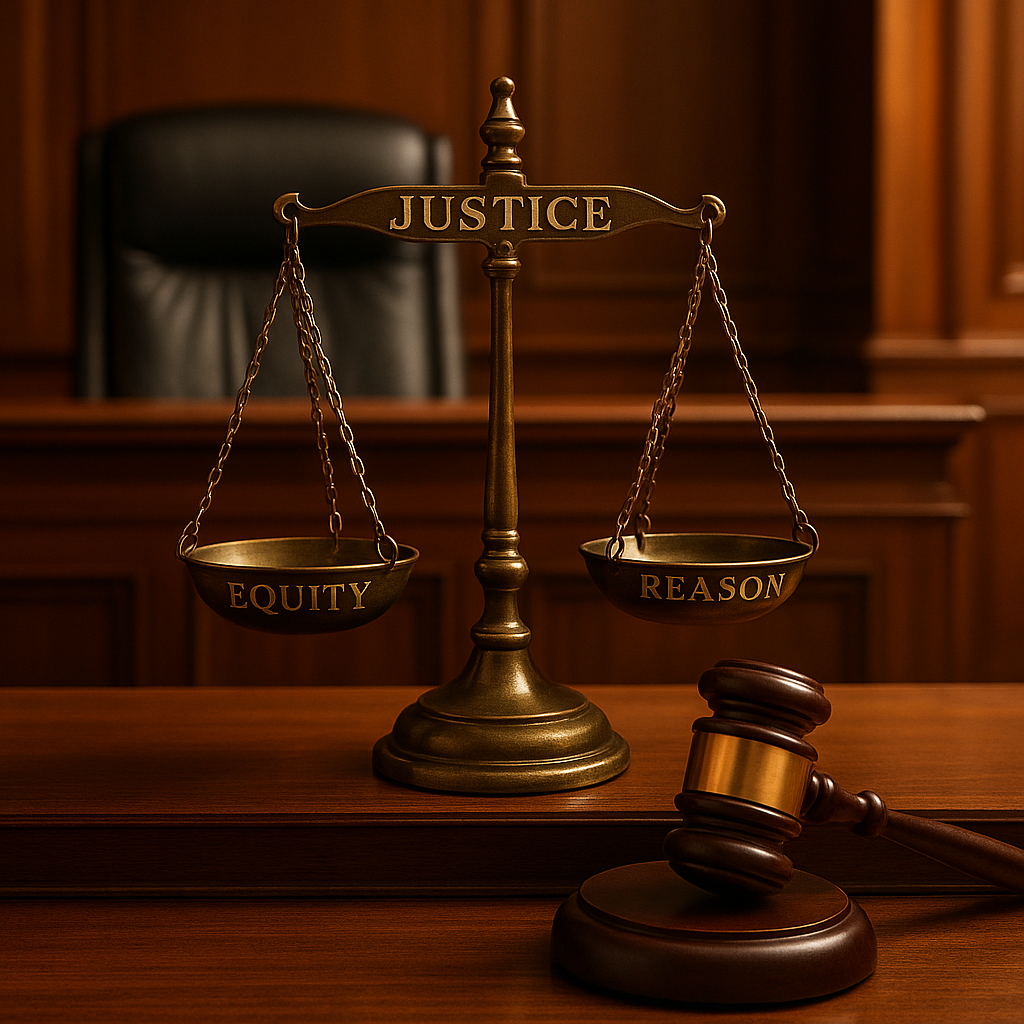
    Bronze scales of justice labeled Justice, Equity, and Reason beside a wooden gavel on a judge’s bench in a traditional Louisiana courtroom, symbolizing fairness and judicial decision-making when the law is silent.The Unforeseen Gaps: Why Laws Can’t Cover Everything

    Imagine Louisiana’s laws as a vast, detailed tapestry woven to guide every aspect of daily life. Even so, no legal system — no matter how comprehensive — can anticipate every possible situation.

    So, what happens when a dispute arises in court, and no written statute or established custom directly applies?

    This is where Louisiana Civil Code Article 4 comes into play. It ensures that justice never stops simply because the law is silent. Instead, it empowers judges to decide cases based on equity, guided by reason, justice, and prevailing usages.


    The Foundation: Louisiana Civil Code Article 4

    Art. 4. Absence of legislation or custom

    When no rule for a particular situation can be derived from legislation or custom, the court is bound to proceed according to equity. To decide equitably, resort is made to justice, reason, and prevailing usages.

    This article defines how Louisiana judges must act when no existing law or custom applies. Rather than leaving cases unresolved, it gives courts both the authority and duty to make equitable decisions that reflect fairness and common sense.


    Beyond the Written Word: Applying Equity, Reason, and Custom

    Equity

    Equity is the principle of fairness — ensuring that justice is achieved even when no statute directly governs the issue. Judges apply equitable reasoning to avoid unjust results that strict legal interpretation might otherwise produce.

    Natural Law and Reason

    When judges appeal to natural law, they turn to universal principles of right and wrong that transcend written rules. Reason ensures that these decisions are logical, balanced, and grounded in moral understanding and societal norms.

    Prevailing Usages

    If no written law or clear precedent exists, prevailing usages — long-established customs or community practices — may help fill the gap. When a certain practice has been consistently observed and accepted as fair, it can serve as a guide for judicial decision-making.


    Why This Matters to You

    For Louisiana citizens, Article 4 is more than just a procedural rule — it’s a safeguard of fairness. It ensures that:

    • No one is left without a remedy. Even when legislation is silent, courts must act.

    • Justice adapts to real life. Courts use equity and reason to handle unique, unforeseen cases.

    • Fairness prevails. Judges consider moral and social principles to ensure outcomes align with justice.

    This article highlights that Louisiana’s judges are not mere “law readers” — they are interpreters of justice, entrusted to apply both law and logic where needed.


    The Human Element in Law

    Article 4 underscores the civil law tradition’s flexibility. It recognizes that law is not static — it must evolve and respond to the complexities of human life.
    By requiring courts to apply equity, Louisiana ensures that compassion and fairness remain at the core of its legal system.


    Navigating the Nuances of Louisiana Law

    Understanding how courts interpret the Civil Code when statutes are silent is essential for anyone facing a unique or unclear legal issue. Whether your case involves property rights, contracts, or personal disputes, principles of equity and reason could shape the outcome.


    Need Legal Guidance?

    When the law doesn’t provide a clear answer, Berniard Law Firm can help.
    Our experienced attorneys understand how Louisiana’s Civil Code — including Article 4 — applies to modern cases.

    📞 Contact us today for a consultation. We’re here to ensure that fairness, justice, and reason guide every step of your case.

    Other Berniard Law Firm Articles:Louisiana Law: Absence of Legislation or Custom — Understanding Civil Code Article 4

    and Understanding How Louisiana Laws Are Interpreted: Clear Language vs. Purpose

  • Understanding How Louisiana Laws Are Interpreted: Clear Language vs. Purpose

    Bronze scales of justice engraved with the words Clarity and Purpose, balanced on a polished wooden desk inside a law library with the Louisiana State Capitol visible through an arched window.Have you ever read a law and wondered what it truly means? Or found yourself facing a situation where a rule seemed to apply — but its exact implications were unclear?

    In Louisiana, our legal system is based on the civil law tradition, meaning that interpretation depends heavily on the Louisiana Civil Code. Understanding how courts interpret laws helps citizens, businesses, and legal professionals navigate their rights and responsibilities with confidence.

    Two key provisions — Article 9 and Article 10 of the Louisiana Civil Code — explain how our courts approach clear laws versus ambiguous ones.


    The Golden Rule: When the Law Is Crystal Clear (Civil Code Article 9)

    At its core, Louisiana law values clarity and precision.

    Louisiana Civil Code Article 9 provides the guiding principle:

    Art. 9. Clear and unambiguous law
    When a law is clear and unambiguous and its application does not lead to absurd consequences, the law shall be applied as written, and no further interpretation may be made in search of the intent of the legislature.

    Think of it like following a recipe: if it says “Add two cups of flour,” there’s no debate — you add two cups.

    Similarly, when a law’s language is straightforward, the courts must apply it exactly as written. Judges and attorneys don’t speculate about what lawmakers meant — they apply what the law says. This principle ensures predictability, stability, and transparency, allowing citizens to understand their legal obligations simply by reading the text.


    When Things Get Fuzzy: Interpreting Ambiguous Laws (Civil Code Article 10)

    But what if the law’s meaning isn’t so clear?

    Sometimes legislation uses complex terms, appears inconsistent, or leaves room for interpretation. That’s where Louisiana Civil Code Article 10 comes into play:

    Art. 10. Language susceptible of different meanings
    When the language of the law is susceptible of different meanings, it must be interpreted as having the meaning that best conforms to the purpose of the law.

    Using our recipe analogy again: if it says “Add a pinch of seasoning,” that’s subjective. You’d interpret “a pinch” based on the purpose of the dish — whether it’s sweet or savory.

    In the same way, when Louisiana courts interpret ambiguous laws, they look to the purpose of the statute — the reason it was enacted and the broader legal framework it fits within. Judges may review legislative history, context, and the societal problem the law was meant to solve.


    Why These Interpretation Rules Matter to You

    These two articles — Article 9 and Article 10 — form the foundation of how Louisiana judges interpret the law. They affect real-world outcomes in cases involving:

    • Contracts

    • Property rights

    • Family disputes

    • Personal injury

    • Business obligations

    Here’s why they matter:

    • Predictability: When laws are clear, you can confidently act knowing what’s required.

    • Fairness: Ambiguities are interpreted consistently, ensuring justice and legislative intent.

    • Protection: Understanding how courts read laws helps you better advocate for your rights.

    Together, these rules create balance — applying laws strictly when clear, and flexibly when interpretation is necessary for fairness and purpose.


    Navigating Louisiana Law with Confidence

    Understanding how laws are read and applied is essential for anyone interacting with Louisiana’s legal system. While the plain meaning rule (Article 9) ensures consistency, the purpose-based rule (Article 10) ensures justice when clarity is lacking.

    If you’re unsure how a specific law affects your situation, don’t guess — get guidance from experienced professionals.


    Need Legal Guidance?

    At Berniard Law Firm, our attorneys are deeply familiar with Louisiana’s Civil Code and its interpretation principles.

    📞 Contact us today for a consultation to discuss how Articles 9 and 10 might impact your case. We’re here to help you navigate the law with clarity, confidence, and care.

    Other Berniard Law Firm Articles on Legal Matters: Did the Son Have the Right to Lend Dad the Company Truck?

    and When Accidents Happen: The Limits of a Homeowner’s Liability for a Child’s Injury