What is vicarious liability? Vicarious liability, simply put, is the common law principle that an employer may be liable for its employee’s negligence if that employee’s negligence occurred within the course or scope of his or her employment.
In the Beech v. Hercules Drilling Company, L.L.C., case coming out of the Eastern District of Louisiana, vicarious liability principles came into play. In this case, certain bizarre events led the United States Court of Appeals for the Fifth Circuit to make a ruling as to whether Hercules Drilling Company should be held vicariously liable for the actions of Michael Cosenza, its employee, who accidentally shot and killed his co-worker, Keith Beech, while both were aboard a Hercules owned vessel.
The facts of the case were not in dispute. Beech was a crane operator aboard a jack-up drilling rig that Hercules owned, while Cosenza was a driller aboard the vessel. On December 13, 2009, the fateful events that led to the aforementioned case, took place. Cosenza happened to own a firearm, which he accidentally took aboard the vessel; Hercules policy prohibited any firearms from being aboard their vessels. Not only did Cosenza bring a firearm aboard the vessel, violating the policy, but when he realized that he had inadvertently brought it aboard (he found it among his laundry) he did not inform anyone about it and placed it in his locker, further violating Hercules policy. Cosenza was aware of the policies regarding firearms.
On December 13, Cosenza was assigned to work a night shift and was the only crewman on duty. His duties included the following: monitoring the rig’s generator; checking equipment; and reporting any suspicious activity or problems. While performing those duties, employees were encouraged by Hercules to stay in the break room, where they could watch television and interact with fellow crew members, while simultaneously monitoring the generator. If something went wrong with the generator the television would turn off.
On that particular night, Beech was also aboard the vessel, although he was not actually on duty. However, since he was aboard the vessel, he was still subject to the call of duty. Both Beech and Cosenza were in the break room, watching television and talking to one another. Beech told Cosenza that he was considering buying a small firearm. As a result, Cosenza decided to show his firearm to Beech. He left the break room, retrieved the firearm from the locker and brought it back to the break room. He showed it to Beech, who inspected it but did not actually handle it. When Cosenza attempted to sit back down in the break room, his arm bumped a portion of the couch, causing the firearm to accidentally discharge, mortally wounding Beech. Beech’s widow, Mrs. Beech, subsequently brought a wrongful death action against Hercules under the Jones Act.
What is the Jones Act? The Jones Act was enacted by Congress in 1920 in order to create “a negligence cause of action for ship personnel against their employers.” This statute’s existence is particularly important because without it there would be no other theories of recovery under which a seaman could recover for negligence on the part of his employer or fellow crew member. Before the Jones Act came into existence, seamen could recover under two theories of recovery, unseaworthiness, and maintenance and cure, which were part of the general maritime law. “Unseaworthiness is a claim under general maritime law based on the vessel owner’s duty to ensure that the vessel is reasonably fit to be at sea.” Lewis v. Lewis & Clark Marine, Inc., while “A claim for maintenance and cure concerns the vessel owner’s obligation to provide food, lodging, and medical services to a seaman injured while serving the ship.”
When Mrs. Beech brought the wrongful death suit against Hercules under the Jones Act, the district court granted judgment in her favor, awarding her $876,997.00 and as tutrix, guardian of her minor child, Jax Delton Beech, the amount of $317,332.00, making her recovery a total of $1,194, 329.00.
Hercules appealed this decision, claiming that Beech and Cosenza were not acting in the course of their employment at the time of the accident, so the judgment should be reversed. Mrs. Beech cross-appealed because she said that the district court failed to include loss of fringe benefit damages in the damages award. After considering both sides, the United States Court of Appeals for the Fifth Circuit reversed the district court’s decision, and here is why.
To understand the appellate court’s decision, it is important to once more consider vicarious liability. Under this principle, the point of contention usually is whether or not the negligence that took place, occurred in the course of employment. In this case, that was the point of contention as well. The court actually had to determine whether Cosenza was acting in the course of his employment when he shot Beech.
According to case law, the Jones Act does allow for employers to be vicariously liable for the negligence of their employees under the doctrine of respondeat superior as long as the neligence occurred “in the course of employment.”
The court then had to determine what “in the course of employment” actually meant. Circuits were split on this. The court decided to go with the Seventh Circuit’s business interest test, deciding “that the test for whether a Jones Act employee was acting within the course and scope of his employment is whether his actions at the time of the injury were in furtherance of his employer’s business interests.” Therefore, when the test was applied to the facts of the case, the Court determined that Cosenza was not acting in the course of his employment. The Court found that Hercules’ business interests in regards to Cosenza required him to monitor the generator, check equipment, and report suspicious activity or problems. Further, Hercules had safety policies that supported its business interests in ensuring workers’ safety. The Court found that Cosenza’s leaving the break room to retrieve a loaded firearm and while he was suppposed to be performing the aforementioned actions, took him well outside the course and scope of his employment and was blatantly contrary to Hercules’ business interests.
The Court also pointed out that if they had applied a different test from the Sixth Circuit instead, for instance, they would have still come to the same conclusion in regards to Cosenza. In other words, the Sixth Circuit had an incidental to job duties test. Under this test, the Court pointed out that an incident like the one at issue in this case is unheard of, and the testimony of multiple witnesses corroborates that; so Hercules could not have anticipated that type of behavior (employee having a loaded firearm at work). Therefore, even under this more liberal test, the Court would still have come to the same conclusion.
This was an important and difficult case for the Court to consider. It is important to note that vicarious liability is a valid legal principle. However, it might not be as easy to recover under this principle as one might initially assume. Often, the biggest point of contention is whether the negligence occurred “in the course of employment.” Courts have grappled with that phrase and with determining what it means.
If you are an employee that is facing a legal situation in which you have been injured during your time of employment and at your place of employment, and you feel that you have a valid claim under vicarious liability principles, it is vitally important that you contact an attorney immediately. Vicarious liability is a valid legal principle, but as the aforementioned case shows, it is not always easy to recover under it. Contact Berniard Law Firm if you are finding yourself in need of legal advice as pertains to vicarious liability.
 In the depths of the Gulf of Mexico, a seemingly minor incident set off a chain of legal events that reverberated through the maritime industry. An underwater sonar device, or towfish, collided with the mooring line of a Shell Offshore drilling rig, causing significant damage. The resulting legal battle involved Shell, the company operating the sonar device (Tesla Offshore), and the vessel’s owner (International Offshore Services). This blog post explores the key issues of the case, the court’s rulings, and the implications for maritime operations.
 In contractual agreements, the validity of indemnity provisions can become a subject of contention between parties. But what happens when determining a contract’s maritime nature becomes pivotal in a case involving specialty services for drilling or production in navigable waters? As discussed below, this issue was scrutinized in a maritime appeal action filed with the
 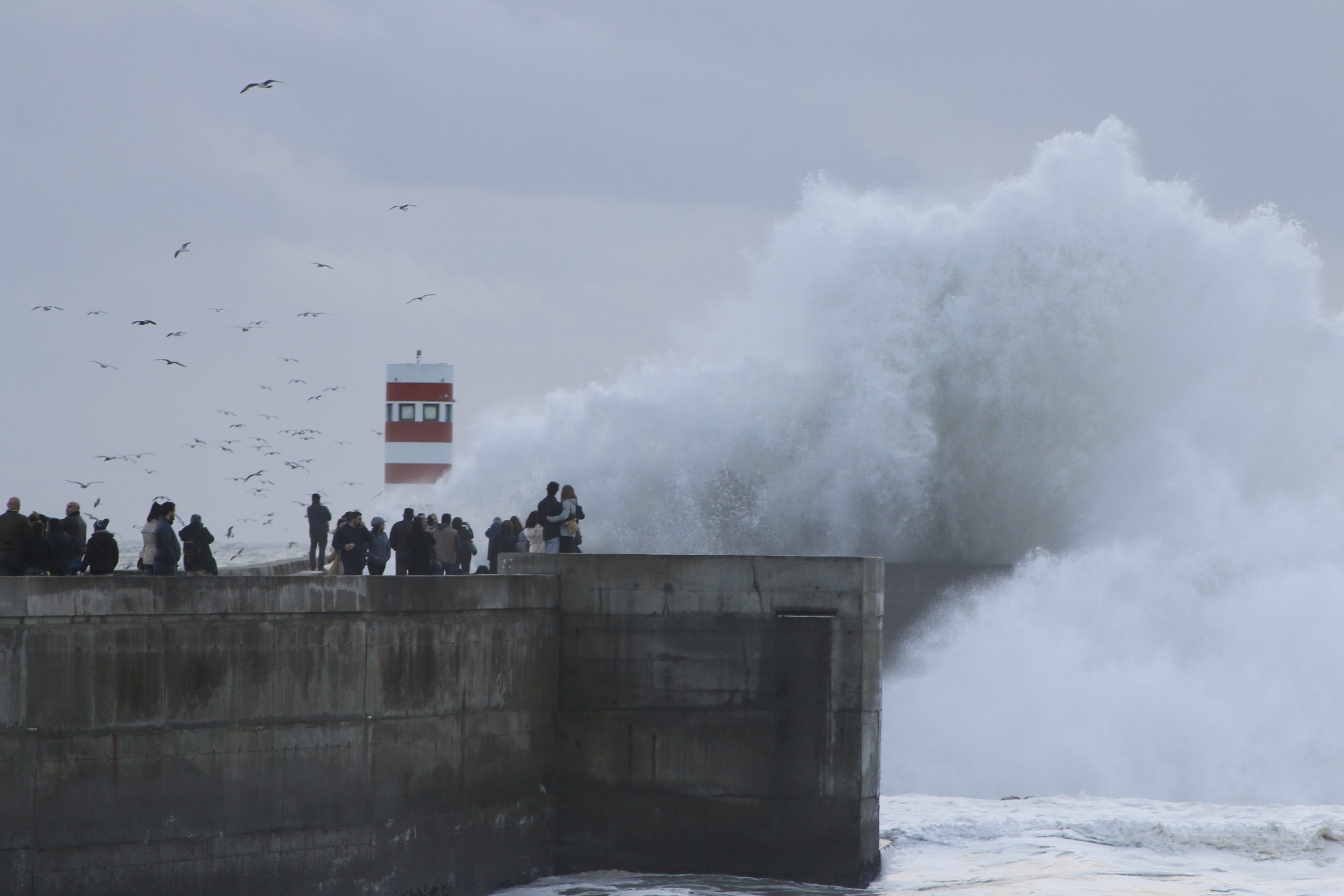 Large waves and rough seas make boat travel a harrowing experience. But what happens if you are at work and fall out of bed during those stormy seas? Is the captain or company you work for liable under the Jones Act? The following case out of Louisiana helps answer the question; can I recover under the Jones Act if rough seas cause my back injury?