Category: Negligence Claims

  • Louisiana Medical Malpractice Lawsuit by Dental Patient Fails at Appeals Court

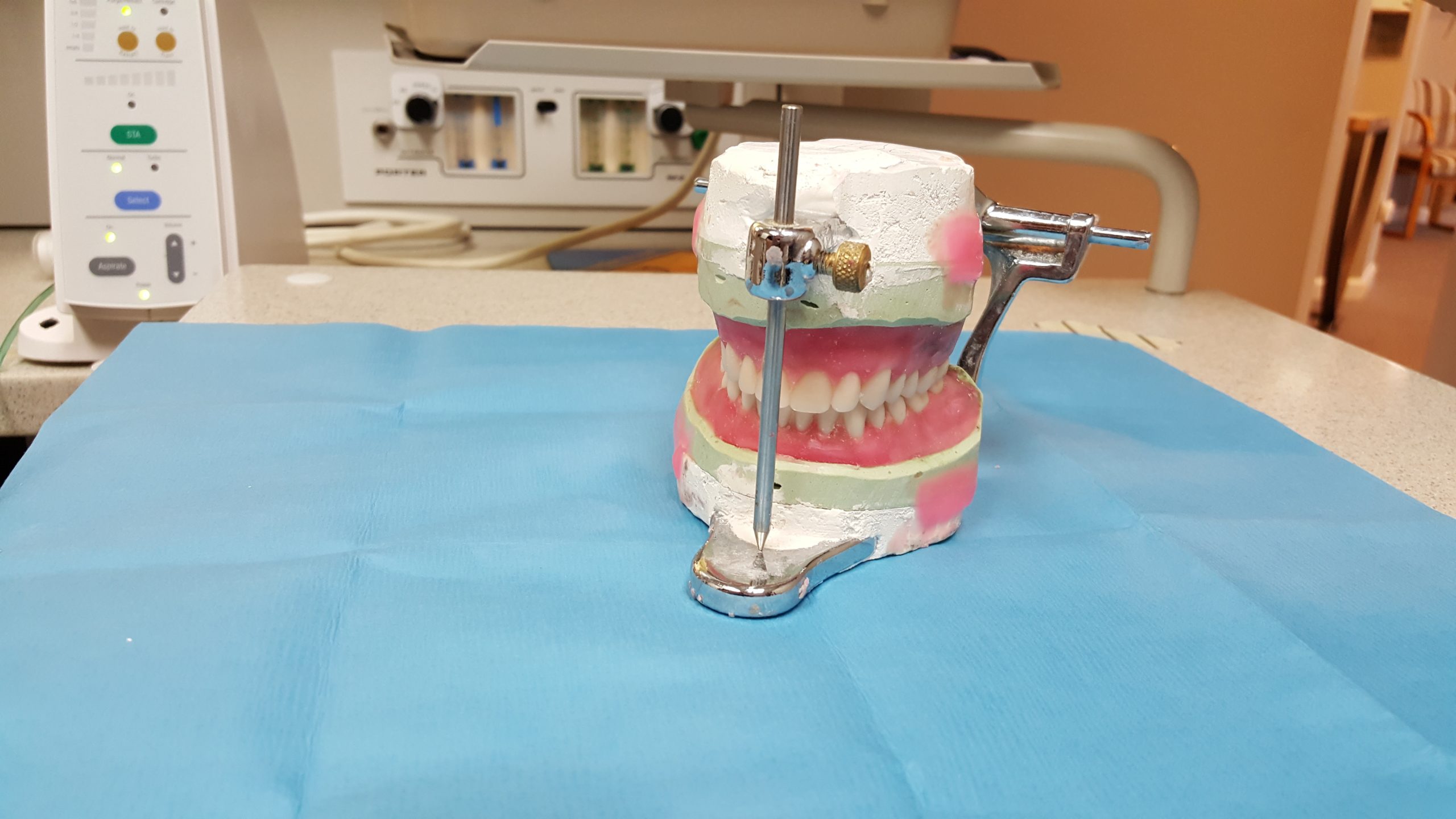
    Appeals from trial court decisions can be costly, especially if the result is again not decided in your favor. Tara Lorraine (“Ms. Lorraine”), a dental patient at Bluebonnet Dental Care, L.L.C., learned this the hard way after appealing a jury verdict decided against her.  The Louisiana Court of Appeals for the First Circuit (“First Circuit”) affirmed that jury verdict and assigned costs of the appeal to be paid by Ms. Lorraine. The following case shows the difficulty in proceeding with a medical malpractice lawsuit in Louisiana based on alleged substandard dental procedures.

    Ms. Lorraine alleged that her injuries occurred during several dental treatments over several months. First, on January 21, 2010, Ms. Lorraine accused Dr. Ross Quartano (“Dr. Quartano”) of spilling etchant on her throat, which left her with a permanent scar. Then, on April 30, 2010, she accused Dr. Louis Lamendola (“Dr. Lamendola”) of extracting one of her teeth without her consent. Finally, Ms. Lorraine claimed that Dr. Andre Bruni (“Dr. Bruni”) and Dr. Quartano failed to remove substantial underlying decay before they filled some of her teeth, causing her such extreme pain that eventually, she had to seek additional help from a different dentist.

    Subsequently, Ms. Lorraine filed a complaint with Louisiana’s Patient Compensation Fund, asking for a medical review panel of each of the three doctors. Upon reviewing Ms. Lorraine’s complaint, the medical review panel found that there was no evidence to support a breach of the standard of care as it related to Dr. Quartano and Dr. Bruni and that a material fact existed regarding Ms. Lorraine’s informed consent with Dr. Lamendola’s removal of her tooth. Thus it did not necessitate an opinion from the medical review panel. However, despite these findings, Ms. Lorraine filed a lawsuit against the same three doctors in the 19th Judicial District Court. Like the medical review panel, the jury found that Ms. Lorraine failed to prove the breach of standards of care. Therefore, the court entered a judgment in favor of the doctors, dismissing Ms. Lorraine’s claims and denying her request for a new trial.

    Thereafter, Ms. Lorraine appealed this decision based on five assignments of error, including (1) an illegal and racially prejudicial removal of four Black jurors from the jury using peremptory strikes in violation of both Louisiana Supreme Court and United States Supreme Court precedent; (2) a refusal to grant a new trial based on jury misconduct; (3) improper failure to prove the standard of care for informed consent based on a specific statute; (4) improper failure to prove standard of care for the enchant spill which caused her scar based on an obviously careless act from which negligence can be inferred; and (5) improper failure to prove standard of care for filling her teeth with significant remaining decay given unanimous expert testimony and again the obviously careless act from which negligence can be inferred.

    The First Circuit considered all five of these assignments of error one at a time. Starting with the illegal and racially prejudicial removal of four Black jurors, the First Circuit made the following findings that the explanations for dismissing the four Black jurors were race-neutral, that peremptory strikes were used on a number of white jurors as well, the trial court was in the best position to evaluate the juror’s involvement, and that the trial court also had the discretion to allow over six peremptory strikes because there were multiple defendants. On Ms. Lorraine’s second claim, the First Circuit noted that it is a high burden to overcome to prove jury misconduct and that courts are generally reluctant to overrule jury verdicts based on claims of improper behavior. Moreover, the First Circuit found no manifest error in the trial court’s assessment of the allegedly improper juror’s credibility, so Ms. Lorraine’s second assignment of error lacked merit.

    As for Ms. Lorraine’s third, fourth, and fifth claims for assignment of error, the First Circuit reviewed each of the relevant standards of care and found the jury did not manifestly error in any of its conclusions. Thus these three claims also were without merit. The First Circuit, therefore, affirmed the jury’s decision and the trial court’s judgment in favor of the doctors, leaving Ms. Lorraine in no better position had she not filed an appeal.

    When deciding whether to appeal a trial court decision, consult a good attorney who can assess the merits of your claims before you are left assessing the fees for a failed appellate decision.

    Additional Resources: IN RE: MEDICAL REVIEW PANEL FOR THE CLAIM OF TARA LORRAINE

    Written by Berniard Law Firm Blog Writer: Gina McKlveen

    Other Berniard Law Firm Articles on Peremptory Challenges: Lafayette Case Provides Important Lesson on Peremptory Challenges and Proving Racially Based Jury Exclusion

  • Louisiana Court holds that tutors are not considered a “parent” entitled to bring a claim for loss of consortium

    Car accidents are extremely traumatic events that can impact the lives of anyone involved. The legal issues arising after a car accident can be complex and affect everyone involved. For example, what are the rights of a tutor when bringing claims on behalf of the children they are responsible for? Will they be considered “parents” under the law and be allowed to bring a claim for loss of consortium? The following case out of Baton Rouge discusses those issues in relation to a car accident. 

    Geneva Marie Fils, an infant at the time, suffered severe personal injuries after being in a car accident. After the accident, Geneva’s maternal aunt and tutor, Calverna Reed, filed a lawsuit related to the car accident. In it, she sought damages on behalf of herself and Geneva for their loss of consortium. A loss of consortium claim is brought when someone has been deprived of their family relationship benefits (ex: love and affection) due to injuries caused by the defendant. 

    The trial court dismissed Reed’s claim for loss of consortium. Afterward, the First Circuit Court of Appeals took the case to determine whether Reed’s loss of consortium claim could stand, considering that she was not a parent or guardian of Fils at the time of the accident. 

    The appeals court reviewed the relevant law on this issue. Louisiana Civil Code article 2315 states that any act causing damage to another must be repaired by the person who caused that damage. These damages can include a claim for loss of consortium. LSA-C.C. art. 2315. Damages under this code, however, require the beneficiary to be a part of the designated classes of beneficiaries defined in article 2315.6. This article requires beneficiaries to be a spouse, child, grandchild, brother, sister, grandparent, father, or mother of the injured party. LSA-C.C. art. 2315.6. The First Circuit held in Leckelt v. Eunice Superette that any party outside of the parties designated in article 2315 would be excluded from the ability to sue.

    The First Circuit noted that “father” and “mother” were not defined in article 2315.6. To keep her claim alive, Reed cited a Louisiana Code of Juvenile Procedure to support her argument that she qualified as a “parent” of Fils. Unfortunately, that code was repealed by the Louisiana Children’s Code. The term “parent” was then defined as “any living person who is presumed to be a parent under the Civil Code or a biological or adoptive mother or father of a child.”  LSA-Ch.C. art. 116(17). That definition does not reference “tutor” or a person who has custody of a child. Ultimately, this definition did not encompass the relationship between Reed and Fils, ending Reed’s claim for loss of consortium.  Further, the court reasoned there was no authority to support a finding that a person who is not the biological or adoptive parent but is a tutor can bring a wrongful death action for the loss of a child and, by extension, a loss of consortium claim. Thus all of Reed’s arguments failed, and the court held a tutor cannot bring a claim for loss of consortium.

    Car accidents come with a lot of emotional baggage that can be tough to deal with. However, a good attorney will have your back inside and outside the courtroom to make life after the accident easier.

    Additional Sources: John Fils and Demitria Fils, Individually and on behalf of Geneva Marie Fils VS Allstate Insurance Company, Charles T. Guidry, Jennifer R. Hayes, Mayola Calais, State of Louisiana through the Department of Social Services and/or Department of Health & Hospitals and/or Office of Community Services and USAgencies Casualty Insurance Com

    Written by Berniard Law Firm Writer Riley Calouette

    Additional Berniard Law Firm Article on Car Accidents: Can a Passenger in a Car Accident Not be a Passenger?

  • Fax Filing A Lawsuit, Make Sure You Follow the Rules Precisely

    After a workplace accident, an employee may be flustered, but it is essential that the employee promptly becomes knowledgeable about court requirements and deadlines. If a claim is not filed within an allocated timeline, the claimant may be barred from bringing the claim forward. The following case out of Jefferson Parish shows why, if you’re fax filing a lawsuit, you must follow the rules precisely. 

    On January 9, 2014, Mr. Palazola fell from a raised platform while in the course and scope of his maintenance job. About a year later, on January 6, 2015, he filed a facsimile petition for damages with the 24th Judicial District Court for Jefferson Parish. On January 23, 2015, the clerk’s office received a copy of Mr. Palazola’s petition with formatting differences from the previously filed facsimile petition.

    The defendants, IMC Consulting, Landry Construction, and Cali & LaPlace Engineers, responded by filing an exception of prescription because Mr. Palazola’s facsimile did not meet the requirements outlined in La. R.S. 13:850. According to Louisiana Revised Statute 13:850, facsimile transmission provides that:

    1. Filing is considered complete at the time the facsimile is transmitted and received by the clerk of court. 
    2. Within seven days, exclusive of legal holidays, the following should be given to the clerk: (1) The original signed document. (2) The applicable filing fees. (3) A five-dollar transmission fee. 
    3. If the party fails to meet the requirements above, the facsimile filing will have no effect. 

    The defendants argued Mr. Palazola did not forward the original petition to the clerk’s office within the 7-day deadline. Therefore, his facsimile had no effect. After a hearing, the trial court sustained the defendants’ exceptions and dismissed Mr. Palazola’s claims.

    On appeal, Mr. Palazola contended the court made an error by accepting the defendant’s exception of prescription because his lawyer did forward the original petition within the mandatory timeframe. Mr. Palazola produced his lawyer’s affidavit, which stated the legal assistant informed him it had been filed via facsimile on January 6, 2015, and that she had personally mailed the original petition to the post office on January 7, 2015. 

    At the hearing on the exception, the defendants argued that Mr. Palazola did not meet the requirements of La. R.S. 13:850 because he did not file the initial petition. The record showed two petitions which contained the exact wording but were spaced differently, formatted differently, and contained different paginations. The defendants also stated there was no evidence Mr. Palazola’s lawyer forwarded the original signed document within the requisite time. The record showed a stamp on the second petition that the clerk’s office received the original petition on January 23, 2015, seventeen days after the facsimile transmission.  

    It was unclear from the judgment and record whether the trial court found that Mr. Palazola did not prove all elements under La. R.S. 13:850(B) because he did not forward the original signed document or did not send the petition within the requisite time. Nevertheless, the appeals court found either reason would justify affirming the defendant’s exception of prescription.

    Following procedure and timelines are critical in all lawsuits, as can be seen in Palazola’s case. No one wants to be a victim twice (once from injury and secondly from late filing.) Therefore, when proceeding with an injury lawsuit, ensure you have plenty of time to correct any procedural flaws before it’s too late. 

    Additional Sources: Tracy Michael Palazola V. IMC Consulting Engineers, Inc.; Comfort Engineered Systems, Inc.; Cali & Laplace Engineers, LLC; And Landry Construction, INC.

    Written by Berniard Law Firm Blog Writer: Needum Lekia

    Other Berniard Law Firm Articles on Prescription: Personal Injury Claim in Streetcar Accident Barred by Prescription

  • FMLA Retaliation and Title VII Hostile Work Environment Claims Fail on Lack of Evidence

    Some consider the workplace as their second home. It is a place where one can thrive intellectually and network simultaneously. However, when a workplace becomes hostile or sexually charged, it can make an employee’s life unbearable. Therefore, to bring a successful claim against FMLA and a hostile workplace, a plaintiff must prove all elements under FMLA and show proof the hostile environment affected their well-being.

    Amy Smith (Smith) worked for Touro Infirmary (Touro) from 2008 to 2014 as a respiratory therapist. Smith claimed during her employment, her direct supervisor Larry Anderson (Anderson), sexually harassed her and created a sexually charged workplace. According to Smith, the female respiratory therapists who participated in Anderson’s advances were favored over those who did not comply. 

    Smith took medical leave under the Family Medical Leave Act (FMLA) while pregnant and was later terminated. Smith alleged her termination was due to her noncompliance with Anderson’s sexual advances. She claimed this because she believed she abided by Touro’s leave policy of reporting while gone and provided additional medical documentation when needed. In addition, Smith filed a discrimination claim with the Equal Employment Opportunity Commission (EEOC) and referenced her discriminatory workplace. The district court dismissed Smith’s case on summary judgment, and she appealed. 

    Smith appealed the court’s dismissal of her FMLA retaliation and Title VII hostile work environment claims. To establish a prima facie case of FMLA retaliation, Smith needed to show: (1) she was an employee protected under the FMLA, (2) she suffered an adverse employment action, and (3) she was treated differently than other similar employees or an adverse decision was made because she took leave.

    On appeal, Smith asserted she had five weeks remaining on FMLA when she last contacted her employer on August 25, 2014. Her calculation would set her FMLA deadline to September 25, 2014. However, she was terminated on September 22, 2014. Smith contends she kept Touro updated while she was gone which satisfied Touro’s policy of monthly reporting while on leave. Smith asserted her termination while on leave constituted an adverse employment action being taken against her. 

    Touro responded that Smith took leave on May 21st, returned to work on June 25th, and then left again. Touro believed her leave was over on August 28. Touro called Smith several times to inquire about her plans to return to work, but Smith never called back. On August 29, Touro sent Smith a letter stating she had exhausted her FMLA leave and needed to provide a medical statement if she needed more time. Touro requested a response from her by September 8th. On September 11, Touro sent an additional letter, seeking Smith’s response by September 1. Otherwise, Touro would proceed with a voluntary resignation. Smith never responded. Thus, she was terminated. 

    The appeals court held it was unclear how much time Smith was approved for when she took leave on July 25, 2015. However, it was clear Touro was under the impression Smith’s FMLA leave was exhausted. This resulted in Touro making several attempts to reach Smith via, calls, messages, and letters to discuss her plans for returning to work. However, Smith ignored all channels of communication. 

    The district court found that Smith’s termination occurred because of a lack of communication on when she would return to work. She was also terminated about a month after she exhausted her FMLA leave. Smith’s only defense was that she suffered an adverse employment action because she was fired while on FMLA leave.

    Regarding Smith’s hostile work environment claim, the district court dismissed Smith’s claim because she did not show how Anderson’s actions affected her professionally. Smith’s leave requests, work schedule, and hours never changed while employed. In addition,  Smith was not denied any promotion or pay raise while working for Touro. Therefore, Anderson’s harassment and hostile working environment did not affect Smith’s job performance or her opportunity for growth. 

    The dismissal of Smith’s hostile work environment and FMLA claims shows how courts weigh evidence in claims of this nature. Therefore, it is essential to have an experienced attorney when presenting such claims. 

    Additional Sources: Amy Smith v. Touro Infirmary; Larry Anderson

    Written by Berniard Law Firm Blog Writer: Needum Lekia

    Other Berniard Law Firm Articles on Workplace Retaliation: Court Upholds Award of Damages for Retaliation Against Pilot for Complying with Federal Law

  • If You Approach a Barking Dog and It Bites You, is the Owner Liable for your Injuries?

    While holding the owner responsible for a dog’s behavior is typically the norm, most reasonable people would know not to approach a barking dog in a gated residence. However, Demetrious Frazier found himself at odds with Luke Difulco after being bitten by one of his dogs while performing his work duties at their home. The following lawsuit answers the question; if you approach a barking dog and it bites you, is the owner liable for your injuries?

    Frazier was an employee of the City of Alexandria and worked as a meter reader. He visited the Difulco’s home one afternoon to read their residential meter. As he approached the gate, two dogs began barking, followed by Luke Difulcot’s son, Daniel, who came outside to greet Frazier. Although Daniel offered to kennel the dogs for Frazier’s comfort, he entered through the gate without responding, and the ten-year-old black Labrador bit him on the hand.

    In contrast to Daniel’s testimony, Frazier claimed that he saw no evidence of a dog when he approached the Difulco’s residence and entered through the gate to check the meter. After entering the gate, he was attacked by a dog, and then a second one approached him. Frazier received workers’ compensation and medical payments from his employer, and he sought additional damages against Luke Difulco through the lawsuit subject of this appeal.

    The trial court ruled in favor of the Difulcos, stating that the dogs had no history of aggression, and Frazier assumed the risk of entering through the gate with barking dogs. Frazier disagreed that he assumed the risk of entering through the gate and believed the Difulcos acted negligently by not kenneling their dogs. 

    Frazier lost his case at trial as the trial Judge found Difulco’s testimony more persuasive. He eventually filed a motion for a new trial and lost. The trial court did, however, change the language of the original judgment, holding Frazier was 100% negligent rather than assuming the risk. Frazier appealed the decision.

    In his motion for a new trial, Frazier relied on a Louisiana statute that provides for a new trial if the decision from the original case was clearly not aligned with the law and evidence (La.Code Civ.P. art. 1972(1)). He also denied the facts regarding the incident with the dogs from the trial court, which relied on the Difulcos’ testimony. 

    Louisiana state law typically holds the owner of the dog responsible for harm if they should have a reasonable concern that the dog would exhibit aggressive behavior (La.Civ.Code art. 2321). However, the Court of Appeals upheld the trial court’s decision that the Difulcos could have done nothing to foresee or prevent the dogs’ behavior. They did so based on the fact that the trial court had assessed the credibility of the witnesses and found Daniel’s testimony credible while Frazier’s was not believable. Therefore, the appeals court found that because Frazier entered the yard after his conversation with Daniel and without Daniel’s knowledge, this was the sole cause of his injuries. 

    While those injured during a work shift deserve compensation, entering a residence with clearly agitated dogs could have been avoided. While every case is different, generally, if you approach a barking dog in Louisiana, you assume the risk and may be unable to recover damages for your injuries. If there is ever an issue regarding liability for an injury, it is best to consult an attorney who can provide the necessary information to move forward.

    Additional Sources: Frazier v. Difulco

    Written by Berniard Law Firm Writer: Ainsley Ayres

    Additional Berniard Law Firm Article On Dog Bites: Liability for Dog Attack in a “No Pets” Apartment Complex

  • Who is Liable for Injuries for a Slip and Fall on a Public Sidewalk?

    Premises liability is an active area of personal injury law, and accidents occurring on public property are no exception. The question often arises, who is liable for a slip and fall on a public sidewalk? In this case, the Louisiana Third Circuit Court of Appeal was asked to determine the premises liability of the town of Lake Arthur for a fall occurring on a public sidewalk built and maintained by this public entity.

    On July 11, 2014, Robin Rogers Richard fell while walking along a sidewalk in Lake Arthur. The portion of the sidewalk where her fall occurred was a driveway that allowed maintenance vehicles to access a public park, with a sloping transition on either side running perpendicular to the street. This portion of the sidewalk was completed in September 2013 by John Anderson Concrete Finishes, Inc. (Anderson), under the direction of Robert Bertrand, the major of Lake Arthur. 

    Ms. Richard filed a motion for summary judgment on the liability issue, arguing the slope of the transition area did not meet certain state and national requirements and was, therefore, defective per se. However, at her deposition, she indicated that her last step before her fall was on a flat portion of the new sidewalk, not the sloped portion. In response, Lake Arthur, Anderson, and its insurer, Seneca Specialty Insurance Co, filed motions for summary judgment alleging statutory immunity from liability and they were not liable because the condition of the sidewalk was open and obvious.

    After a hearing, the trial court granted summary judgment in favor of the defendants, finding there was no evidence the sloped area caused Ms. Richard’s fall and the condition of the sidewalk was open and obvious.

    On appeal, Richards asserts three assignments of error: the trial judge erred by not granting plaintiffs’ summary judgment, the trial judge erred by granting defendants’ summary judgments, and alternatively, the trial judge erred by not finding that genuine material issues of facts in dispute preclude summary judgments if the appellate court does not grant plaintiffs’ motion for summary judgment.

    To prevail in a case against a public entity for a fall on a sidewalk, the plaintiff must prove the public entity’s custody or ownership of the defective thing, the defect of the thing created an unreasonable risk of harm, the public entity had actual of constructive notice of this defect, and the public entity failed to take corrective action within a reasonable time. Campbell v. Evangeline Parish Police Jury, 2014-1301, ppg. 7-8 (La. App. 3 Cir. 5/6/15), 164 So.3d 408, 415, writ denied, 15-1067 (La. 9/11/15), 176 So.3d 1043 (quoting Chamber v. Village of Moreauville, 11-898 (La. 1/24/12), 85 So.3d 593). See also La. R.S. 9:2800.

    Regarding the first element, Lake Arthur had custody of the sidewalk at the time of Ms. Richard’s fall. The substantive issue, in this case, concerns the remaining elements, namely whether the sidewalk, as constructed, created an unreasonable risk of harm. The Louisiana Supreme Court has adopted a four-factor risk-utility balancing test for determining whether a condition is unreasonably dangerous, in which the court weighs the utility of the thing, the likelihood and magnitude of harm (including the obviousness and apparentness of the condition), the cost of preventing the harm, and the nature of the plaintiffs’ activities in terms of its social activity of whether it is dangerous by nature. Pryor v. Iberia Parish Sch. Bd, 10-1683, p. 4 (La. 3/15/11), 60 So.3d 594, 597 

    The court held that evidence, in this case, established the utility of the sidewalk and driveway since it allowed vehicles to enter the park without damaging their undersides and without a ramp protruding into the road. Further, the court found the likelihood and magnitude of harm were low since no person had reported an injury because of the sidewalk condition before Ms. Richard, and the state of the sidewalk was obvious and apparent. For example, Ms. Richard’s testimony revealed that she knew there was a driveway at this point in the sidewalk before her fall. In addition, photographs of this area show the area was lighter in color than the older portions of the sidewalk, with signs indicating where the driveway was located. Crucially, the court held the condition of the sidewalk as Ms. Richard saw it, not as measured by a survey from an engineer pursuant to this litigation. 

    The appeals court also held there was no evidence of steps the town could have taken to make the area more noticeable. The sidewalk was being used for its intended purpose and this social utility was not dangerous by nature. 

    Taken together, the court found the obvious and apparent condition of the sidewalk was sufficient to show it was not unreasonably dangerous, and the Richards were thus unable to prove an essential element of their claim against the defendants. The court, therefore, affirmed that judgment of the trial court dismissing the Richards’ claims against the Town of Lake Arthur, Anderson, and Seneca Insurance, in addition to assessing costs to the Richards.

    This case demonstrates that premises liability of public entities often hinges on what efforts the public entity has made to ensure public safety, in addition to providing an example where such actions successfully avoided liability after an accident.

    Additional Sources: Richard v. Town of Lake Arthur, 16-113 (La. 3rd Cir. 06/01/16). 

    Written by: Hannah Keller

    Additional Berniard Law Firm Article on Premises Liability: When a Building’s Ledge is Open and Obvious, Building Owner Not Held Liable for Fall

  • Injured by Stocking Cart in Grocery Aisle, Whose Fault is it?

    Everyone can picture a grocery store on a busy day. The aisles are congested, and workers are hurrying to replace products on the sales floor. There may be stocking carts blocking walkways. Who is responsible if a shopper trips over a worker’s cart and injures herself? What about if the worker and the shopper knew the cart was there?

    This scenario is exactly what happened to Donna Massery, a shopper when she tripped over a vegetable cart at a Rouses Market in New Orleans. She had arrived at Rouses and was searching for ginger when she approached Produce Manager, Jose Villa, to ask for directions. Villa was restocking produce that was on a cart. The cart was approximately 5 to 6 feet wide and 3 feet tall, with a long bed spanning the length. The middle section of Villa’s cart was empty, though boxes were stacked on both the left and right sides. 

    Ms. Massery reached for the ginger upon Mr. Villa’s direction, turned to walk away, and fell over the cart. She sustained soft tissue damage from catching herself with her hands and hitting her shin and knee on the cart. There was a factual dispute over the length and substance of Ms. Massery and Mr. Villa’s conversation. Mr. Villa contends that he alerted her to the hazard and directed her to move away. Ms. Massery claims it was a shorter conversation limited to the subject of her ginger inquiry.

    Ms. Massery filed suit against Rouses, seeking damages for her injuries. The trial court granted Ms. Massery $20,000 subject to a 50% fault allocation to her. Rouses appealed the fault allocation, alleging that the cart did not present an unreasonable risk of harm, the 50% fault was incorrectly granted, and that court misinterpreted Louisiana Revised Statute 9:2800.6, which covers the burden of proof in claims against merchants. The appellate court can only overturn the trial court’s decision upon a finding of manifest error. Ambrose v. McLaney, 959 So. 2d 529 (La. Ct. App. 2007).

    La. R.S. 9:2800.6 states that a merchant owes reasonable care to keep the store in a reasonably safe condition. If a negligence claim is brought against a merchant by a shopper injured at the store, the shopper is responsible for proving that: 1. The condition created an unreasonable risk of harm that was reasonably foreseeable, 2. The merchant either created or had actual or constructive notice of the harm before the injury, 3. The merchant failed to exercise reasonable care. 

    Courts evaluate if a condition is unreasonably dangerous through a four-factor balancing test. The test balances the risk of harm against the ease at which the harm could be prevented. The factors are 1. The utility of the condition, 2. The likelihood and magnitude of the harm, including whether it was open and apparent, 3. The cost of preventing the harm, and 4. The nature of the shopper’s activity. Pryor v. Iberia Parish School Board, 60 So. 3d 594 (La. 2011). Just as a merchant must use reasonable care, so does the shopper. Both parties must act reasonably. 

    The trial court held that customers are used to seeing carts in aisles at the grocery store, and both customers and workers are interested in keeping the store stocked. The placement of the cart, the trial court reasoned, created an unreasonable risk of harm and that it was foreseeable that a customer might trip over it. Constructive notice existed under factor 2 of La. Rev. Stat. 9:2800.6 as Mr. Villa warned Mr. Massery and was aware of the cart. A shopper may be distracted in a case such as this, and therefore the store should still exercise reasonable care to prevent any foreseeable harm. The appellate court found the trial court ruled correctly and upheld the ruling on this first issue on appeal. 

    The second issue on appeal, the allocation of fault, was correctly allocated according to the appellate court. The court stated the allocation of fault was reasonable given that, like in Darby v., where the plaintiff tripped over an unattended cart that was open and obvious, workers should anticipate that shoppers will be distracted by the products on the shelves while shopping rather than on their feet and surroundings. Again, this issue was not decided unreasonably, and therefore the appellate court upheld the trial court on this issue. 

    Finally, the appellate court determined that the lower court’s interpretation of La. R.S. 9:2800.6 regarding the fault allocation was not in manifest error because Rouses failed to exercise reasonable care and move the cart upon notice of the condition. 

    This case exemplifies how the fault allocation process is applied in New Orleans. When faced with an injury due to a hazardous condition in a store, plaintiffs are often limited by their responsibility to act with reasonable care. In this case, each party is responsible for $10,000 of the total $20,000 in damages. Therefore, the plaintiff is only awarded $10,000. This incentivizes customers and workers to pay attention to their surroundings and act with care, even on busy days. 

    Additional Sources: MASSERY V. ROUSE’S ENTERS., L.L.C.

    Written by Berniard Law Firm Blog Writer: Corrinne Yoder-Mulkey

    Additional Berniard Law Firm Articles on Workers Compensation: Clean Up On Aisle 5: West Monroe Grocery Store Liable for Shopper’s Trip-and-Fall

  • Louisiana Jury Awards No Damages Because of Preexisting Injuries, Can an Appeals Court Fix the Ruling?

    Everyone wants to emerge victorious after their day in court, but occasionally the jury will refuse to award the judgment you deserve. When a person loses their case at trial, they can appeal it to a higher court.  The appeal process allows for a narrow reconsideration of a case to assure that the lower court got to the correct answer; if the appeals court finds that the lower court did not get the correct answer, they can amend the lower court’s judgment, including the calculation of damages. 

    Preexisting medical conditions aggravated by an accident do not preclude an injured party from recovering damages and medical expenses from the person who hit them. Ms. Kimberly Guidry has such preexisting medical conditions and was involved in an accident that aggravated those preexisting medical conditions. At trial in the 15th Juridical District, the jury found awarded no damages, no medical expenses, and no lost wages to Kimberly. 

    Kimberly had presented medical expert testimony that showed her injuries were aggravated by the accident, but the jury awarded her nothing. With this denial, Kimberly appealed to the Third Circuit Court of appeals. She claimed the jury committed “manifest error” in their findings and that the trial court had committed a “legal error” in failing to grant her a new trial due to this adverse ruling. Kimberly’s case helps answer the question; “If a Louisiana Jury awards no damages because of preexisting injuries, can an appeals court fix the ruling?”

    The court of appeals must follow a strict test when considering if they can overturn a jury’s factual findings. First, the court of appeals must find that there was no reasonable factual basis from which a jury could reach the conclusion they did. Then, the court of appeals must further establish that the jury’s ruling was clearly wrong when considered in relation to the facts of the record. Cole v. Allstate Insurance Co.

    The test that the appeals court used to consider overruling jury factual findings boils down to this: did the jury have a reasonable basis for their finding? If the facts of the case do not show that the jury had a reasonable basis for their finding, the court of appeals can overturn their decision and decide on the award of damages on their own. In this case, the court of appeals determined that there was no reasonable basis on which the jury could base their finding, therefor they overturned the jury’s decision and rendered one of their own. With this, the court of appeals must follow further tests when considering how much damages to apply. 

    There is no one way that the court of appeals can determine damages; each award requires individual examination of the facts and circumstances of the underlying case. Bailey v. LeBlanc. The court of appeals looked at similar instances in which a person with preexisting conditions, such as Kimberly, was further injured due to the crash and what award the juries in those cases awarded. The court of appeals decided to award Kimberly general damages, past medical expenses, and six months of advance payment so that she could recover. 

    A jury can decide against you, but that is not the end of the road. Preexisting medical conditions aggravated due to an accident or workplace injury do not limit the amount you can recover to cover your bills. Juries are central to our judicial system, but sometimes they get it wrong. As a result, our legal system has created a legal pathway to overturn adverse jury decisions to favor the injured party. This appeals process is detail oriented and complex, but a skilled lawyer can navigate the legal waters to secure a favorable judgment. 

    Other Sources: CALVIN JOSEPH GUIDRY, ET AL. VERSUS LAFAYETTE HEALTH VENTURES, INC., ET AL.

    Written By Berniard Law Firm Writer: Ethan W. Seitz

    Additional Berniard Law firm articles: What is the Standard to Overturn a Jury’s Decision About Compensation in Personal Injury Cases, How Much Do Juries Award in Mesothelioma Lawsuits in Louisiana?

  • Three-Year Rule Applies to Worker’s Compensation Claims for Necessary Treatment

    Timing is an important part of claiming worker’s compensation in Louisiana. Louisiana R.S. 23:1209(C) requires that:

    1. The employee files an initial claim or makes other suitable arrangements within one year of the injury; and
    2. The employee makes any subsequent claims no more than three years after the last payment of medical benefits.

    A claim that fails (1) or (2) is “prescribed” under the statute, meaning it falls outside of the window for being accepted.

    In cases like Kennedy v. WSTMC, where requirement (2) is in question, the outcome depends on when exactly “the last payment of medical benefits” was made.

    Ms. Denise Kennedy was an employee of Washington/St. Tammany Medical Center (WSTMC) when she was injured in a slip and fall accident. She received treatment paid by WSTMC’s insurer FARA, including a successful disc fusion operation in July 2007. In February 2010, her treating physician released her from care.

    WSTMC continued to schedule Ms. Kennedy for appointments with their physician throughout 2011. She received an X-Ray on July 11, 2011, but missed appointments scheduled for August, September, and November. Ms. Kennedy’s final appointment was a Second Medical Opinion (SMO) exam covered by FARA with a payment on January 27, 2012. At this time, the employer’s doctor agreed that she could be released.

    On January 26, 2015, Ms. Kennedy filed a “Disputed Claim for Compensation” form. WSTMC objected because it was filed over three years after the last payment of medical benefits. Additionally, WSTMC argued that the last payment of medical benefits was not the January 27th payment for Ms. Kennedy’s SMO appointment; instead, it was the payment issued for her X-Ray in July 2011.

    At the first hearing on this matter, a Worker’s Compensation Judge (WCJ) sided with WSTMC, finding that the last payment of medical benefits occurred on July 11, 2011. 

    The Louisiana First Circuit Court of Appeal was next. Here, another statute was brought to bear: La. R.S. 23:1203, which makes employers liable only for medical expenses necessary for treating a work-related injury. Considering the effect of both statutes, the Court of Appeal could narrow the question. When was the last payment for a medical benefit necessary for treatment?

    The X-Ray appointment in July 2011 was deemed necessary. The other appointments in 2011 Ms. Kennedy did not attend? Not necessary—or treatment—considering she was absent. That left only the SMO examination. Was it a necessary medical treatment that would “restart the clock” and give her another three years to make a claim? If so, her January 2015 filing would just meet the prescriptive period set out in R.S. 23:1209(C).

    The First Circuit concluded that it wasn’t. The idea behind an SMO appointment is to give the employer a chance to verify the legitimacy of the employee’s claim. When mandated by an employer, it is required for the employee. La R.S. 23:1121(A). However, an SMO is an evaluation, not a necessary part of the employee’s medical care—especially for someone like Ms. Kennedy, who has already completed treatment with another physician.

    The 1209 statute is meant to promote fairness and protect employers from stale claims. See Winn Dixie Louisiana. On the downside, distinguishing between necessary treatment and optional evaluations is potentially confusing for an employee. A great lawyer can help translate the statutory law and ensure a good faith claim goes forward on the proper timeline.

    Additional Sources: DENISE KENNEDY VERSUS WASHINGTON/ST. TAMMANY REGIONAL MEDICAL CENTER

    Written by Berniard Law Firm Blog Writer: Emily Toto

    Additional Berniard Law Firm Articles on Louisiana Worker’s Compensation Disputes: What happens when a Workers’ Compensation Judge orders your claim to be paid and your employer appeals?

  • Can the Louisiana Department of Transportation Be Found Liable for a Car Accident?

    Driving poses undeniable risks. However, travelers may need to consider how unsafe a barrier curb may be in certain situations. When is the state liable for these conditions? A case from the St. John Baptist parish considered how the state department of development and transportation was at fault for construction risks that contributed to an accident. 

    One afternoon, James Harris drove along the Airline Highway in Louisiana with his wife and their two grandchildren. As Harris traveled southbound, another northbound driver, Marilyn (MB), began driving erratically. MB’s car eventually drifted into the opposite side of traffic after crossing over a barrier curb on the highway. Harris moved onto the right-hand shoulder of the road to avoid MB. Unfortunately, despite his efforts to prevent a collision, MB’s vehicle crashed into Harris’, and he injured his left leg, foot, and hip. Ultimately, Harris’ left leg was amputated eight inches below the knee, and MB died from the accident. 

    Harris sued the Louisiana Department of Transportation and Development (DOTD) for failing to have a jersey curb that would have prevented MB’s car from drifting into the opposite side of traffic. In addition, he sued Progressive Security Insurance Company, MB, MB’s insurance provider. The trial court found the DOTD to be 90% at fault and Ms. MB to be 10% at fault for the accident, and the jury ultimately awarded Harris $5,000,000 in general damages and $1,000,000 for loss of enjoyment of life. On appeal, the DOTD argued that the trial court abused its discretion in finding the DOTD liable and in the number of damages awarded to Harris. 

    La. R. S. 48:35 requires the DOTD to adopt minimum safety guidelines for highways, bridges, construction, and maintenance. The guidelines come from the American Association of State Highway and Transportation Officials (AASHTO). In this case, the AASHTO guidelines stated that barrier curbs were not recommended on highways with speed limits above 50 miles per hour. The area where the accident occurred had a speed limit of 55 miles per hour. Therefore the barrier curb at the location of the accident was not recommended. In Harris’ case against the DOTD, he argued that a jersey curb instead of a barrier curb would have been safer and would have prevented MB from entering the opposite side of traffic. 

    During the trial, Harris had to prove that the DOTD owned the highway, the conditions of the highway created an unreasonable risk of injury,  the DOTD was aware of the unsafe condition and failed to take action to fix the hazard, and the hazardous condition was the actual cause of Harris’ injury. The trial court initially concluded that the barrier curb caused the accident because it helped “launch” MB’s vehicle into the opposite side of traffic. Also, the fact that the barrier curb was not recommended in that highway area assisted the trial court in deciding that the barrier curb was an unreasonable hazard. However, the court of appeals decided that the trial court’s decision, in this case, was “clearly wrong” because the DOTD did not violate minimum safety guidelines, and the barrier curb was not the ultimate cause of the accident. The AASHTO guidelines simply stated that barrier curbs are not recommended for roads with speed limits over 50 miles per hour but did not prohibit them from being used.

    Additionally, AASHTO did not require jersey curbs at the location of the accident. Therefore, the DOTD did not violate Louisiana law or minimum safety guidelines concerning the barrier curb and the absence of the jersey curb. The court also pointed out that MB’s actions were the real cause of the accident because if she had stayed in control of her car, the accident would not have happened. 

    The DOTD was ultimately still liable for Harris’ injuries because the barrier curb was not recommended in the area. However, the court held that it was inappropriate to allocate 90% of the fault to the DOTD. Instead, the court held that the DOTD and MB were equally at fault for the accident. 

    As this case demonstrates, presenting facts, evidence, and legal issues can be very complicated with entities such as the LDOT involved. Therefore, one must have an expert attorney to help guide you through the legal process if you are involved in a car accident. 

    Other Sources: JAMES HARRIS AND DORIS HARRIS VERSUS STATE OF LOUISIANA, DEPARTMENT OF TRANSPORTATION AND DEVELOPMENT AND PROGRESSIVE SECURITY INSURANCE COMPANY

    Written by Berniard Law Firm

    Other Berniard Law Firm Articles on LDOT: Louisiana Court Discusses Evidentiary Issues in Case Against Louisiana Department of Transportation and Development