
Category: Negligence Claims

  • What kind of Evidence is Needed to Prove Future Medical Benefits in a Medical Malpractice Lawsuit?

    After a medical malpractice-induced injury, patients may need significant awards of damages to cover the expenses of a resulting disability.  A case in Shreveport shows how to present substantial evidence of an ongoing need for care. It also helps answer the question; What kind of Evidence is Needed to Prove Future Medical Benefits in a Medical Malpractice Lawsuit?

    In 2007, Dr. Anil Nanda operated on Barbara Wise to address weakness in her right shoulder. Unfortunately, during the surgery, Dr. Nanda accidentally made a small tear in the membrane covering the spinal cord. Although Dr. Nanda attempted to seal the tear, Barbara experienced ongoing post-surgical weakness in her upper and lower extremities. When Wise and her husband brought up her symptoms to Dr. Nanda at follow-up appointments, he told them that these complications were normal and would eventually go away. However, when the weakness persisted, Dr. Nanda ordered an MRI, which showed a spinal fluid leak putting pressure on Wise’s spinal cord. Although Dr. Nanda corrected the tear in a second surgery, Wise continued to suffer severe weakness in her extremities that required aggressive rehabilitation. 

    Wise filed a medical malpractice lawsuit against Dr. Nanda and Louisiana State University Health Sciences Center to recover the costs incurred due to her condition. She was awarded $1,355,740 for medical expenses and benefits between the injury and verdict, 2) $1,054,776 for future medical expenses  3) $517,000 for lost wages, and $250,000 for pain and suffering. LSU appealed the award of costs between the injury and verdict and lost wages. 

    Under La. R.S. 40:1237.1, “future medical care and related benefits,” includes all care needed after a malpractice injury, including care from non-professional family members. However, courts must review expenses for family member caregiving with extra scrutiny, ensuring each claimant has accurately described the necessity of the caregiving, the amount of care rendered, and the market value of the services. Edwards v. St. Francis Med. Ctr.

    Wise presented ample evidence of her husband’s extensive caregiving, including the testimony of multiple lay witnesses, pictures and videos of their home with mobility modifications, and records of her progress in rehabilitation. Her abilities were extremely limited when Wise was initially discharged from the hospital. Her husband’s care had significant effects on her recovery, enabling her to perform many small daily tasks with mobility aids and even drive again. However, despite these improvements, she will still need significant assistance from her husband and other caregivers for the rest of her life. 

    Considering this, the court rejected LSU’s arguments that Wise had not accurately shown the necessity of family caregivers and the amount of time they assisted. However, the court did find the hourly rate assigned for her husband’s care was miscalculated. Wise’s expert witness had come to a figure of $18 per hour by calling two different care agencies in the area. However, because Wise’s husband was a non-professional and not employed by a care agency, the court found that $8 per hour would be a more appropriate rate. Therefore, the award for medical expenses between the injury and verdict was reduced to $904,944.24. 

    The court rejected LSU’s second argument that Wise had not adequately proven the amount of wage loss she suffered due to her injuries. Although Wise was 65 and had already retired as a teacher at the time of her injury, she had been making plans to return to teaching as a retiree. Under Section 515 of Title 28, Part CXV of the Louisiana Administrative Code, retired teachers can return to work on a limited basis in areas with a shortage of teachers. Wise had obtained a teaching position she intended to start in the fall of 2007 and was hoping to have her surgery before the school year started. Witnesses testified that Wise had said that if she taught until 75, her salary could cover a house that she and her husband planned to build. Based on the evidence in the record, the court concluded that her award for lost wages was appropriate. 

    It is essential to ensure that your award for damages after a medical malpractice injury is adequate to cover your needs. A skilled personal injury attorney can help you assemble a solid case to fight for the amount you will need to compensate for a long-term injury.

    Other Sources: BARBARA S. WISE, ET AL. Plaintiff-Appellee Versus LOUISIANA STATE UNIVERSITY HEALTH SCIENCES CENTER, ET AL. Defendant-Appellant

    Article Written by Berniard Law Firm

    Other Berniard Law Firm Articles on Medical Malpractice and Increase in Trial Awards: Court Increases Damages Award in Wrongful Death and Survival Action Lawsuit


  • When Can a Client Sue Their Former Lawyer?

    Negligent lawyers can get themselves into hot water by retaining confidential client documents. Often, this violation of professional responsibility will result in a malpractice suit. 

    The more egregious behavior, the more intensely the lawyer may find themselves being litigated against. For example, in the following appeal, a lawyer is sued from all angles as his former firm and his former client sue him to regain client files retained post-employment. 

    Thomas Glynn Blazier was fired from his job as an associate at a law firm in Lake Charles. The firm sued Blazier for damages, during which it became aware Blazier had kept confidential files, including those relating to client Elaine Marshall. When Marshall learned of Blazier’s actions, she intervened as both an individual and as the Estate to which the files related and fought to regain possession of the files. Blazier motioned against this intervention to no avail. 

    Blazier then filed his first exception of no right of action, claiming Marshall had no cause of action and that she failed to comply with logistical filing requirements. The exception was rejected, and Marshall officially joined the firm in a motion for summary judgment to recover the retained files. The trial court granted this motion and ordered Blazier to return everything. Blazier was unhappy with this result and again sought to have Marshall excluded.

    Blazier filed a new exception of no right of action, stating Marshall and he never had an attorney-client relationship. The trial court granted the exception in favor of Blazier and held the firm had the only interest in the documents, and Marshall could not separately sue to regain them. The firm had the sole right of action because the file materials belonged to the firm and because the clients hired the firm rather than the individual lawyer. Marshall appealed, claiming an interest in the documents separate from the law firm’s interest, which would grant her a cause of action. 

    An exception of no right of action is raised to challenge a plaintiff’s standing in the class of persons that legally have a cause of action for a particular lawsuit. Reese v. State Dep’t of Pub. Safety & Corr., 866 So.2d 244, 246 (La. 2/20/04). On appeal, the court should determine whether the party has a valid legal interest in the subject matter of the lawsuit. Eagle Pipe & Supply, Inc. v. Amerada Hess Corp., 79 So.3d 246, 256 (La. 10/25/11)

    To analyze whether Marshall had a legal interest in the case, the court analyzed Rule 1.16(d) of the Louisiana Rules of Professional Conduct. The rule mandates prioritizing the client’s interest over the attorney’s interest. The attorney may hold the files, but the client has a right to bring suit to recover these files regardless of the existence of a current attorney-client relationship. Therefore, a client will always have a right of action in a case involving the retention of their confidential documents by a former attorney. The appellate court reversed the lower court holding and sent it back to the trial court, mandating Marshall be deemed a valid party to the lawsuit. 

    Lawyers are expected to maintain a high level of professional responsibility. The rules of attorney-client privilege are drilled into the heads of first-year law students nationwide. Law firms are responsible for the behavior of their employees, even after their employment. This case demonstrates the procedure for holding lawyers accountable for acting against attorney-client privilege. 

    Additional Sources: HUNTER V. BLAZIER

    Written by Berniard Law Firm Blog Writer: Corrinne Yoder-Mulkey

    Additional Berniard Law Firm Articles on Exceptions to Right of Actions: Third Circuit Reverses Lafayette Court Ruling on an Exception of No Right of Action Claim

  • How Does a Pre-Existing Injury affect your Workers’ Compensation Claim?

    When people are injured at work, they expect to be compensated for an extended period. However, worker’s compensation can be hard to recover. So how does a pre-existing injury affect your workers’ compensation claim? The following lawsuit from Metairie, Louisiana, helps answer this question. 

    Sharon Mangiaracina suffered a work-related injury to her shoulder and thumb when she fell from an allegedly defective chair while working for Avis Budget Group, Inc. (“Avis”). Mangiaracina claimed the shoulder injury already existed but was worsened after the accident. The fall led to surgery on the injured shoulder. Due to the pre-existing nature of the shoulder injury, Avis and its insurer, CNA, refused to pay for the surgery. As a result, Mangiaracina’s health insurance paid for most of her medical bills, and she sustained some out-of-pocket expenses. She filed a claim for compensation for medical and indemnity benefits from Avis and CNA. 

    The worker’s compensation judge found Mangiaracina suffered from a pre-existing injury that was worsened by the work-related injury for which she deserved compensation. Accordingly, the judge awarded Mangiaracina weekly temporary total disability benefits. Avis was also ordered to pay for all medical and travel expenses from the sustained injuries. Therefore, a pre-existing injury did not affect Mangiaracina’s workers’ compensation claim in this case.

    Avis appealed the judgment of the trial court. Avis argued Mangiaracina failed to show her surgery and medical treatment were connected to the accident. The appeals court affirmed the trial court’s judgment. That decision was followed by procedural motion practice at the trial court. Essentially Avis argued it didn’t have to pay for certain medical bills already reimbursed by Mangiaracina’s health insurer. The trial court’s judgment was then “clarified” by that court, which altered it according to Mangiaracina. She appealed to the Fifth Circuit Court of Appeal of Louisiana, seeking to enforce the court’s original judgment.

    An amendment to a final judgment is permissible if it does not change the substance of the judgment. La.C.P. art. 1951. The appeals court decided the worker’s compensation court was clarifying its judgment and did not add anything to alter the substance. Therefore, Avis and CNA were still responsible for paying the medical expenses. 

    The court also found Mangiaracina was not entitled to reimbursement directly for the medical bills paid by her insurance. In addition, under La. R.S. 23:1203 and La. R.S. 23:1034.2, the court found the worker’s compensation judge did not err in deciding the defendants must pay for all the medical expenses following a fee schedule. These rules state the employer is required to take care of all medical-related issues that arise from a work-related injury and a reimbursement schedule shall be established, but any fees in excess will not be recoverable. Overall, the court found no merit to Mangiaracina’s arguments and affirmed the decision of the worker’s compensation court. 

    Being out of work due to an injury can be stressful especially if the employee is not receiving worker’s compensation. However, the employee should be entitled to some sort of worker’s compensation when hurt on the job. Here, the court decided Mangiaracina was entitled to the payment of her medical bills and judgments could be clarified as long as they were not altered. 

    Additional Sources: Sharon Mangiaracina v. Avis Budget Group, Inc.

    Written by Berniard Law Firm Writer: Alivia Rose

    Additional Berniard Law Firm Article on Worker’s Compensation: Does Your Work-Related Accident Qualify for Workers’ Compensation Benefits?

  • A “Stay” of a Federal Suit May Have Far-Reaching Impacts for Prescription Purposes

    Personal injury cases can often drag out for years in a confusing manner. This is especially true when there are disagreements about the proper venue and subject matter jurisdiction. A recent appeal discussed below tackles the challenges of dismissal of actions due to a lack of jurisdiction and the timing requirement of prescription.

    This case arose out of a car accident in 2010 in Tangipahoa Parish. Plaintiffs initially filed in federal district court to recover damages for personal injuries, claiming the federal court had jurisdiction due to the diversity of citizenship between plaintiffs and defendants. Ms. Crowe, the defendant, had moved to dismiss due to her claim that she was a Louisiana resident at the time and, thus, diversity of citizenship did not exist. In 2011, the federal court denied Crowe’s motion. 

    However, in 2012 a different federal district court dismissed the plaintiff’s complaint due to lack of jurisdiction. In the current lawsuit, heard in state court, the defendant argued the case was prescribed on its face because it was filed over two years after the accident, and no defendant was served with process within the applicable period. Eventually, this issue was decided in a pre-trial proceeding, and then evidence regarding prescription was excluded from the trial. The trial court found for the plaintiffs, and the defendants motioned for a new trial based on the claim the court erred in denying the exception of prescription. 

    In Louisiana, a new trial will be ordered when the trial court is convinced, after examining the facts, the current judgment would be a miscarriage of justice. Pope v Roberts. The denial of a motion for a new trial is within the trial court’s judgment. Rao v Rao. In determining whether the denial of a motion for a new trial was in error, the appellate court had to examine the merits of the defendant’s prescription objection. 

    A tort claim is subjective to a liberative prescription period of one year, which begins from the day of injury. La. Civ. Code 3492. An objection of prescription may be raised by peremptory exception, La Civ. Code P. art 927(A)(1), and must be decided based on the facts alleged in the petition, which must be accepted as true. Kirby v Field. Generally, courts construe against prescription and, in favor of the claim, sought to be dismissed. Bailey v Khoury. Prescription is interrupted when an action is filed in a competent court, but if an action is commenced in an incompetent court or venue, then prescription is only interrupted through service within the prescriptive period. La. Civ. Code 3462

    The Court found no merit in the defendant’s argument for a prescription exception. The Court found it significant that the original motion to dismiss led to not a dismissal but an administrative stay pending the outcome of the state court proceeding. The appellate court decided that by staying the case, the federal court had maintained subject matter jurisdiction. The appeals court agreed with the trial court that until the federal court determined it lacked jurisdiction, then the federal suit interrupted prescription. 

    Justice McDonald dissented. He further emphasized that filing an action in an incompetent court cannot lead to prescription being interrupted. Additionally, a court that does not have subject matter jurisdiction is not a competent court. Glasgow v PAR Minerals Corp. Further, subject matter jurisdiction is not discretional; it either exists or it does not. Printworks, Inc. v Dorn Co. Thus, McDonald concluded that since it was eventually decided the federal court did not have jurisdiction, then it was never a court of competent jurisdiction, and filing of the suit did not interrupt prescription. 

    This case illustrates the confusing nature of timing in filing a claim. Plaintiffs must file within the statutory prescription period for their claim. A good attorney will ensure this requirement is met. 

    ADDITIONAL SOURCES: KAREN ARNOUVILLE VS. ANNIE CROWE AND SHELTER MUTUAL INSURANCE

    Written by Berniard Law Firm Blog Writer: Elisabeth Tidwell

    Other Berniard Law Firm Articles on Prescription Issues: Discrimination Lawsuit Against Florida Parishes Juvenile Justice Commission Dismissed Due to Prescription

  • Can I Recover under the Jones Act if Rough Seas Cause a Back Injury

    Large waves and rough seas make boat travel a harrowing experience. But what happens if you are at work and fall out of bed during those stormy seas? Is the captain or company you work for liable under the Jones Act?  The following case out of Louisiana helps answer the question; can I recover under the Jones Act if rough seas cause my back injury? 
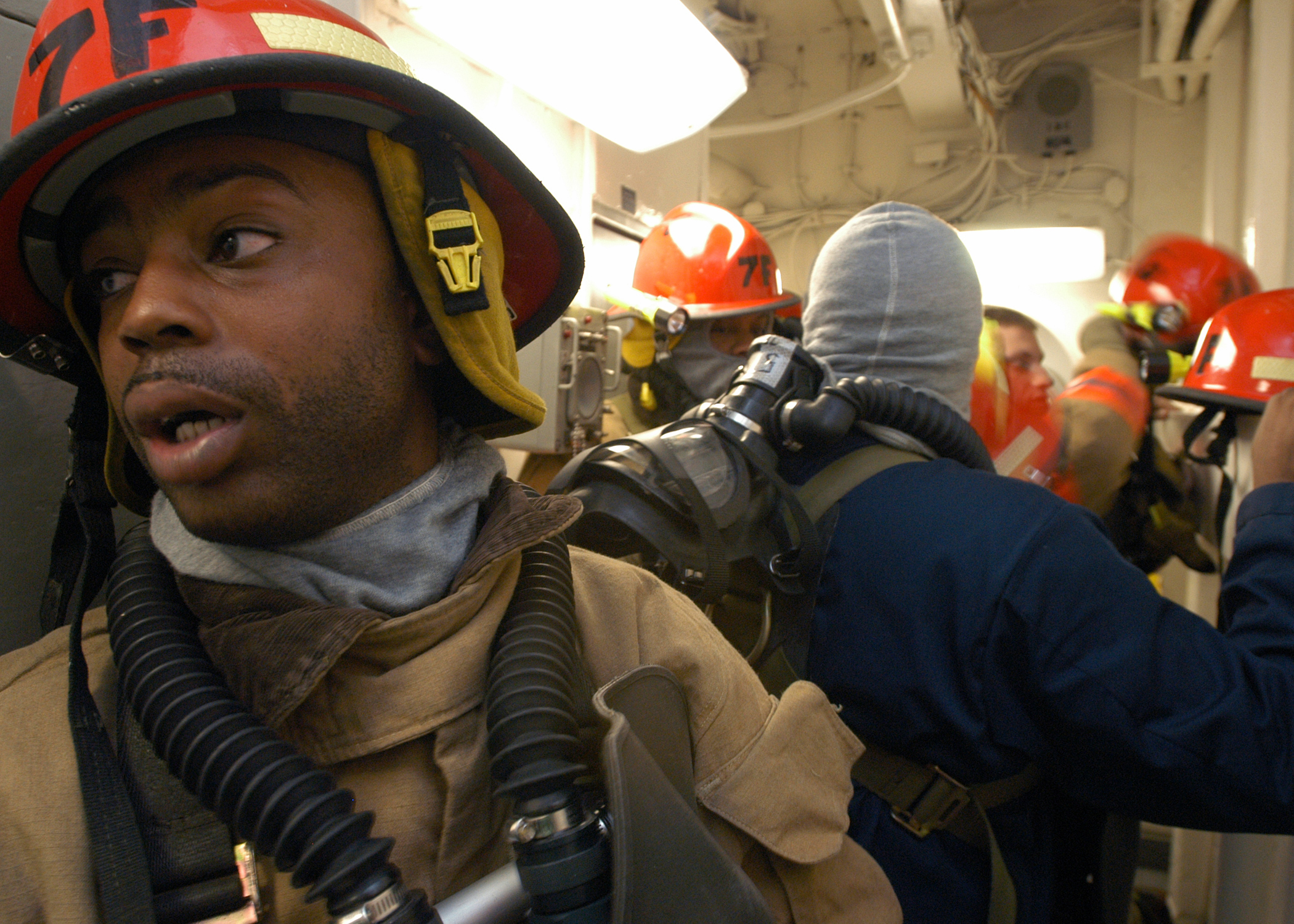
    Richard Bosarge sued Cheramie Marine LLC (“Cheramie”) under the Jones Act after he allegedly suffered injuries aboard one of its utility vessels. See 46 U.S.C. § 30101. Before starting work, he had to complete a physical. During the physical, Bosarge responded he did not have any prior back pain or injuries, even though he had previously received medical care for his back pain. Nonetheless, Cheramie hired Bosarge to work as a relief captain. 

    Bosarge claimed he was injured due to the captain’s decision to travel through rough seas. He alleged the captain’s path caused him to come out of bed and get slammed down. Cheramie argued the waves were not that big, and Bosarge had not reported having an accident. The jury found Bosarge had not suffered an accident. Further, the jury also found Bosarge misrepresented or concealed facts during his pre-employment physical. 

    Bosarge appealed, arguing there was insufficient evidence to support the jury’s verdict. However, because Bosarge did not move for a directed verdict, new trial, or judgment notwithstanding the evidence, the appellate court could not review whether sufficient evidence existed. See OneBeacon Ins. Co. v. T. Wade Welch & Assocs.

    On appeal, Bosarge also argued the district court had confused the jury with the word “accident” in the jury instructions. He claimed the word “accident” suggests the incident occurred without fault. The appellate court found the verdict did not need to be overturned solely because the district court judge had not exactly followed the Pattern Jury Instructions provided by the Fifth Circuit. The appellate court pointed to the definition of “accident” in the dictionary, which states the event can result from carelessness or ignorance. Additionally, Bosarge did not provide any evidence that an ordinary person’s use of the word “accident” assumes that no one is at fault. Therefore, in light of the district court’s broad discretion with respect to jury instructions, the appellate court ruled there was no error requiring the case to be reversed. 

    Bosarge also argued the district court should not have allowed Cheramie’s expert to opine about an MRI film from before the accident because he had not received this record before the trial. The appellate court ruled the district court did not err in allowing this evidence because the expert report had been disclosed months earlier. The district court also ruled the MRI films could not be admitted into evidence. 

    This case shows one can recover for injuries sustained during rough seas if one can prove the captain or company’s negligence. Unfortunately for Bosarge, he couldn’t convince the jury Cheramie’s captain was negligent in his actions. He also wasn’t successful in his attempt to overturn the jury’s decision through the appeal. With better facts or evidence, perhaps he could have prevailed. A good lawyer can help advise you on what you need to do prior to and during a trial to preserve possible arguments for appeal. For example, they can help you move for a directed verdict or judgment notwithstanding the evidence. They can also help advise you on appropriate jury instructions and admissible evidence. 

    Additional Sources: Bosarge v. Cheramie Marine, LLC

    Written by Berniard Law Firm

    Additional Berniard Law Firm Article on the Jones Act: Personal Injury Case in Louisiana Appellate Court Examines Jones Act Seaman Status

  • Can a State Fire Marshall be liable for Inspector Negligence in a Wrongful Death Lawsuit in Louisiana?

    People rely on public services daily, from fire departments to police officers. But what happens if a public entity is responsible for an injury? Can they be held liable for negligence? A recent case out of Grand Isle, Louisiana, shows how public entities can be shielded from liability for negligent conduct in some circumstances. It also helps answer the question; Can a state fire marshall be liable for inspector negligence in a wrongful death lawsuit in Louisiana?

    In 2012 a fire in the Willow Creek Apartments in Grand Isle, Louisiana, killed two occupants, Belle Christin Brandl, and Timothy Joseph Foret. Brandl’s three children filed a wrongful death lawsuit against the apartment’s owners, Steven Caruso and Willow Creek, L.L.C., their insurers, and the State of Louisiana through the Department of Public Safety and Corrections, Office of the State Fire Marshal (SFM) and its inspector. The plaintiffs argued Marchiafava as an inspector, failed to properly look into reports of fire hazards that caused the fire, failed to notify the building owners of any hazard and resolve the hazard, and falsified reports regarding his inspection of the Willow Creek building. SFM and the inspector denied the allegations arguing the inspector did investigate an unverified public complaint at the building, which revealed no serious life hazards. Further, the residents of the building did not have any further complaints of hazards. 

    SFM and the inspector filed an exception of no cause of action on the grounds SFM and the inspector did not owe a legal obligation, otherwise known as a duty, to the plaintiffs. The trial judge granted the exception. Then SFM and the inspector filed a motion to dismiss the complaint, which was granted, and the plaintiffs filed an appeal. 

    Upon review, the courts agreed even if the inspector failed to inspect the building properly, that would not be enough evidence to support a negligence claim. La. R.S. 9:2798.1 protects public entities from liability when their employees act under their own discretion. This is because the courts do not want to impose on legislative policy formation by imposing liability on public entities for discretionary decisions. 

    In this case, SFM is a public entity that is shielded from any liability for the negligence of its employees so long as the employee had a legal obligation to the general public rather than a specific individual. Dufrene v. Guarino. The court found the inspector was acting under his discretion per La. R.S. 40:1563(C). That law provides a fire marshal may, at his discretion, report any complaint from a citizen to the appropriate fire prevention bureau, and the fire marshal may conduct a joint inspection with the fire prevention bureau. In this case, the inspector used his discretion to contact the Grand Isle Fire Chief to conduct a fire inspection of the apartment building. 

    Further, the court disagreed the inspector’s falsified records were a negligent act that led to the fire. The court reasoned facts demonstrate the inspector had falsified his records to show he did a second inspection of the apartment only after the fire happened. Meaning the inspector’s misconduct could not have led to the fire because he made the false report after it had already happened. 

    This case demonstrates public entities tend to be protected from negligence liability. Especially so when their employees act with discretion and owe a general legal obligation to the public. Conversely, public entities are more likely to be liable for negligence cases when they owe a legal obligation to a specific person, which is a higher standard to meet for a plaintiff. A complex case with complex legal issues such as this requires a skilled lawyer.

    Additional Sources: CLAIRE COCHRAN, ET AL VERSUS STEVEN CARUSO, WILLOW CREEK, L.L.C., LOUISIANA DEPARTMENT OF PUBLIC SAFETY AND CORRECTIONS, OFFICE OF THE STATE FIRE MARSHALL, NUNZIO MARCHIAFAVA, AND WESTERN HERITAGE INSURANCE CO. 

    Written by Berniard Law Firm

    Other Berniard Law Firm Articles on Wrongful Death Cases: Court Increases Damages Award in Wrongful Death and Survival Action Lawsuit

  • What do I need to Prove for A Slip and Fall Lawsuit in Louisiana?

    If you are walking down the aisle of a store and fall and injure yourself, you may think you have a winning lawsuit. However, that is not always the case. A recent lawsuit out of Gretna, Louisiana, establishes what a plaintiff needs to prove when filing a slip-and-fall lawsuit in Louisiana. 

    Terry Collins was walking down one of the lumber aisles in a Home Depot in Gretna, Louisiana when he slipped and fell on a liquid substance spilled on the floor. Home Depot and ISS Facility Services, Inc. had a Maintenance Services Agreement and before Collins fell, ISS employees used a floor-cleaning machine around where Collins slipped. Following the accident, Collins and his wife filed a lawsuit against Home Depot and ISS.

    Home Depot moved for summary judgment, asking the court to decide in its favor based on the current facts. Home Depot argued under La. R.S. 9:2800.6. Collins failed to prove Home Depot had actual or constructive notice, meaning Home Depot employees were actually aware of or should have been aware of the spilled liquid in the aisle. 

    La. R.S. 9:2800.6 requires plaintiffs who are suing businesses to prove that (1) the store owed the plaintiff a legal obligation to keep the premises safe and free of hazards, such as the slippery substance (2) the dangerous condition presented an unreasonable risk of harm and that risk was foreseeable (3) the defendant had actual or constructive notice of the condition prior to the accident and (4) the defendant failed to exercise reasonable care. Reasonable care is defined as what a reasonable business would do in the same or similar circumstances. 

    In support of its motion for summary judgment, Home Depot attached the plaintiffs’ petition for damages and a portion of Collins’ deposition testimony. The testimony revealed Collins had been down the aisle where he fell twice within 30 minutes. The second time Collins walked down the aisle, he said he slipped on liquid streaks he believed were caused by the ISS employees. However, Collins said he had never witnessed the employees cleaning the floor when he walked down the aisle for the first time. 

    Further, Home Depot also attached an affidavit from Christina LaBbombard, a Home Depot Senior Manager, which confirmed the Maintenance Service Agreement between ISS and Home Depot was in effect on the day Collins was injured. The affidavit also revealed ISS employees were not on Home Depot payroll and Home Depot had no authority or control over how the ISS employees performed their work. Further, Home Depot did not own the floor-cleaning machine the ISS employees used to clean the floor. Lastly, Home Depot included another affidavit from the Assistant Store Manager, James Barger. Barger said he went to the aisle within minutes of Collins falling and he never saw any liquid on the floor. According to Barger, no Home Depot employees used the floor-cleaning machine and no other customers complained of any liquid on the floor. 

    After a hearing, the trial court granted Home Depot’s motion for summary judgment because ISS was an independent contractor and the plaintiffs failed to prove Home Depot had any knowledge of the condition. The plaintiffs then filed an appeal seeking to overturn the summary judgment ruling. The court of appeals first considered whether Home Depot created the dangerous condition, causing Collins to fall. Collins argued there was a reasonable dispute as to whether the ISS employees could be considered Home Depot Employees, making the company liable under vicarious liability

    Vicarious liability is when employees are liable for the actions of their employees when they are acting within the scope of their employment. Ultimately, the court found Home Depot did not have enough control over the ISS employees to make the company vicariously liable. This is because Home Depot did not have any authority over how the ISS employees conducted the maintenance and Home Depot did not supervise the ISS employees. Next, the court evaluated whether Home Depot had constructive knowledge of the liquid. Under La. R.S.9:2800.6(B)(2) plaintiffs to have present “positive evidence” of the existence of the condition before the accident in order to establish constructive knowledge. Collins failed to present any such evidence and Home Depot provided evidence no other customers complained of any liquid on the floor. 

    This case makes clear although a slip and fall may have occurred within a certain business, the business may not be at fault if an independent contractor caused the supposed condition. This emphasizes the importance of naming the correct defendants in a lawsuit and presenting enough evidence in order for the case to make it to trial. It also helps show what is needed to prove a slip and fall lawsuit in Louisiana.

    Additional Sources: TERRY COLLINS & LAINIE COLLINS VERSUS THE HOME DEPOT, U.S.A., INC.

    Written by Berniard Law Firm

    Other Berniard Law Firm Articles on Slip and Fall Accidents: Wal-Mart Not Liable For Slip And Fall Accident in Houma, Louisiana

  • Utility Ground Hole Fall Lawsuit Fails on Lack of “Constructive Notice”

    If you fall into a utility box with no cover, one would likely think they can recover for the damages they endured. However, in Louisiana, lawsuits aren’t as easy as you think. For example, is a company responsible for the utility box if it didn’t have “constructive notice” the ground hole cover was defective? The following lawsuit out of New Orleans shows the difficulties encountered when suing a utility company for a ground hole cover fall.

    Antoine Perrier fell into a utility ground hole near the intersection of Press Drive and Haynes Boulevard. Perrier filed a lawsuit against Bellsouth Communications in which he alleged a failure to maintain the protective cover over the utility box. Perrier also noted that Bellsouth was liable due to the lack of adequate warnings of the dangerous condition of the utility hole near the busy Boulevard.

    Believing they were not liable, Bellsouth filed a motion for summary judgment. Under La. C.C.P. art. 966(B)(2) a court should grant summary judgment when there is no genuine dispute of any material fact. If a plaintiff such as Perrier won’t be able to prove his case at trial then a court will dismiss it. This procedure allows for the efficient use of the court’s time. The summary judgment filed by Bellsouth, in this case, focused on constructive notice.

    Constructive notice is a principle tantamount to a trip and fall lawsuit in Louisiana. To have constructive notice, a plaintiff must prove the condition (here, the faulty utility box cover) existed for such a period of time the exercise of reasonable care would have discovered it. La. R.S. 9:2800.6(C)(1)

    Bellsouth proved it had no constructive notice of any defect in the summary judgment filing. Bellsouth submitted evidence they were entitled to summary judgment, including (1) they were not the property owners where the incident occurred, and (2) the utility box was located on a public right away the city-owned. They also submitted evidence the city owned it because they cut and maintained the grass surrounding the area.

    After Bellsouth established those facts It was up to Perrier to make a positive showing to support his claim with evidence. While Perrier argued Bellsouth had constructive notice because the utility hole and fiber cables were damaged by Hurricane Katrina and failed to repair it. Bellsouth replied they had yet to have prior notice of problems or defects in relation to the utility hole cover. Further, Bellsouth argued the engineering documents used by Perrier to assert no repairs had been made showed the opposite. The records showed Bellsouth performed extensive repairs to fiber cables after hurricane Katrina.

    The appellate court agreed that Bellsouth made a case the city-owned and maintained the property by cutting the grass near the utility box. Further, Bellsouth performed care in extensive repairs to the fiber cables after Hurricane Katrina. The appellate court agreed with the trial court there was no genuine issue of material fact as it pertained to Bellsouth having constructive notice the utility ground hole cover was defective. Therefore Perrier’s lawsuit was dismissed.

    The Perrier lawsuit shows the complexity of proving a ground hole trip and fall against utility companies. Constructive notice, summary judgment, and other legal maneuvers may sink your case before it gets to trial. Make sure you hire an experienced attorney before filing such lawsuits. 

    Other Sources: ANTOINE PERRIER VERSUS BELLSOUTH COMMUNICATION SYSTEMS, LLC.

    Written by Berniard Law Firm Writer Brianna Saroli

    Other Berniard Law Firm Articles on Summary Judgment and Trip and Fall Lawsuits: Plaintiff Fails to State Slip and Fall Claim Against Metairie Cafe Owner

  • Baton Rouge Recreation and Park Commission Found Not at Fault for Child’s Injuries

    When someone is injured in an accident, the question often arises, who is at fault? Certain factors must be met to find fault in an injury case. The following case outlines the elements which must be proven to file a personal injury lawsuit against a public park in East Baton Rouge.  

     While climbing spectator bleachers at a park, two-year-old Derrick Albert Jr. (DJ) fell and landed on a concrete surface. DJ’s parents, Brittany Hasbert and Derrick Albert, Sr., brought a claim against the Baton Rouge Recreation and Park Commission (BREC) for the Parish of East Baton Rouge, pursuing damages for the injuries DJ sustained from his fall. 

    After receiving the lawsuit, BREC filed a motion for summary judgment to dismiss their claims. BREC argued DJ would be unable to prove the bleachers were defective and the bleachers were the cause of his injuries. BREC also argued that it didn’t have actual or constructive notice of a defect in the bleachers. 

    The Louisiana Nineteenth Judicial District Court granted BREC’s motion for summary judgment. DJ then appealed to the Louisiana Court of Appeal First Circuit

    Summary judgment applies only when there is no genuine issue of material fact after the evidence has been reviewed. La. C.C. P. art. 966(B)(2). A genuine issue consists of a triable issue. See Smith v. Our Lady of the Lake Hosp.  Additionally, a material fact exists when they potentially insure or preclude recovery. See King v. Illinois Nat. Ins. Co.

    In this case, the Court of Appeal investigated the limitation of liability for public bodies. La. R.S. 9:2800. This law states that to prove BREC was liable for DJ’s injuries, the parents must be able to establish five factors: 

    1. That  BREC had custody or ownership of the defective bleachers,
    2. The defect in the bleachers caused an unreasonable risk of harm,
    3. BREC had actual or constructive notice of the defect,
    4. BREC failed to correct the defect in a reasonable time, and 
    5. Causation existed. 

    In support of its motion for summary judgment, BREC presented the affidavit of a senior risk manager for the entity. This affidavit stated there were no reported complaints or other incidents to demonstrate the alleged bleacher defects before DJ’s fall. The affidavit also noted that BREC did monthly inspections on the bleachers, indicating they were defects-free. Further,  the parents’ lawsuit was the first and only complaint involving the bleachers. BREC also introduced testimony from the company’s representative stating the bleachers were routinely inspected for hazards. Finally, BREC introduced testimony from witnesses, including DJ’s grandmother, who said they saw the child walking up the bleachers but did not see how he fell. 

    On the other hand, the parents argued there was a wide gap between the top bleacher seat and the guardrail. This, as well as unstable wooden boards, equates to defects that caused DJ’s fall. Additionally, the parents introduced an affidavit from a certified playground safety expert. This affidavit stated the bleachers were not in compliance with the Consumer Products Safety Commission Bleacher Guidelines. In response, BREC argued the guidelines were not mandatory, and any gaps in the bleachers were open and obvious to any users.  

    The Court of Appeal found that BREC demonstrated an absence of factual support for essential elements of the parents’ claims. In addition, the Court of Appeals held that BREC had no actual or constructive notice of any defect in the bleachers, as there had been no prior complaints or incidents relating to the parents’ arguments. Accordingly, the Court of Appeal affirmed the District Court’s granting of summary judgment in favor of BREC. 

    This case demonstrates the need for understanding the elements that go into a personal injury lawsuit. The fact that someone, including a child, is injured in a public park does not necessarily mean the entity was at fault. An experienced attorney may be needed to explain the elements and determine a lawsuit’s viability. 

    Additional Sources: BRITTANY HASBERT INDIVIDUALLY AND ON BEHALF OF If HER MINOR SON, DERRICK ALBERT, JR., AND DERRICK ALBERT, SR. VERSUS THE RECREATION AND PARK COMMISSION FOR THE PARISH OF EAST BATON ROUGE

    Written by Berniard Law Firm Blog Writer: Samantha Calhoun

    Additional Berniard Law Firm Articles on Summary Judgment: Plaintiff in Lawsuit Involving Injury at St. Francisville Resort Fails to Survive Summary Judgment — Louisiana Personal Injury Lawyer Blog

  • Considering a Lawsuit? Don’t Discard Evidence Critical to Your Case

    An important safeguard in the law is the requirement for an accusing party to support its allegations with facts and, ultimately, evidence. There are multiple reasons to have this protection in place. Proceeding with a claim that makes a wrong conclusion against another party would not be particularly fair or just, nor would it be an effective use of court resources.

    Louisiana courts entitle a party to move for summary judgment to press the opposing side to demonstrate there is a genuine dispute to resolve. La. Code Civ. P art. 966. If, for example, a plaintiff makes a claim that requires the support of physical evidence that they cannot produce, summary judgment will be granted. The following case out of Washington Parish, Louisiana, shows why, if you are considering a lawsuit, you should never discard evidence critical to your case. 

    Robert D. Byrd used a home-based oxygen machine provided by Pulmonary Care Specialists, Inc. (PCS). He was hospitalized for respiratory failure after being found unconscious by his mother, who reported that the machine was running at the time. Byrd’s machine did not undergo maintenance or repair before the incident. However, his mother did request service one day earlier. Byrd’s mother subsequently set the oxygen machine out with the trash, preventing follow-up testing or inspection. 

    Byrd filed a lawsuit against PCS for 1) negligence based on lack of service that resulted in the device’s malfunction and 2) breach of duty to provide safe equipment. PCS moved for summary judgment on both claims due to an absence of evidence linking Byrd’s respiratory failure to the usage of its product, which the trial court granted.

    In the appeal that followed, various issues arose due to late filings, problematic motions, and questions about the sufficiency of Byrd’s appellate brief. However, the First Circuit Court of Appeal was generous in sifting through the mistakes to identify actions that could be brought to a resolution.

    First, the First Circuit Court of Appeal affirmed the trial court’s finding of negligence due to insufficient product support because there was no evidence to indicate the oxygen machine had malfunctioned. Additionally, no evidence was put forward to argue a malfunction led to Byrd’s respiratory failure. The Court of Appeal noted in the record that the evidence revealed no witness who could testify to what occurred at the time of Byrd’s respiratory failure. 

    Further, considering the machine itself was missing, Byrd couldn’t produce an expert who tested it to opine whether or not the alleged malfunction occurred. It was up to Byrd to present evidence of this nature to defeat summary judgment. He didn’t, and the trial court’s decision was upheld, dismissing Byrd’s case.

    Byrd’s situation demonstrates how a plaintiff needs to connect all the dots to prove an injury was caused by negligence. Unfortunately, any chance of gleaning evidence to support his claim became unavailable when the device was discarded. If there is any possibility you will seek a legal remedy for a personal injury, proceed with caution: keep hold of vital information and let an experienced lawyer guide the way.

    Additional Sources: Robert D. Byrd vs. Pulmonary Care Specialists, Inc.

    Written by Berniard Law Firm Blog Writer: Emily Toto

    Additional Berniard Law Firm Article on Medical Device Failure and Negligence: Tragic Incident Involving Infant Demonstrates Assignment of Liability