 This case focuses on the procedural aspects of a personal injury lawsuit, highlighting the importance of deadlines and the consequences of missing them.
Case Background
Charles and Jeri Kouba sued the City of Natchitoches after Mr. Kouba fell on a staircase owned by the city. They alleged a defect in the staircase caused his injuries. The City filed a motion for summary judgment, which the Koubas opposed. However, they missed the deadline to file their opposition and requested a continuance (postponement) of the hearing. The trial court denied their request and granted summary judgment in favor of the City.
Motion to Continue
The Koubas argued that they needed more time to gather evidence and expert opinions to oppose the summary judgment motion. However, the appeals court found no abuse of discretion in the trial court’s denial of their continuance request. Here’s why:
- Missed Deadline: The Koubas missed the statutory deadline to file their opposition to the summary judgment motion.
- Purpose of Continuance: The court explained that the purpose of allowing continuances in summary judgment proceedings is to give parties time to comply with deadlines, not to excuse missed deadlines.
- Lack of Good Cause: The Koubas’ reason for missing the deadline was their attorney’s calendaring error, which the court did not consider a sufficient “good cause” for a continuance.
Summary Judgment
The court then reviewed the summary judgment ruling itself, applying the same standards as the trial court:
- Burden of Proof: The City, as the moving party, had the burden to show that there was no genuine issue of material fact.
- Premises Liability: In Louisiana, to hold a public entity liable for an injury on its property, a plaintiff must prove several elements, including that the property was defective, the defect posed an unreasonable risk of harm, and the entity had notice of the defect.
- Lack of Evidence: The court found that the Koubas failed to present sufficient evidence to create a genuine issue of material fact regarding the City’s knowledge of any defect in the staircase.
Exclusion of Evidence
The Koubas also argued that the trial court erred in excluding photographs they attempted to introduce. However, the court found no error because the Koubas had missed the deadline to file these photographs with their opposition to the summary judgment.
Key Takeaways
- Deadlines Matter: Meeting procedural deadlines is crucial in legal proceedings. Failure to do so can have serious consequences.
- Summary Judgment Standards: Summary judgment can be a powerful tool to resolve cases efficiently when there are no genuine factual disputes.
- Premises Liability: Proving a premises liability claim against a public entity requires evidence of a defect, an unreasonable risk of harm, and the entity’s knowledge of the defect.
Outcome
The appeals court affirmed the trial court’s decision, upholding the denial of the continuance and the grant of summary judgment in favor of the City. This case underscores the importance of diligence in meeting procedural deadlines and the necessity of presenting sufficient evidence to survive a summary judgment motion.
 The
The  In a ruling emphasizing the critical importance of adhering to legal deadlines, the
  We’ve all heard the phrase “slip and fall,” often in a comedic context. However, slip-and-fall accidents can result in severe injuries and legal battles. The recent Louisiana Court of Appeal case of Barton v. Walmart highlights the complexities of such cases and what it takes to prove a merchant’s liability.
 We’ve all heard the phrase “slip and fall,” often in a comedic context. However, slip-and-fall accidents can result in severe injuries and legal battles. The recent case of
  David Cox delivered four pallets of shirk-wrapped material for his employer, Southwestern Motor Transport, in June 2012. The delivery location was the Baker Distributing Company warehouse in Shreveport, Louisiana. Baker’s delivery dock did not have a dock plate. A dock plate is a metal bridge connecting a truck’s back to the loading dock. There is an empty space between the back of the truck and the loading dock without a dock plate. In addition, Cox found that the loading dock was cluttered with several objects. Due to this clutter, Cox could not use a forklift to unload the truck.
  Lawsuits involving slip and fall accidents are widespread. However, specific requirements must be satisfied to prevail in a slip-and-fall case. The following lawsuit helps answer the question: Can a business be held liable if a patron slips and falls on a wet walkway?
  When it comes to personal injury claims resulting from slips, trips, or falls, the concept of open and obvious defects plays a significant role. Failing to act reasonably or being harmed by an apparent defect may hinder your ability to recover compensation for your injuries. This case exemplifies the importance of these factors in determining liability.
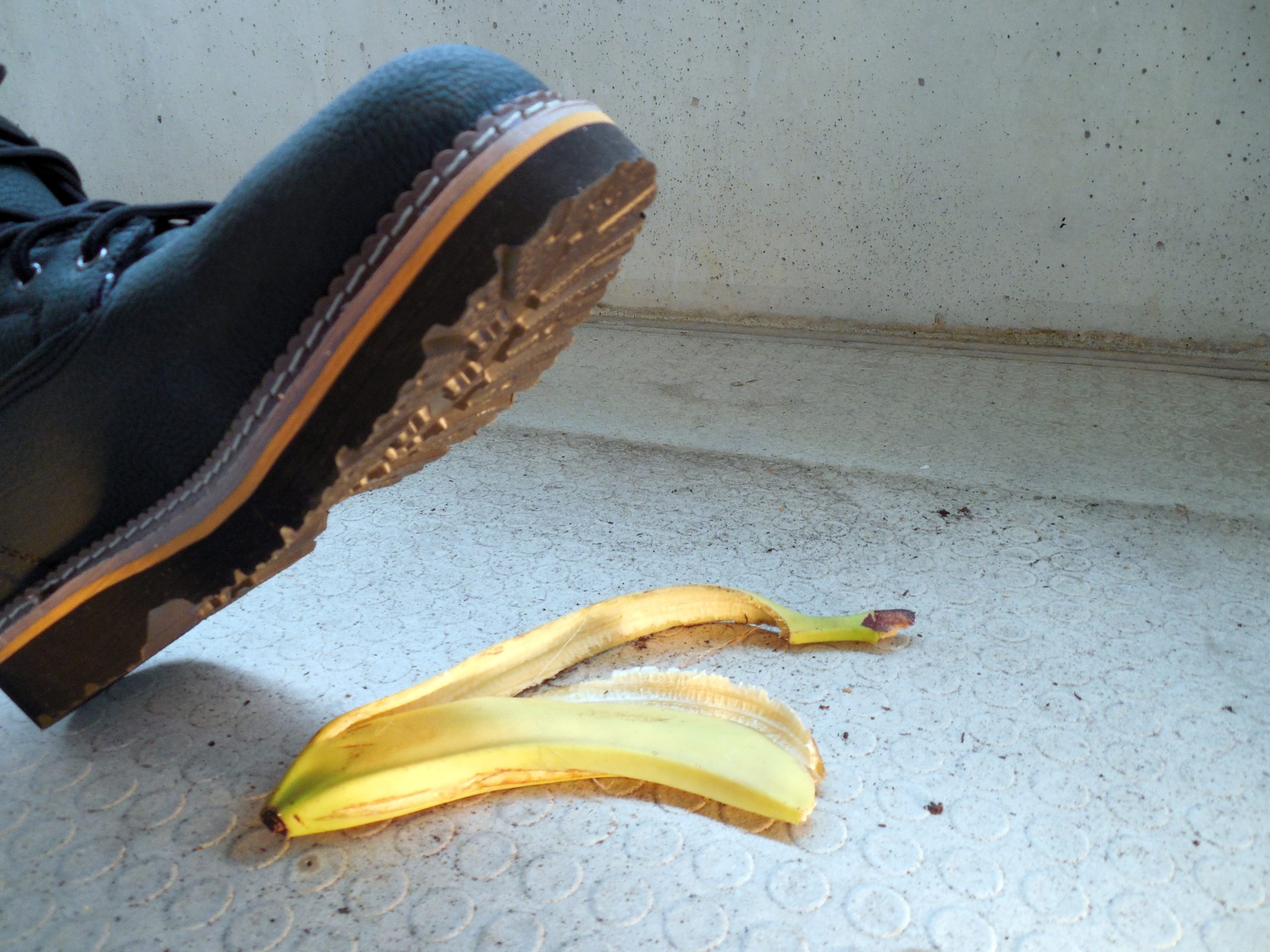 When you make a quick run to the store, the last thing you expect is to be injured while shopping. If you slip and fall at a store, you might expect the store to be responsible for any injuries you might have suffered. However, Louisiana law requires that a store have actual or constructive knowledge of the hazardous condition to be held liable. Therefore, if you are considering filing a lawsuit against a store for a slip-and-fall accident, it is essential to provide evidence of the store’s knowledge so your claim does not get dismissed.
  Imagine attending a routine medical appointment at your local doctor’s office. You enter the premises expecting a standard check-up, but unexpectedly, you trip over a defective threshold and fall onto a hard terrazzo floor. This unsettling scenario is precisely what Lois J. Tate encountered in their accident, sparking a personal injury action against Touro Infirmary and Louisiana Children’s Medical Center. The Louisiana Fourth Circuit Court of Appeal affirmed the Trial Court’s decision to grant summary judgment in favor of the defendants, Touro Infirmary, and Louisiana Children’s Medical Center.