Category: Strict Liability

  • Who’s Responsible When a Step Collapses?

    The following case deals with a common scenario: a guest gets injured at a business and sues, alleging negligence. But the legal outcome hinges on a crucial factor – whether the business owner knew or should have known about the dangerous condition that caused the injury.

    Case Summary

    Melanie Mark was injured when a wooden step on a cabin staircase collapsed at a KOA campground in Lafayette, Louisiana. She sued KOA, claiming they were negligent in maintaining the property. However, the trial court granted summary judgment in favor of KOA, finding that Ms. Mark failed to prove KOA had any knowledge of the defect in the stairs. Ms. Mark appealed this decision.

    Legal Principles

    The court’s decision revolved around Louisiana Civil Code Article 2317.1, which deals with premises liability. Here’s the key takeaway:

    Knowledge is Key: Property owners are only liable for injuries caused by defects if they knew, or should have known, about the defect and failed to exercise reasonable care to prevent the damage.
    The court also considered the duty of care owed by innkeepers to their guests:

    Innkeeper’s Duty: Innkeepers have a heightened duty to ensure their premises are safe and to warn guests of any hidden dangers. This includes conducting reasonable inspections.
    The Court’s Analysis

    The appeals court reviewed the evidence and found no indication that KOA knew or should have known about the rotten step. Here’s why:

    No Prior Complaints: KOA had no record of any prior complaints or issues with the stairs.
    Regular Maintenance and Inspections: KOA conducted regular maintenance and yearly inspections, and no defects were found.
    Hidden Defect: The rot was hidden on the underside of the step, making it difficult to detect even with a reasonable inspection.
    Plaintiff’s Own Testimony: Ms. Mark herself testified that the stairs appeared fine and safe when she used them before the accident.
    Based on this, the court concluded that KOA did not breach its duty of care and was not liable for Ms. Mark’s injuries.

    Important Considerations

    This case highlights some important aspects of premises liability law:

    Burden of Proof: The injured party bears the burden of proving the property owner’s knowledge of the defect.
    Constructive Knowledge: Even if the owner didn’t have actual knowledge, they can still be liable if they should have known about the defect through reasonable care.
    Hidden Defects: Liability is less likely when the defect is hidden and not readily discoverable.
    Outcome

    The appeals court affirmed the trial court’s decision, granting summary judgment in favor of KOA. This means Ms. Mark’s case was dismissed, and she was responsible for the costs of the appeal.

    This case serves as a reminder that proving negligence in premises liability cases requires demonstrating the property owner’s knowledge of the dangerous condition. When a defect is hidden and there’s no evidence the owner knew or should have known about it, it’s difficult to establish liability.

  • Court of Appeal Increases Monetary Damages Award Following Workplace Injury in Monroe Beverage Facility

    Injuries that occur while an individual is working can devastate the injured party’s life in several ways. Not only does the injured party likely earn less money due to the injury, but other damages, such as medical expenses and loss of enjoyment of life, may also result.

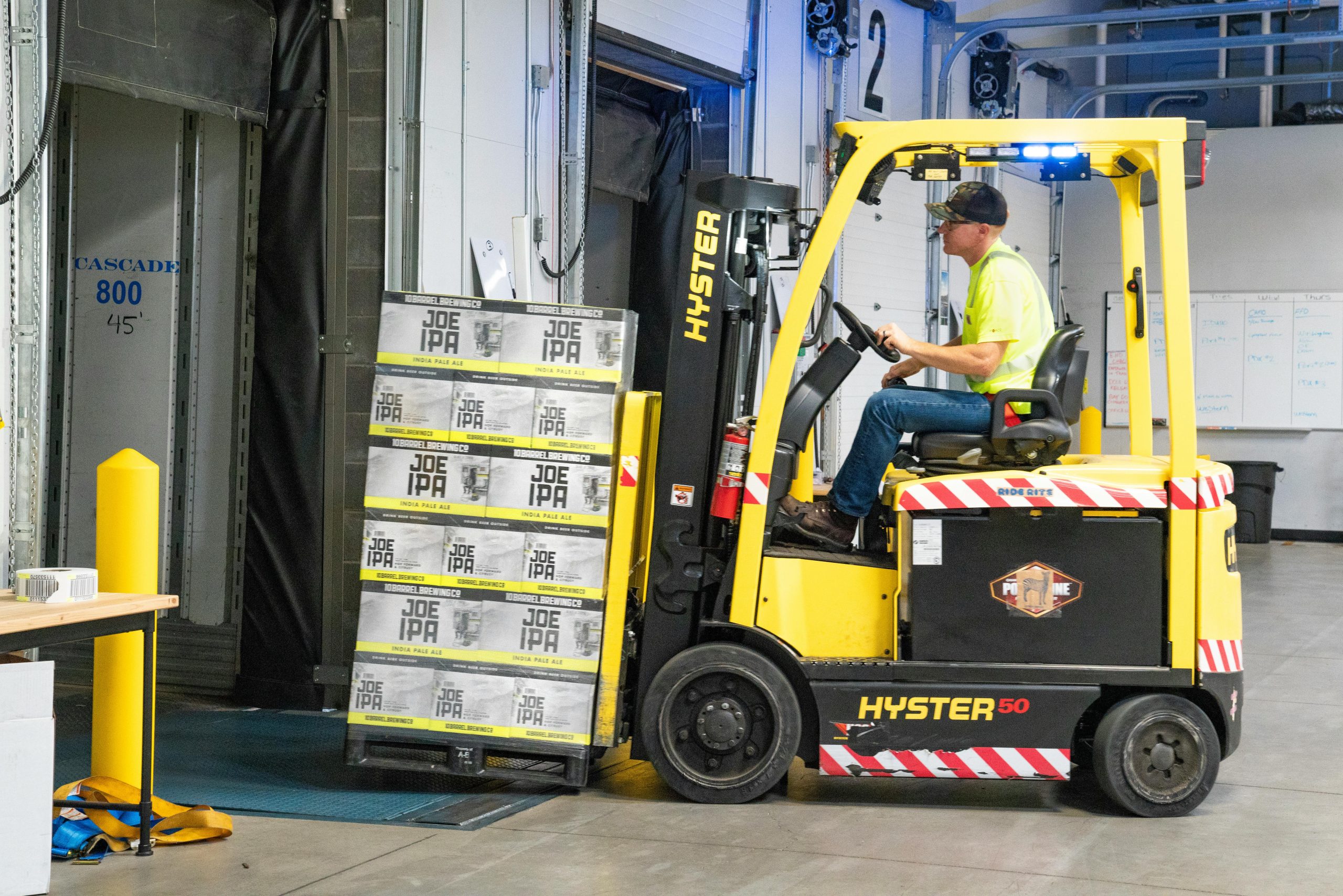
    James Thomas was a forklift operator for Marsala Beverage Company (“Marsala”) in Monroe, Louisiana. In addition to operating forklifts, Thomas routinely moved cases of drinks by hand and performed janitorial duties around the facility. On one occasion, when Thomas was operating a forklift to unload pallets of drinks, the forklift fell out of the back of a delivery truck, landing several feet below onto concrete.

    After the fall, Thomas visited Marsala’s company doctor, Dr. George Woods, complaining of pain in his back. Dr. Woods examined Thomas and ordered x-rays, which showed no evidence of fractures in Thomas’s spine. During the visit, Thomas explained to Dr. Woods that he wanted to return to work as soon as possible to receive bonus compensation based on the number of hours he worked that week. Dr. Woods cleared Thomas to return to work, which he did even though he continued to experience back pain.

    After several months, Thomas stopped working and filed a lawsuit against Louisiana United Businesses Association Casualty Insurance Company (“LUBA”). Marsala’s insurance carrier. In the petition, Thomas sought damages for physical and mental suffering, medical expenses, inability to earn past and future wages, disability, and loss of consortium.

    At trial, the jury awarded Thomas $40,000 for general damages, $34,977 for inability to obtain past wages, and $40,000 for previous medical expenses. It also awarded Thomas’s wife $10,000 for loss of consortium. Subsequently, the trial judge decreased Thomas’s total award to approximately $50,000 based on Thomas’s failure to mitigate damages.

    Thomas appealed to Louisiana’s Second Circuit Court of Appeal. The first issue on appeal was whether the $40,000 award for general damages was, as Thomas argued, abusively low. The purpose of general damages is to compensate an injured party for pain and suffering that cannot be precisely calculated. Duncan v. Kansas City Southern Railway Company, 773 So.2d 670 (La. 2000). There is no definitive way to calculate general damages, Terry v. Simmons 215 So.3d 410 (La. Ct. App. 2017), but a jury should consider the severity and duration of pain and suffering that the injury caused. LeBlanc v. Stevenson, 770 So.2d 766 (La. 2000). The Court of Appeal affirmed the jury’s award of $40,000 in general damages based on the fact that the jury based the amount on evidence that the duration and the severity of Thomas’s injury were low.

    Additionally, much of the evidence revealed discrepancies in Thomas’s accident description. These discrepancies likely reduced Thomas’s credibility with the jury. The Court specifically noted that Thomas’s Facebook posts following the injury were inconsistent with the level of activity that he reported to doctors and that Thomas described the details of the accident differently to six different doctors he visited throughout treatment

    The second issue for the Court of Appeal was whether the jury’s decision to not award Thomas damages for future medical expenses was reasonable. Under Louisiana jurisprudence, a party must provide evidence of the need for future medical expenses through testimony from a medical expert. Terry v. Simmons 215 So.3d 410 (La. Ct. App. 2017). An appellate court must only determine if the jury’s award was reasonable. Menard v. Lafayette Ins. Co. 31 So.3d 996 (La. 2010).

    Here, the Court of Appeal noted that there was no objective medical evidence to show that Thomas continued to suffer pain from the accident. Additionally, several physicians opined that Thomas’s back pain was not caused by the injury but rather by aging. In light of this evidence and Thomas’s failure to show that he would incur expenses for medically necessary future treatment, the Court of Appeal held that the jury’s decision not to award damages for future medical expenses was reasonable.

    The third issue before the Court of Appeal was whether the jury’s award of $34,977 for lost wages was reasonable. A party looking to recover previously lost wages must prove the dollar amount lost and the duration of work missed due to the injury. Boyette v. USAA, 783 So.2d 1276 (La. 2001). The Court of Appeal noted that the jury miscalculated its award for lost wages because it based its figure on 12 months of missed work; Thomas, in fact, could not work for 16 months. Accordingly, given Thomas’s wages of $2,872.33 per month, the jury should have multiplied this figure by 16 months, resulting in a total award for lost wages of $45,957. 

    Next, the Court of Appeal examined the jury’s decision not to award Thomas damages for loss of future earnings. In Louisiana, the loss of future earnings is determined by the decrease in the injured party’s ability to work based on his experience level, type of work, and training. Young v. Marsh, 153 So.3d 1245 (La. Ct. App. 2014). The Court of Appeal affirmed the jury’s decision not to award damages for loss of future earnings based on the fact that Thomas was able to return to performing janitorial duties after the injury as well as Thomas’s failure to provide evidence of the amount of earnings he would expect to lose if he found only a light duty job.  

    The fifth issue for the Court of Appeal was whether Thomas failed to mitigate his damages. In Louisiana, an injured party must reduce damages using reasonable discretion, good faith, and fair dealing. Young v. Marsh (supra). The injured party must comply with whatever treatment is recommended by a healthcare professional reasonably expected to heal the injury. Flemings v. State, 19 So.3d 1220 (La. Ct. App. 2009). An injured party who unreasonably delays medical treatment, where that delay aggravates the injury, is considered to have failed to mitigate damages.

    The trial record indicated that Thomas did not complete all the physical therapy that was recommended and that he did not take all the medication that was prescribed by his doctors. However, the Court of Appeal determined that these failures were the fault of LUBA, not Thomas himself. Since the evidence showed that Thomas reasonably attempted to comply with the recommended medical treatment, the Court of Appeal held that Thomas adequately mitigated damages.

    The sixth issue before the Court of Appeal concerned the jury’s award of $10,000 to Mrs. Thomas for loss of consortium, which Thomas argued was abusively low. A spouse may recover monetary damages for loss of consortium when an injury to a spouse results in loss of companionship, impairment to sexual relations, decreased ability to perform material services, decreased financial support, loss of aid and assistance, and loss of fidelity. La. C.C. art. 2315(B).

    Noting that Thomas was able to help around the house after the injury by performing light duties and that Thomas suffered from high blood pressure and erectile dysfunction for several years before the injury, the Court concluded that the injury did not result in a substantial decrease in the quality of the Thomas’ marriage. Therefore, the $10,000 award for loss of consortium was reasonable and not abusively low. 

    The seventh and final issue for the Court of Appeal concerned the trial court’s prohibition against introducing evidence about the worker’s compensation benefits that Thomas had already received before the trial. The Court determined that since the ban on introducing previously received worker’s compensation benefits is absolute under Louisiana law, the trial court did not err in excluding that evidence from the trial. See La. C.E. art. 414.

    This case demonstrates the importance of retaining an experienced attorney in a workplace injury case. To cite one example, had the attorney representing Thomas failed to notice that the jury incorrectly calculated Thomas’s lost wages award and enumerated that error on appeal, Thomas’s overall recovery would have been reduced by almost $11,000.  

    Additional Sources: THOMAS v.  BOYD ET AL.

    Written by Berniard Law Firm

    Additional Berniard Law Firm Articles on Workers Compensation: Injured Worker Denied Appeal in the City of New Orleans

     

  • Can a business be liable if a patron slips and falls on a wet walkway?

    Lawsuits involving slip and fall accidents are widespread. However, specific requirements must be satisfied to prevail in a slip-and-fall case. The following lawsuit helps answer the question: Can a business be held liable if a patron slips and falls on a wet walkway? 

    While walking with her son in the Treasure Chest Casino parking lot, Linda Cangelosi slipped and fell under the outdoor tent that covered part of the walkway entrance into the casino. Cangelosi slipped while stepping from the roadway to the walkway. At the time of her fall, the ground was wet, with puddles. After he fell, employees of Treasure Chest Casino assisted Cangelosi and called an emergency team. Cangelosi declined their offer to transport her to the hospital and continued to the casino. However, about 45 minutes later, she left because her hip hurt. She consulted with a doctor, who provided her with pain medication. Since the accident, Cangelosi had to use a walker and has been in pain. Cangelosi filed a lawsuit against Treasure Chest Casino. Both Cangelosi and Treasure Chest Casino filed motions for summary judgment. The trial court granted Treasure Chest Casino’s summary judgment motion. Cangelosi appealed. 

    Under La. C.C. art. 2317, the owner of a thing is liable for damage if they knew or should have known about the defect that causes damage, which could have been prevented if the owner had exercised reasonable care. Further, under La. C.C. art. 2322, this also applies to building owners. Therefore, if Cangelosi provided sufficient evidence that Treasure Chest Casino knew or should have known about the wet walkway that caused her slip and did not act reasonably, she could prevail in her lawsuit.

    On appeal, Cangelosi argued the casino’s walkway was unreasonably dangerous and defective, which resulted in her fall. She claimed there was a hazardous condition from the passing vehicles and improper drainage. She claimed her allegation there were all kinds of debris and liquids was sufficient to establish there was a hazardous condition. Treasure Chest Casino countered Cangelosi did not provide sufficient evidence to prove there was an unreasonable dangerous condition they failed to warn patrons about. Treasure Chest Casino specifically pointed to a non-skid product it used on its walkways.

    Additionally, Cangelosi and her son testified they knew the ground was wet because it had rained most of the day. A video of Cangelosi’s fall showed she stepped directly into a puddle, which the appellate court explained was an obvious hazard. Thus, Treasure Chest Casino had adequately supported its summary judgment motion with evidence its walk was not defective. In contrast, Cangelosi had not provided evidence of an unreasonably dangerous condition that caused her fall. Therefore, the appellate court agreed with the trial court’s grant of Treasure Chest Casino’s summary judgment motion because there were no disputes of material facts. 

    This case at the Treasure Chest Casino highlights the importance of establishing liability in such incidents. While Cangelosi argued that the casino’s walkway was unreasonably dangerous and defective, the appellate court ultimately found that she had not provided sufficient evidence to support her claim. The court’s decision underscored the importance of addressing the presence of clear hazards and the responsibility of business owners to ensure a safe environment for patrons. If you find yourself in a similar situation, seeking legal counsel is crucial to understanding your potential for success in a lawsuit against the establishment.

    Additional Sources: Linda Cangelosi v. Treasure Chest Casino, LLC

    Article Written By Berniard Law Firm

    Additional Berniard Law Firm Article on Slip and Fall Accidents: Slip and Fall in Louisiana Convenience Store Lawsuit Discusses Open and Obvious Risk

  • Unfair Trade Practices in Louisiana and Home Foreclosure

    Like many states, Louisiana has an unfair trade practices act. In Louisiana, it is known as the Louisiana Unfair Trade Practices and Consumer Protection Law. Just as the name implies, this law is meant to protect consumers from the unfair, misleading, or fraudulent acts of those provide services, goods, and financing. Any contract or agreement entered into in violation of this law is void. However, the Louisiana Unfair Trade Practices and Consumer Protection Law (“Law”) has a serious limitation; it does not apply to a financial institution that is federally insured, including most banks and lending institutions.

    The Law’s limitation means that an average mortgage arrangement from a large or national financial institution will not be affected by the protection that the Law affords. The United States Court of Appeals for the Fifth Circuit provides an example of this exception in a recent decision. In that case, a woman arranged for a home mortgage through Bank of America. Bank of America then assigned the mortgage to Wells Fargo. Both of these companies are large financial institutions that are federally insured.

    When the woman defaulted on her mortgage, Wells Fargo sought to foreclose on her home. She applied for assistance from a federal government program called Home Affordable Modification Program (“HAMP”) during the foreclosure process. HAMP is designed to help modify mortgages for those who are in foreclosure proceedings so that they can keep their homes and pay a more affordable monthly payment. While the woman’s HAMP application was pending, the foreclosure proceeding was supposed to be put on hold. However, despite this application, her home was sold at a foreclosure sale before she received word back from HAMP to determine whether he application had been approved. She also claimed that she did not receive notice of the sale. Essentially, she argued that her home was sold out from under her without her knowledge.

    She attempted to sue both Bank of America and Wells Fargo. She argued that Bank of America should not have allowed Wells Fargo to purchase the mortgage. She also argued that the foreclosure proceedings violated the Louisiana Unfair Trade Practices and Consumer Protection Law. However, the state court determined that even if they did violate the Law, the Law did not apply to them because of the financial institutions exception.

    After a loss in state court, the woman appealed the case to the federal district court. However, the district court pointed out that it cannot sit as a court of appeals for state-exclusive actions. That means that the federal district court cannot hear a case where the only arguments are based on state law. Instead, a district court can only hear a case where there is some sort of federal jurisdiction based on either federal law or involves parties from different states, unless Congress has authorized the district court to act otherwise. Nonetheless, where a case questions the procedures of the state court, instead of applying substantive state law, then the federal court could hear the case. For example, if the woman argued that he procedure violated her constitutional rights, then the district court would likely be able to hear the case. This concept is known as the Rooker-Feldman doctrine. As the court explains, “Reduced to its essence, the Rooker-Feldman doctrine holds that inferior federal courts do not have the power to modify or reverse state court judgments except where authorized by Congress.”

    In this case, the woman complained that the proceedings in the state court were incorrect; therefore, she was not just asking the district court to review the state court decision. As a result, the district court had the authority to review the case. Despite that fact, the woman failed to state a claim because both Bank of America and Wells Fargo are federally insured financial institutions that are not subject to the Louisiana Unfair Trade Practices and Consumer Protection Law. That meant that the Court of Appeals had to affirm the lower court, and the woman failed in her efforts to appeal.

    It may have been possible to assert other arguments based on federal law, but the woman failed to do so. In fact, there were several arguments that the woman waived because she failed to timely assert them. In an appeal, if you do not assert every argument that you have in your opening brief, then you effectively lose the ability to use that argument at any point in the rest of the appeal. In this case, this may have been crucial to the woman’s case because she failed on the arguments that she presented originally (the state law claims). That point highlights the importance of competent attorneys who can argue effectively for you.  (more…)

  • Careful Review of Home Insurance Policy Crucial


    It is extremely important to review your home insurance policy to determine what types of damages the policy will actually cover, especially in areas prone to suffer from hurricane damages. Under Louisiana law, the insured individual is required to first prove that the insurance policy covers the cause of the claim. For example, if the policy only covers certain types of causes of damage, such as wind and hail, then the insured must prove that the damage was in fact caused by either wind or hail. Once the insured has done this, then the insurance company can argue that the incident is not covered by the policy. Therefore, it is extremely important that the insured take the time to determine the cause of the damage in order to prove that the policy covers their claim.


    A case arising from Lake Charles, Louisiana illustrates this point. In this case, a homeowner suffered roof damage that they believed was caused by Hurricane Ike around September 13, 2008. Four shingles were missing and the insured claimed that this resulted in leakage in several rooms of the home. However, State Farm, the homeowner’s insurance company, determined that the leakage was not caused by Hurricane Ike and reclassified the claim as a “non-hurricane” claim.


    State Farm, using several experts, determined that the leakage resulted from normal wear and tear on the roof, and therefore the homeowner’s insurance policy did not cover the leakage damage. Instead, State Farm concluded that only the four missing shingles were the result of wind and that they were the only damages that State Farm should reimburse to the insured; State Farm did not reimburse the insured for the damages caused by the leakage, but just the replacement value of the four damaged or missing shingles. The total damages that State Farm paid were under $500.00.


    The insured had damages that were estimated at $9,385.00 by one expert and $204,717.78 by another expert. However, while these experts estimated what the cost of the leakage damage and repairing the roof would be, neither expert determined the actual cause of the damages. One of the insured’s experts thought that the wind had lifted the house’s flat roofing, which allowed water to enter the home. However, the expert could not explain why the nails on the flat roofing were still in place if the wind had lifted it. The State Farm expert, on the other hand, determined that the wind damage only included those four damaged or missing shingles and the leakage was actually caused by normal wear and tear. The State Farm expert concluded that there was “no evidence of roof damage that would be caused by severe weather . . . . The roofs, both asbestos shingle and built up roofs and all associated flashings are past their life cycle and are in need of replacement.”


    The insured’s policy did not cover “poor workmanship; wear, tear, deterioration, or latent defect; settling, cracking, or expansion of walls, roofs, or ceilings; or leakage of water from air conditioning systems, household appliances, or plumbing.” Since the State Farm expert determined that the cause of the damage was from normal wear and tear, there was no way that the insured could satisfy the requirement to prove that the policy covered his claim. As such, the court granted State Farm summary judgment.


    The court will grant summary judgment where one party cannot meet their required burden as a matter of law at trial. Summary judgment allows the court to avoid costly trials where there is one clear winner before the trial even begins. In this case, where the insured had no evidence that all of the damage he was claiming was caused by an occurrence included in the insurance policy, the court determined that summary judgment was appropriate. If the insured had employed experts that specifically testified as to the cause of the leakage damage, then the court may have allowed the case to proceed to trial. Further, the insured could have made a more diligent effort to report leakage as it occurred, which would help prevent the damage from spreading in the long run.


    This case illustrates several very important points for the average homeowner. First, you should carefully read your policy so that you know what type of damage is covered. Second, if necessary, you may need to acquire experts that can explain what caused the damage to your home. Lastly, report damages immediately so that you can avoid costly repairs later on.  (more…)

  • Understanding the Direct Action Statute and Insurance Disputes

    Louisiana has a Direct Action Statute that allows injured third parties to sue an insurance company directly when the insurance company’s insured causes an injury. For example, if you are involved an automobile accident where you are not at fault, you can sue the at-fault driver’s insurance company directly instead of suing the at-fault driver themselves. The Direct Action Statute is beneficial because it gives injured third parties access to the entity that will actually pay compensation for the injuries. It can be especially helpful where the insured fails to file a claim with their insurance company themselves. However, the injured third-party’s ability to sue the insurance company directly is limited by the insurance contract between the insurance company and the insured.

    Despite the fact that the insurance contract is between the insurance company and the insured, an injured third party must still comply with most of the terms of the contract. This overarching rule applies specifically to whether the policy covers the insured and whether the policy covers a particular event. The insurance company will ask: Did this person have coverage when this accident happened? and Does this policy cover this type of event? For example, in insurance contracts limited to specific times, the insurance company will not cover a claim that occurred outside the time frame of the contract, regardless of who brings the claim. In a related example, automobile coverage that is limited to only certain vehicles will cover only those vehicles, regardless of who brings the claim. That is, the injured third party can have no greater rights than the insured would have had if he or she brought the complain themselves.

    In a United States Fifth Circuit Court of Appeals case, the court determined that specific requirements of the contract also extend to injured third parties. That case involved a “claims-made-and-reported” policy. That type of policy not only requires that a claim arise within the policy period, but also that the insured (or another party under the Direct Action Statute) had to have reported the claim within the policy period. This type of notice requirement helps insurance companies avoid claims that are reported years after they happen; instead, this policy requires notice within a certain amount of time.

    The case in the Fifth Circuit involved a Lawyers Professional Liability Policy that covered Titan, L.L.C. (“Titan”) for a period of one year. The policy stated that it would cover damages and expenses resulting from “a claim that is both first made against [Titan] and reported in writing to [CNA] during the policy period.” The policy requires that Titan must “immediately give written notice to [CNA] during the policy period . . . of any claim made against [Titan].”

    A lawsuit was filed against Titan while Titan was issuing title insurance policies on behalf of First American. The claim was filed within the policy period, but it was not reported within the policy period. Since Titan was acting on behalf of First American, First American was also injured by Titan’s actions. In order to avoid some liability, First American notified the insurance company (CNA) of the suit, but it was about six months after Titan’s policy had expired.

    The court determined that since neither Titan nor First American gave “written notice . . . within the policy period” as the policy required, then First American did not have a claim, regardless of the Direct Action Statute in Louisiana. Essentially, the court determined that the reporting requirement that Titan was subjected to also applied to First American, who was not a party to the insurance contract. Although First American may have been unaware of the terms of the contract, the court determined that to rule otherwise would give First American broader powers against the insurance company than Titan would have had.

    As someone that might be injured by an insured, it is important to make yourself aware of potential pitfalls like these in the insurance policy. Reporting claims right away can help avoid this type of situation. Navigating insurance contracts and insurance claims can be tricky. Contact The Berniard Law Firm at 1-855-550-5000, and we would be happy to help you with your legal questions and concerns.

  • Uninsured Motorist Coverage: What Are Your Rights?

    When you signed up for automobile insurance, you might have noticed that many states now require automobile insurance agencies to include some sort of uninsured motorist (“UM”) clause in your insurance agreement. Oftentimes, the only way to get out of including this in your coverage, and therefore having to pay a higher premium, is by explicitly rejecting this additional coverage. How exactly do you reject this additional coverage, though? While this might seem like an easy question, most states, including the state of Louisiana, require very specific requirements to be met in order for rejection of UM coverage to be proper.

    In the State of Louisiana, that is exactly the case: In order to get out of paying a higher premium for this uninsured motorist coverage, the insured has to explicitly reject that coverage. And the state of Louisiana has many rules with regard to how to properly complete this task.

    In order for an uninsured motorist rejection to be considered proper, Louisiana courts have found six tasks that must be completed by the insured. In Duncan v. U.S.A.A Ins. Co., 06-0363 (La. 11/29/06), 950 So. 2d 544, the court outlines these six tasks as follows:

    1) initialing the selection or rejection of coverage chosen;
    2) if limits lower than the policy limits are chosen (available in options 2 and 4), then filling in the amount of coverage selected for each person and each accident;
    3) printing the name of the named insured or legal representative;
    4) signing the name of the named insured or legal representative;
    5) filling in the policy number; and
    6) filling in the date.

    While the Court in Duncan did not explicitly deal with the timing of these tasks, a couple years later, the Court in Gray v. American National Propery & Cas. Co., 07-1670 (La. 2/26/08), 977 So. 2d 839, discussed the requisite timing in which the above tasks need to be completed. According to the Court in Gray, all six of these tasks have to be completed before the UM selection form is signed by the insured. The Court also went on to say that the completion of these tasks has to be done in a manner showing that the insured’s signature signifies that he or she agrees with all of the information that is contained in the insurance form. While the Court said that the tasks have to be completed before the UM selection form is signed by the insured, that was not the most important part of the Court’s findings. Rather, the most important part of the Court’s holding was that the insured’s signature needs to signify agreement with all that is contained in the form.

    In the recent case decided by the Louisiana Supreme Court, Edward Morrison v. U.S.A.A Casualty Ins. Co., No. 2012-CC-2334, the Court really focused on the fact that the most important part of the timing of the UM selection form is that the insured’s signature is affirming agreement to all the clauses contained therein. This case primarily deals with task #1 listed above which requires that an individual properly initial the selection or rejection of coverage chosen in order for UM rejection to be considered proper.

    In this case, the insured’s representative clearly meant to reject UM coverage but accidentally did not initial the line that stated such in the agreement form. When the insurer received the form, he or she noticed that the form was incomplete and sent it back to the insured’s representative. At that time, the representative initialed the proper line rejecting UM coverage and returned the form to the insurer. This clearly showed that the insured agreed with all of the clauses and various information contained in the form. Furthermore, all of this was completed before the relevant accident, so the court held the UM rejection valid.

    (more…)

  • Uninsured/Underinsured Motorist (UM) Coverage Limitations in the State of Louisiana

    In a previous blog post, we discussed how exactly uninsured/underinsured motorist (UM) benefits can be rejected in Louisiana. While that post went through some of the legal technicalities involved in rejecting UM coverage, it did not discuss in depth some of the scenarios in which coverage might be rejected and how the court might actually rule despite those legal technicalities.

    This blog post will focus on specific cases and scenarios in which, despite not following every legally prescribed requirement under Louisiana law, the court has decided that coverage was actually properly rejected or limited. Some of these examples involve just a word or two out of place, others involve completely leaving off pertinent information. But all of the below examples make it clear that the parties’ intents are more important that perfectly following the letter of the law.

    The first example deals with a case involving an automobile accident. In that case, the individual driving the car involved in the accident was driving one of his employer’s vehicles. So the question was whether or not the employer’s insurance company, General Insurance Company of America (GICA), had properly produced a valid and enforceable uninsured/underinsured motorist rejection form, as required by the commissioner of insurance. Whether or not this UM rejection form had been properly completed would mean the difference between $100,000.00 and $1,000,000.00 available under the policy. GICA contended that it had filled the form out properly and that coverage should be $100,000.00, and the individual driving the car claimed the opposite and that coverage should be in the amount of $1,000,000.00.

    In that case, the plaintiff argued that the form did not fulfill all requirements as specified by Louisiana statute for proper uninsured/underinsured motorist rejection. Specifically, the form that was signed had an improper title. Despite the fact that the form did not have the exact proper title, the court decided that the form was still valid and enforceable, and therefore, UM rejection was properly executed. The governing factor in the case was whether or not GICA’s intent was clear from the UM rejection form. Because the intent was clear, despite the improper title, rejection was still proper.

    Another example from the Louisiana court system involved a UM rejection form that not only had the title wrong, but also had several other deviations. Despite these errors, the uninsured/underinsured motorist rejection was still deemed proper because the form was clear about the limitation of the coverage. From the form, it was obvious that the party meant to limit UM motorist coverage.

    Yet another case dealt with a form that was missing the insurance company name and policy number. Both of those pieces of information are technically required by law in order for the UM rejection to be valid. However, the court in that case ruled that such omissions will not invalidate an otherwise valid form when it is clear that the intent was to reject UM coverage. The technical errors had little weight on the court’s decision because the overall intent of the parties was clearly stated in the signed document.

    In a Louisiana Supreme Court case, a form did not properly contain the printed name of the legal representative of the corporate insured. However, once again, despite this technical error, the Court determined that the uninsured/underinsured motorist rejection form would not be considered invalid because of that small error because the overall intent of the parties was clear from the form.

    From these examples, it is clear that the courts will not always strictly apply the stated law and that sometimes the overall intent of the parties is more important and carries more weight in determining the validity of a UM rejection form.

    (more…)

  • Accident Reviews Nature of Employer-Employee Relationship

    If you have ever been injured on the job or if you have ever known an employee who broke the law while on the job, you might know something about an employee-employer relationship and the legal obligations that come with such a relationship. Typically, if you are working for an employer and one of the two above-mentioned scenarios happens (in addition to several other possible scenarios), the employer can be held vicariously liable for the actions of the employee. Furthermore, the employer’s insurer might also be held liable if the accident or unlawful behavior happened while on the job.

    A recent case that took place in the Parish of Lafayette helps illustrate some of the issues of the employee-employer relationship and when exactly an employer might be held liable for the actions of someone else. In this Lafayette case, a lady had been riding on the back of a motorcycle when the driver of her motorcycle suddenly collided with another motorcycle. At the time of the accident, the driver was pulling into the parking lot of a truck stop. As a result of the collision, the female rider suffered severe brain injuries and was permanently disabled.

    In response to the serious injuries suffered by their daughter, the woman’s parents each sued several parties and insurers seeking recovery for the damages suffered by both their daughter and themselves individually. One of the parties was a business owner of the truck stop who the parents argued was the employer of one or both of the motorcycle operators involved in the collision. According to the parents’ lawsuits, under the employee-employer relationship, the truck stop owner was vicariously liable because the motorcycle operators were working for the owner of the truck stop at the time of the accident. Despite these allegations, the parents’ suits against the employer were dismissed when the employer filed a motion for summary judgment, which was granted.

    On appeal, the parents argued that the motion for summary judgment should not have been granted for several different reasons, one of them being that there was an issue of fact as to whether or not the two motorcycle operators were employees of the truck stop owner. In response to their appeal, the court shed light on some of the important considerations that must be made when analyzing an employee-employer relationship.

    First, the court looked to another Louisiana case, Savoie v. Fireman’s Fund Ins. Co., 347 So.2d 188 (La. 1977), in order to determine if an employee-employer relationship exists. In determining the existence of such a relationship, one of the main issues that has to be analyzed is whether or not the employer exercises sufficient right of control and supervision over the employee.

    Some of the factors that might result in a court determining that right of control does exist are selection and engagement of a a worker, whether or not the individual receives wages, the power of control the employer exercises over the worker, and whether or not the employer has the power to dismiss the individual.

    Ultimately, the court found that neither motorcycle operator was an employee of the truck stop owner and that the motion for summary judgment was proper. Neither driver received wages from the truck stop owner, and even if one of the motorcycle operators had been delivering a part to the owner, as was alleged, that alone was not enough to make him an employee, especially in light of the fact that the owner and the operator had been friends for years.

    (more…)

  • Business Problems Arise Out Of Ambiguous Contract Terms

    One area where lawyers must continue to improve is drafting contracts. It is imperative that lawyers learn the intricacies of legal writing and the different meanings words have in the legal community and their ordinary meaning. If a word or phrase in a company’s contract is ambiguous, it is susceptible to multiple interpretations and might result in litigation at some point. A common example of litigation like this involves insurance policies. Therefore, it’s important to draft clear and concise contracts in order to save the time, money, and effort associated with litigation.

    Ambiguous contractual provisions are to be strictly construed against the insurer and in favor of coverage for the insured. Insurance coverage is meant to protect the insured, so the public policy reflects this favoring. However, this strict construction rule applies only if the ambiguous policy provision is susceptible to two or more reasonable interpretations. The key is that it must be reasonable, not just another interpretation. If the word or phrase is clear, then no further interpretation is necessary. The words and phrases used in insurance policies are to be construed using their plain, ordinary, and generally prevailing meaning unless the words have acquired a technical meaning.

    This seems to be a clear explanation of how contract terms are to be interpreted, but even so, many cases arise with an insured claiming that a certain phrase is ambiguous and they should not be denied relief under their policy. For example, Herbert Farms, who conducts a rice farming operation in St. Landry Parish, Louisiana, claimed the phrase “rice drying house” in their policy was ambiguous and other reasonable interpretations of the phrase was possible. Herbert Farms filed a claim for losses under its policy when its rice was damaged while in storage, seeking coverage under a section that listed “grain tanks” as covered property. However, there is a clear and unambiguous exclusionary clause that states that property covered in certain sections, including the section listing grain tanks, is not covered. The two pertinent pieces of property not covered in Herbert Farms’ policy were the contents of a rice warehouse and rice drying houses.

    Herbert Farms argued that since the grain tanks were specifically listed in the coverage section, they policy should not be allowed to later exclude these tanks from coverage. They also argued that the storage bins were cylindrical in shape, and therefore do not comport with what a normal person would consider a “house.”

    Even though “rice drying house” is not specifically defined in the policy, it does not make that term ambiguous. The court looked at the ordinary, plain, and generally prevailing meaning of the phrase. The court held that “contents of a rice warehouse” normally includes the rice bins and any other rice storage devices. Furthermore, the grain tanks even meet the ordinary definition of house,” which means structure in the context of rice storage. So when grain tanks are used to store rice that is being dried, they are “rice drying houses” and the contents of the tanks is not covered. Therefore, the court denied Herbert Farms’ claim and affirmed the Western District of Louisiana’s ruling against Herbert Farms.

    Herbert Farms’ rice was ruined because three fans stopped operating. Unable to dry the rice until they were repaired, the rice was stained, making it far less valuable. As a result, Herbert Farms had to sell the rice at a lower price, costing them almost a quarter of a million dollars. Trying to recoup some of these losses, Herbert Farms was likely hoping for a settlement from the insurance company. Unfortunately, when a contract is drafted clearly and concisely, it is imperative for courts not to create ambiguity and stick to the black letter law.