
Category: Wrongful Death

  • Louisiana Medical Malpractice: When the Mailbox Rule Doesn’t Deliver

    Filing a medical malpractice claim in Louisiana involves navigating a complex process, including meeting strict deadlines. One crucial step is timely paying the filing fee to the Patient’s Compensation Fund Oversight Board (PCF Board). But does the “mailbox rule” apply to these payments? A recent Louisiana Court of Appeal case, In re: Medical Malpractice Review Panel Proceedings of Tiffany Anderson, grappled with this question, highlighting the importance of understanding the nuances of the law and the potential consequences of missed deadlines.

    Tiffany Anderson’s Case:

    Tiffany Anderson filed a request for a medical review panel with the PCF Board alleging medical malpractice. She mailed the required filing fee within the 45-day deadline, but the payment was not received by the PCF Board until after the deadline. The PCF Board declared her claim invalid, and the district court upheld this decision. Anderson appealed.

    The Court’s Decision:

    The Court of Appeal reversed the lower court’s ruling, stating that the “mailbox rule” should apply to filing fees. This rule generally states that a mailed document is considered filed on the date it’s mailed, not the date it’s received. The court reasoned that the law doesn’t specify whether “to pay” means the payment must be received or merely mailed within the deadline. In such cases, they favored the interpretation that preserves the claim.

    Dissenting Opinion:

    However, there was a dissenting opinion. Judge McDonald argued that the plain meaning of “to pay to the board” implies receipt of the payment, not just mailing it. He cited previous cases supporting this interpretation and expressed concern that applying the mailbox rule could circumvent the 45-day deadline. He also pointed to recent legislative changes suggesting a trend towards a “date of receipt” requirement.

    Key Takeaways:

    This case emphasizes the following crucial points:

    • Strict Deadlines in Medical Malpractice Claims: The Louisiana medical malpractice process involves strict deadlines. Missing any of them can have serious consequences for your claim.
    • The Mailbox Rule & Its Limitations: While the mailbox rule generally applies to filing legal documents, its applicability to payments like filing fees can be less clear.
    • Importance of Legal Counsel: Navigating the complexities of medical malpractice claims requires experienced legal guidance. An attorney can help you understand the deadlines, ensure timely filings, and advocate for your rights.

    The Tiffany Anderson case serves as a reminder of the importance of adhering to all deadlines in medical malpractice claims. While the court’s decision in this case favored the plaintiff, the dissenting opinion and other legal precedents highlight the potential risks of relying solely on the mailbox rule for payments. When in doubt, it’s always best to err on the side of caution and ensure your payments are received by the deadline.

    Written by Berniard Law Firm

    Other Berniard Law Firm Blog Articles on Medical Malpractice and Prescription Issues: Louisiana Court Upholds Prescription in Wrongful Death Suit, Highlights Joint Tortfeasor Rule and Grieving Widow Granted Opportunity to Fight Prescription in Medical Malpractice Case

  • Louisiana Court Reverses Summary Judgment in Medical Malpractice Case, Highlighting Importance of Fact-Finding in Proving Negligence

    In a significant development for medical malpractice litigation in Louisiana, the Fourth Circuit Court of Appeal recently reversed a summary judgment, underscoring the importance of thorough fact-finding and the potential need for expert testimony in such cases. The case, Diana Deruise-Pierce v. University Healthcare System, L.C., et al., underscores the necessity of thorough fact-finding and the potential need for expert testimony in medical malpractice cases, even when negligence appears evident.

    Case Overview:

    The lawsuit stemmed from the treatment rendered to Mr. Pierce at University Medical Center in New Orleans. Mr. Pierce was admitted for a medical procedure, but his condition deteriorated overnight. Despite this, the medical team proceeded with the planned procedure.

    Tragically, Mr. Pierce went into cardiac arrest during the procedure and passed away. His widow, Diana Deruise-Pierce, filed a medical malpractice lawsuit alleging that the healthcare providers breached the standard of care by transporting and leaving Mr. Pierce unattended in the hallway outside the radiology suite while he was in a severely deteriorated state.

    Trial Court’s Ruling:

    The trial court granted summary judgment in favor of the defendants, relying on the medical review panel’s opinion that no breach of the standard of care occurred. The court also emphasized the absence of independent medical expert testimony to support the plaintiff’s negligence claim.

    Court of Appeal’s Decision:

    The Court of Appeal reversed the summary judgment, highlighting the presence of genuine issues of material fact that precluded summary judgment. The court emphasized the ambiguity surrounding whether Mr. Pierce was left unattended and for how long.

    Crucially, the court recognized that even without expert testimony, a breach of the standard of care could be established if the alleged negligence was so obvious that a layperson could infer it. The court also pointed to the deposition testimony of a fellow physician, Dr. Cooper, which suggested potential deviations from the standard of care.

    While acknowledging the challenges in proving causation without expert testimony, the court stressed the need for further fact-finding to determine the circumstances surrounding Mr. Pierce’s death and whether the alleged negligence contributed to it.

    This case underscores the critical importance of thorough investigation and fact-finding in medical malpractice cases. It highlights that even when negligence seems apparent, a detailed examination of the circumstances is necessary to establish a breach of the standard of care and its causal link to the patient’s injuries.

    The decision also emphasizes the potential role of expert testimony in proving medical malpractice. Still, it acknowledges that negligence may be so evident that expert opinion is not required in some instances.

    This case serves as a reminder that medical malpractice cases are complex and require careful consideration of all relevant facts and evidence. If you or a loved one has suffered harm due to potential medical negligence, it is crucial to consult with an experienced attorney to understand your legal rights and pursue appropriate action.

    Written by Berniard Law Firm

    Other Berniard Law Firm Blog Articles on Fact-Finding and Expert Witnesses: When Do I Need Expert Testimony for a Medical Malpractice Lawsuit? and Appeal Necessary in Car Accident Case Where District Court’s Finding of Fact Strays

  • Louisiana Court Grapples with Complexities of Adoption in Wrongful Death Case

    A recent ruling by the Louisiana Court of Appeal, Third Circuit, has shed light on the complex interplay between adoption and the right to file wrongful death and survival actions. The consolidated cases, stemming from a tragic car accident that claimed the lives of Richard Stewart, Jr., and his two minor children, raised questions about whether adopted children and biological half-siblings can pursue such claims.

    The accident resulted in the deaths of Richard Stewart, Jr., and his two minor children. Mr. Stewart was survived by his wife, Lisa Stewart, and two adult sons, Daniel Goins and David Watts, who were adopted as minors. Additionally, the deceased minor children had a biological mother, Brandi Hardie, who was not a party to the lawsuits.

    Following the accident, multiple survival and wrongful death actions were filed. The central issue was whether Goins and Watts, as adopted children and biological half-siblings, had the right to bring these claims.

    The trial court denied the defendants’ exceptions of no right of action, allowing Goins and Watts to pursue their claims. The court reasoned that biological relationships and dependency, rather than legal classifications, should determine a child’s rights in such cases.

    The Court of Appeal, in a split decision, granted the defendants’ exceptions of no right of action concerning Goins’ claims for the deaths of his biological father and half-siblings. The majority concluded that adoption terminates the legal relationship between the adopted child and their biological parents, barring them from pursuing wrongful death claims.

    Judges Cooks and Savoie dissented, arguing that the Louisiana Civil Code articles governing wrongful death and survival actions do not exclude adopted children or half-siblings. They emphasized the importance of biological relationships and the potential unconstitutionality of denying adopted children the right to file such claims.

    Judge Conery concurred in part and dissented in part, agreeing with the dissenters regarding the inclusion of adopted children and half-siblings but disagreeing on the specific outcome of the case. He highlighted the need for the biological mother of the deceased minor children to be included in the proceedings to determine her potential abandonment and its impact on the siblings’ right to sue.

    This case illustrates the legal complexities surrounding adoption and inheritance rights in the context of wrongful death and survival actions. It underscores the ongoing debate about the balance between biological and legal relationships in determining who can seek compensation for the loss of a loved one.

    The dissenting opinions raise important questions about the potential implications of excluding adopted children from pursuing wrongful death claims, particularly concerning their constitutional rights.

    As the law continues to evolve in this area, it is crucial for individuals involved in adoption or facing the tragic loss of a loved one to seek legal counsel to understand their rights and navigate the complexities of the legal system.

    Additional Sources: KHRISTY GOINS RISMILLER, TUTRIX FOR DANIEL EDWARDS GOINS VERSUS GEMINI INSURANCE COMPANY, ET AL.

    Written by Berniard Law Firm

    Other Berniard Law Firm Articles on Who Has a Right to Bring a Lawsuit: Louisiana Court holds that tutors are not considered a “parent” entitled to bring a claim for loss of consortium and Biological Father Denied Claim in Son’s Louisiana Wrongful Death LawSuit

  • Louisiana Court Upholds Prescription in Wrongful Death Suit, Highlights Joint Tortfeasor Rule

    A recent ruling by the Louisiana Court of Appeal has shed light on the complexities of prescription (the state’s equivalent of a statute of limitations) and the concept of joint tortfeasors in wrongful death cases. The case, Crocker v. Baton Rouge General Medical Center, involved a tragic incident where a mentally impaired man, Jerry Sheppard, died after an altercation following his discharge from the hospital.

    Jerry Sheppard was taken to the emergency room at Baton Rouge General Medical Center (BRGMC) due to hallucinations. Despite his mental impairment, he was discharged without notifying his family. Hours later, he was found wandering the streets and was fatally injured in an altercation with a homeowner, Mr. Zeno.

    Jerry’s mother, Ridder Crocker, filed a lawsuit against both BRGMC and Mr. Zeno, alleging their negligence led to Jerry’s death. Mr. Zeno raised a prescription exception, arguing the lawsuit against him was filed beyond the one-year deadline. Ms. Crocker countered, claiming the timely filing of her medical malpractice claim against BRGMC suspended prescription for Mr. Zeno as a joint tortfeasor.

    The Court of Appeal affirmed the trial court’s decision, dismissing Ms. Crocker’s claims against Mr. Zeno due to prescription. The court determined that BRGMC and Mr. Zeno were not joint tortfeasors, as their alleged negligent acts did not occur contemporaneously and they owed different duties to Jerry.

    Understanding Joint Tortfeasors and Prescription:

    • Joint Tortfeasors: In Louisiana, joint tortfeasors are individuals whose combined actions cause harm to another. When one joint tortfeasor is sued within the prescriptive period, it can interrupt prescription for all joint tortfeasors.
    • Prescription: In personal injury and wrongful death cases, Louisiana has a one-year prescription period. If a lawsuit is not filed within this timeframe, the claim is generally barred.
    • Medical Malpractice and the LMMA: The Louisiana Medical Malpractice Act (LMMA) governs claims against healthcare providers. It requires a medical review panel’s evaluation before a lawsuit can be filed, which can suspend prescription against healthcare providers but not necessarily against other parties.

    Case Implications

    This case illustrates that even when multiple parties contribute to an injury, they might not be considered joint tortfeasors for prescription purposes. The court’s emphasis on the timing and nature of the alleged negligent acts underscores the importance of carefully analyzing each party’s role in the incident.

    Key Takeaways

    • Timely Filing is Crucial: Strict adherence to prescription deadlines is vital in Louisiana. Failing to file a lawsuit within the one-year period can permanently bar your claim.
    • Joint Tortfeasor Rule: The joint tortfeasor rule can interrupt prescription for all parties involved, but only if their actions are sufficiently connected in time and causation.
    • Seek Legal Advice: Navigating the complexities of prescription and the LMMA can be challenging. If you believe you have a claim, it’s crucial to consult with an experienced attorney as soon as possible.

    Additional Sources:RIDDER WILLIAMS CROCKER, INDIVIDUALLY AND ON BEHALF OF HER DECEASED SON, JERRY LEE SHEPARD VERSUS BATON ROUGE GENERAL MEDICAL CENTER — MID CITY AND ITS STAFF, INCLUDING, BUT NOT LIMITED TO oa THE BEHAVIORAL HEALTH UNIT, WILLIAM T. ELLIOT, MD, AND JOSEPH THOMAS, JR, MD

    Written by Berniard Law Firm

    Other Berniard Law Firm Articles on Prescription Issues: Prescription Important in Lawsuit Tied to Truck Fire and The Clock is Ticking: Understanding Prescription in Louisiana Personal Injury Cases

  • Coroner Not Liable for Burial of Foster Child’s Remains

    A recent Louisiana Court of Appeal for the Fourth Circuit decision has highlighted the complex legal issues surrounding the handling of deceased individuals’ remains, particularly in the context of foster care. The case, involving the parents of a minor child who passed away while in foster care, underscores the challenges in establishing liability against a coroner for the disposition of remains.

    In this case, the parents of Eli Simmons, a minor child who died while in foster care, sued various parties, including the Orleans Parish Coroner, alleging negligence in the handling of their son’s remains. The Coroner filed a motion for summary judgment, which the trial court granted, dismissing the parents’ claims.

    The parents appealed, arguing that the trial court erred in its decision. However, the Court of Appeal upheld the summary judgment, finding that the parents failed to provide sufficient evidence to support their negligence claims against the Coroner.

    Key Points of the Ruling:

    • Burden of Proof: The Court emphasized that in a summary judgment motion, the burden of proof initially rests with the mover (the party requesting the summary judgment). However, once the mover establishes that there’s no genuine issue of material fact, the burden shifts to the opposing party to present evidence demonstrating a factual dispute that warrants a trial.
    • Negligent Infliction of Emotional Distress (NIED): The parents’ primary claim was for NIED, alleging that the Coroner’s actions caused them emotional distress. The court noted that to succeed in an NIED claim, the plaintiff must prove the defendant violated a legal duty and engaged in outrageous conduct.
    • Coroner’s Duties and Immunities: The court highlighted specific Louisiana laws outlining the Coroner’s duties and immunities. Louisiana law grants coroners immunity for discretionary acts within their lawful powers and duties. Additionally, no action can be taken against a cemetery authority (which includes the Coroner’s office in this context) for the remains left in its possession for over 60 days unless a written contract exists for their care.
    • Lack of Evidence: The court found that the parents failed to provide sufficient evidence to demonstrate a genuine issue of material fact regarding the Coroner’s alleged negligence or outrageous conduct.

    Coroners in Louisiana enjoy a degree of immunity that allows them to perform their duties without the constant threat of litigation. La. R.S. 13:5713. The immunity, however, isn’t absolute. It doesn’t protect them from claims arising from actions that are:

    • Outside the scope of their lawful powers and duties
    • Criminal, fraudulent, malicious, intentional, or grossly negligent

    In the Simmons case, the court found the Coroner’s actions fell within the scope of their lawful duties and were not unreasonable or outrageous, thus entitling them to immunity.

    This case highlights the complexities surrounding the handling of deceased individuals’ remains, particularly in cases involving foster children. While the parents’ grief is understandable, the court’s decision underscores the legal framework protecting coroners from liability in certain situations.

    The ruling also emphasizes the importance of understanding the burden of proof in summary judgment motions. If you are involved in a legal dispute, it’s crucial to consult with an experienced attorney to ensure your rights are protected and that you present sufficient evidence to support your claims.

    Additional Sources: PATRICK SIMMONS, SR., ET. AL VERSUS THE STATE OF LOUISIANA, ET AL

    Written by Berniard Law Firm

    Additional Berniard Law Firm Blog Articles on Coroners  and Statutory Immunity: Coroner’s Outrageous Actions Result In Loss of Statutory Immunity in Louisiana Lawsuit and Understanding Statutory Employer Immunity in Workers’ Compensation Cases in Louisiana

  • Court of Appeal Increases Monetary Damages Award Following Workplace Injury in Monroe Beverage Facility

    Injuries that occur while an individual is working can devastate the injured party’s life in several ways. Not only does the injured party likely earn less money due to the injury, but other damages, such as medical expenses and loss of enjoyment of life, may also result.

    James Thomas was a forklift operator for Marsala Beverage Company (“Marsala”) in Monroe, Louisiana. In addition to operating forklifts, Thomas routinely moved cases of drinks by hand and performed janitorial duties around the facility. On one occasion, when Thomas was operating a forklift to unload pallets of drinks, the forklift fell out of the back of a delivery truck, landing several feet below onto concrete.

    After the fall, Thomas visited Marsala’s company doctor, Dr. George Woods, complaining of pain in his back. Dr. Woods examined Thomas and ordered x-rays, which showed no evidence of fractures in Thomas’s spine. During the visit, Thomas explained to Dr. Woods that he wanted to return to work as soon as possible to receive bonus compensation based on the number of hours he worked that week. Dr. Woods cleared Thomas to return to work, which he did even though he continued to experience back pain.

    After several months, Thomas stopped working and filed a lawsuit against Louisiana United Businesses Association Casualty Insurance Company (“LUBA”). Marsala’s insurance carrier. In the petition, Thomas sought damages for physical and mental suffering, medical expenses, inability to earn past and future wages, disability, and loss of consortium.

    At trial, the jury awarded Thomas $40,000 for general damages, $34,977 for inability to obtain past wages, and $40,000 for previous medical expenses. It also awarded Thomas’s wife $10,000 for loss of consortium. Subsequently, the trial judge decreased Thomas’s total award to approximately $50,000 based on Thomas’s failure to mitigate damages.

    Thomas appealed to Louisiana’s Second Circuit Court of Appeal. The first issue on appeal was whether the $40,000 award for general damages was, as Thomas argued, abusively low. The purpose of general damages is to compensate an injured party for pain and suffering that cannot be precisely calculated. Duncan v. Kansas City Southern Railway Company, 773 So.2d 670 (La. 2000). There is no definitive way to calculate general damages, Terry v. Simmons 215 So.3d 410 (La. Ct. App. 2017), but a jury should consider the severity and duration of pain and suffering that the injury caused. LeBlanc v. Stevenson, 770 So.2d 766 (La. 2000). The Court of Appeal affirmed the jury’s award of $40,000 in general damages based on the fact that the jury based the amount on evidence that the duration and the severity of Thomas’s injury were low.

    Additionally, much of the evidence revealed discrepancies in Thomas’s accident description. These discrepancies likely reduced Thomas’s credibility with the jury. The Court specifically noted that Thomas’s Facebook posts following the injury were inconsistent with the level of activity that he reported to doctors and that Thomas described the details of the accident differently to six different doctors he visited throughout treatment

    The second issue for the Court of Appeal was whether the jury’s decision to not award Thomas damages for future medical expenses was reasonable. Under Louisiana jurisprudence, a party must provide evidence of the need for future medical expenses through testimony from a medical expert. Terry v. Simmons 215 So.3d 410 (La. Ct. App. 2017). An appellate court must only determine if the jury’s award was reasonable. Menard v. Lafayette Ins. Co. 31 So.3d 996 (La. 2010).

    Here, the Court of Appeal noted that there was no objective medical evidence to show that Thomas continued to suffer pain from the accident. Additionally, several physicians opined that Thomas’s back pain was not caused by the injury but rather by aging. In light of this evidence and Thomas’s failure to show that he would incur expenses for medically necessary future treatment, the Court of Appeal held that the jury’s decision not to award damages for future medical expenses was reasonable.

    The third issue before the Court of Appeal was whether the jury’s award of $34,977 for lost wages was reasonable. A party looking to recover previously lost wages must prove the dollar amount lost and the duration of work missed due to the injury. Boyette v. USAA, 783 So.2d 1276 (La. 2001). The Court of Appeal noted that the jury miscalculated its award for lost wages because it based its figure on 12 months of missed work; Thomas, in fact, could not work for 16 months. Accordingly, given Thomas’s wages of $2,872.33 per month, the jury should have multiplied this figure by 16 months, resulting in a total award for lost wages of $45,957. 

    Next, the Court of Appeal examined the jury’s decision not to award Thomas damages for loss of future earnings. In Louisiana, the loss of future earnings is determined by the decrease in the injured party’s ability to work based on his experience level, type of work, and training. Young v. Marsh, 153 So.3d 1245 (La. Ct. App. 2014). The Court of Appeal affirmed the jury’s decision not to award damages for loss of future earnings based on the fact that Thomas was able to return to performing janitorial duties after the injury as well as Thomas’s failure to provide evidence of the amount of earnings he would expect to lose if he found only a light duty job.  

    The fifth issue for the Court of Appeal was whether Thomas failed to mitigate his damages. In Louisiana, an injured party must reduce damages using reasonable discretion, good faith, and fair dealing. Young v. Marsh (supra). The injured party must comply with whatever treatment is recommended by a healthcare professional reasonably expected to heal the injury. Flemings v. State, 19 So.3d 1220 (La. Ct. App. 2009). An injured party who unreasonably delays medical treatment, where that delay aggravates the injury, is considered to have failed to mitigate damages.

    The trial record indicated that Thomas did not complete all the physical therapy that was recommended and that he did not take all the medication that was prescribed by his doctors. However, the Court of Appeal determined that these failures were the fault of LUBA, not Thomas himself. Since the evidence showed that Thomas reasonably attempted to comply with the recommended medical treatment, the Court of Appeal held that Thomas adequately mitigated damages.

    The sixth issue before the Court of Appeal concerned the jury’s award of $10,000 to Mrs. Thomas for loss of consortium, which Thomas argued was abusively low. A spouse may recover monetary damages for loss of consortium when an injury to a spouse results in loss of companionship, impairment to sexual relations, decreased ability to perform material services, decreased financial support, loss of aid and assistance, and loss of fidelity. La. C.C. art. 2315(B).

    Noting that Thomas was able to help around the house after the injury by performing light duties and that Thomas suffered from high blood pressure and erectile dysfunction for several years before the injury, the Court concluded that the injury did not result in a substantial decrease in the quality of the Thomas’ marriage. Therefore, the $10,000 award for loss of consortium was reasonable and not abusively low. 

    The seventh and final issue for the Court of Appeal concerned the trial court’s prohibition against introducing evidence about the worker’s compensation benefits that Thomas had already received before the trial. The Court determined that since the ban on introducing previously received worker’s compensation benefits is absolute under Louisiana law, the trial court did not err in excluding that evidence from the trial. See La. C.E. art. 414.

    This case demonstrates the importance of retaining an experienced attorney in a workplace injury case. To cite one example, had the attorney representing Thomas failed to notice that the jury incorrectly calculated Thomas’s lost wages award and enumerated that error on appeal, Thomas’s overall recovery would have been reduced by almost $11,000.  

    Additional Sources: THOMAS v.  BOYD ET AL.

    Written by Berniard Law Firm

    Additional Berniard Law Firm Articles on Workers Compensation: Injured Worker Denied Appeal in the City of New Orleans

     

  • Is An Unmarried Romantic Partner Entitled to Death Benefits in Workers’ Compensation?

    It is always tragic when a loved one passes away, especially when there are children are involved. Death benefits are part of the workers’ compensation system intended to help the surviving family members when someone passes away as a result of an on-the-job accident. However, with the evolving definition of a family, there can sometimes be complicated legal issues about who is entitled to recover death benefits. This case involves a claim from a supposedly unmarried romantic partner who had a child with the worker who died in an accident at work. 

    Travis Chiokai died as a result of an accident at work. When he died, Chiokai was unmarried. However, Chiokai had been in a romantic relationship with Latashia Perez. Perez filed a Disputed Claim for Compensation against Chiokai’s employer, Irby Construction, as well as their insurer, Old Republic. Perez sought death benefits for herself, as well as for her unborn child. Once the child was born, DNA testing was conducted that confirmed the child’s father was Chiokai. The child subsequently received death benefits. 

    Irby Construction and its insurer argued Perez should not received benefits under La. R.S. 23:1253, which defines dependents who are entitled to receive death benefits. The statute explicitly states that a concubine, such as Perez, is not entitled to receive death benefits. Irby Construction and its insurer filed an exception of no right or cause of action. The Workers’ Compensation Judge denied the motion. 

    Perez’s claim alleged Chiokai was killed in an on-the-job accident and claimed she and her child were entitled to receive death benefits. Irby Construction and its insurer denied Perez’s allegations. They later claimed Perez and Chiokai were never married, so Perez was not entitled to receive death benefits. 

    Perez claimed she was entitled to receive the difference between the death benefits owed to their child and the maximum workers’ compensation rate under La. R.S. 23:1232(8). She also claimed La. R.S. 23:1253 did not apply because their child was Chiokai’s daughter. 

    The appellate court noted there was no evidence presented at the hearing. In this case, Irby Construction and its insurer had the burden of proof for establishing Chiokai and Perez had not been married. Because Irby Construction and its insurer had not presented any evidence about whether Perez and Chiokai had ever been married, the appellate court could not consider whether Perez was entitled to receive death benefits, despite the wording of La. R.S. 23:1253 that stated concubines were not entitled to receive death benefits. 

    This case illustrates the importance of providing evidence to support your claim. If you do not provide evidence in support of your claim, then the court cannot consider the merits of your claim. A knowledgeable attorney can help you determine what evidence to present in support of your claim and advise you on what benefits you might be entitled to. Although money can never replace a loved one, receiving death benefits is one way you can start to move forward and build a future after a loved one’s death.

    Additional Sources: Latashia v. Perez v. Irby Construction Co., et al.

    Article Written By Berniard Law Firm

    Additional Berniard Law Firm Article on Death Benefits: Company Trying to Avoid Worker’s Compensation Benefits For Family Of Deceased Employee Fails On Appeal

  • Failure To Investigate Does Not Suspend Time Requirement For Filing Wrongful Death Lawsuit

    We have all heard the saying “time is of the essence.” This is especially true when you are filing a lawsuit. If you do not comply with the statutory requirements for how long you have to file a lawsuit, a court will be unable to hear your claim. Although certain exceptions apply that extend your timeline for filing a lawsuit, there are strict evidentiary requirements for these exceptions to apply. 

    Julius Lennie worked for a Company that cleaned pipes in oilfields. The cleaning process allegedly involved the emission of naturally occurring radioactive material. About fifteen years after retiring, Lennie was diagnosed with lung cancer and died shortly thereafter. Four years later, his surviving spouse and children filed a lawsuit against various companies for whom Lennie had cleaned their oilfield pipes. They claimed Lennie had been exposed to harmful levels of radiation, causing his lung cancer and death. They claimed the companies had been aware of the dangers of the radioactive materials but did not warn Lennie about the dangerous or take adequate precautions. The Lennies claimed they were not aware about the radiation exposure until less than a year before they filed their lawsuit, when one of Lennie’s children read about it in the newspaper and they met with an attorney. The Lennies claimed the companies had actively concealed the existence of the naturally occurring radioactive materials. 

    Because the Lennies filed their lawsuit over a year after Lennie’s death, the defendants filed peremptory exceptions of prescription, claiming they were required to have filed their lawsuit within one year of his death, pursuant to La. C.C. art. 2315.1. The Lennies claimed they did not have any actual or constructive knowledge of their claims until less than a year before they filed the lawsuit, because the companies had concealed it. The trial court granted the defendants’ peremptory exceptions of prescription, finding there was not sufficient evidence the defendants had concealed the existence of the naturally occurring radioactive material such that the Lennies did not have knowledge of their possible claims. The Lennies appealed.

    On appeal, the court considered whether the Lennies’ claim they did not have knowledge about the potential cause of his death until three years after Lennie’s death – and within one year of when they filed the lawsuit – was reasonable. In analyzing whether exceptions to prescription apply, courts consider what a plaintiff knew or should have known about the potential causes of action. See Wells v. Zadeck. The appellate court rejected the argument that the existence of any suggestive information on the internet was sufficient to establish constructive knowledge. 

    However, the Lennies had not taken other reasonable steps such as talking with Lennie’s doctors about the potential causes of the cancer that resulted in his death. Therefore, the appellate court agreed the one-year period for filing the lawsuit began to run at the time of Lennie’s death because there was not sufficient proof the Lennie’s lack of knowledge was the result of anything besides their failure to investigate. 

    This case illustrates the importance of being aware of, and complying with, applicable timelines for filing lawsuits. A good lawyer can advise you on the timing requirements and if any exceptions might apply. 

    Additional Sources: Patricia Lennie et al. v. Exxon Mobile Corp., et al.

    Article Written By Berniard Law Firm

    Additional Berniard Law Firm Article on Prescription: Trial Court Decision Overturned Due to Prescription Period Expiring

  • Contra Non Valentem Inapplicable To Lawsuit From Lung Cancer Death

    Even in cases involving tragic factual situations, strict procedural requirements must be followed to prevail on your claim. This case involves the time limits in which you must file a lawsuit and the principle of contra non valentem, which is a rule that the time limit in which someone has to file a lawsuit does not start if the other person was hiding information that would allow them to bring their claim.
    This case involves the tragic death of a husband and father, Julius Lennie. Tuboscope employed him for over thirty years. Various oil companies hired Tuboscope to clean and refurbish pipes and tubes used in the oilfield. The clean process involved the emission of a naturally occurring radioactive material. In 2010, after retiring, Lennie was diagnosed with lung cancer and died shortly thereafter. Almost four years later, his spouse and children filed a lawsuit against various companies that had hired Tuboscope.

    His surviving family claimed Lennie had been exposed to dangerous levels of radiation while working, which caused his cancer and death. They alleged the companies knew naturally occurring radioactive materials were dangerous but had not warned Lennie or taken appropriate corrective actions. The Lennies argued they had filed the lawsuit after reading an article about radiation exposure in pipe yards, so they were not on notice of their claims until September 2013.

    The companies argued the Lennies’ lawsuit should be dismissed because they had not filed it within the one-year period required in La. C.C. art. 2315.1. The Lennies argued they had no actual or constructive knowledge of their claims until they read the newspaper article in 2013. The Lennies argued their claims had not prescribed, under the theory of contra non valentem. The trial court found the Lennies had not established contra non valentem. The Lennies appealed.

    The Lennies did not dispute they had filed their lawsuit almost four years after Lennie’s death. However, they argued contra non valentem was an exception to La. C.C. art. 3467, which states legislation can create an exception to the time period in which to file a lawsuit. The appellate court explained for contra non valentem to apply, the companies would have had to done some act to prevent the Lennies from filing their lawsuit. This conduct must involve concealment, fraud, ill practices, or misrepresentations. The Lennies pointed to the companies’ lobbying efforts and publications involving naturally occurring radioactive materials as evidence they were trying to conceal the link between these materials and cancer.

    However, other evidence indicated the companies had been involved with screening methods for naturally occurring radioactive materials dating back over a decade. The State of Louisiana had also adopted applicable regulations. Therefore, the appellate court agreed with the trial court’s holding the Lennies had not provided sufficient evidence that the companies were trying to conceal the applicable causes of action from them, so contra non valentem did not apply. 

    This case illustrates one exception that can prolong how long you have to file a lawsuit. A good lawyer can advise you on the required time limits for filing different types of lawsuits and the exceptions that might apply to prolong this period. 

    Additional Sources: Patricia Lennie, Brett Lennie, and Marcella Fueslier v. Exxon Mobil Corp., et al.

    Article Written By Berniard Law Firm

    Additional Berniard Law Firm Article on Prescription: Time is of the Essence When Understanding Prescription and Timing of a Case

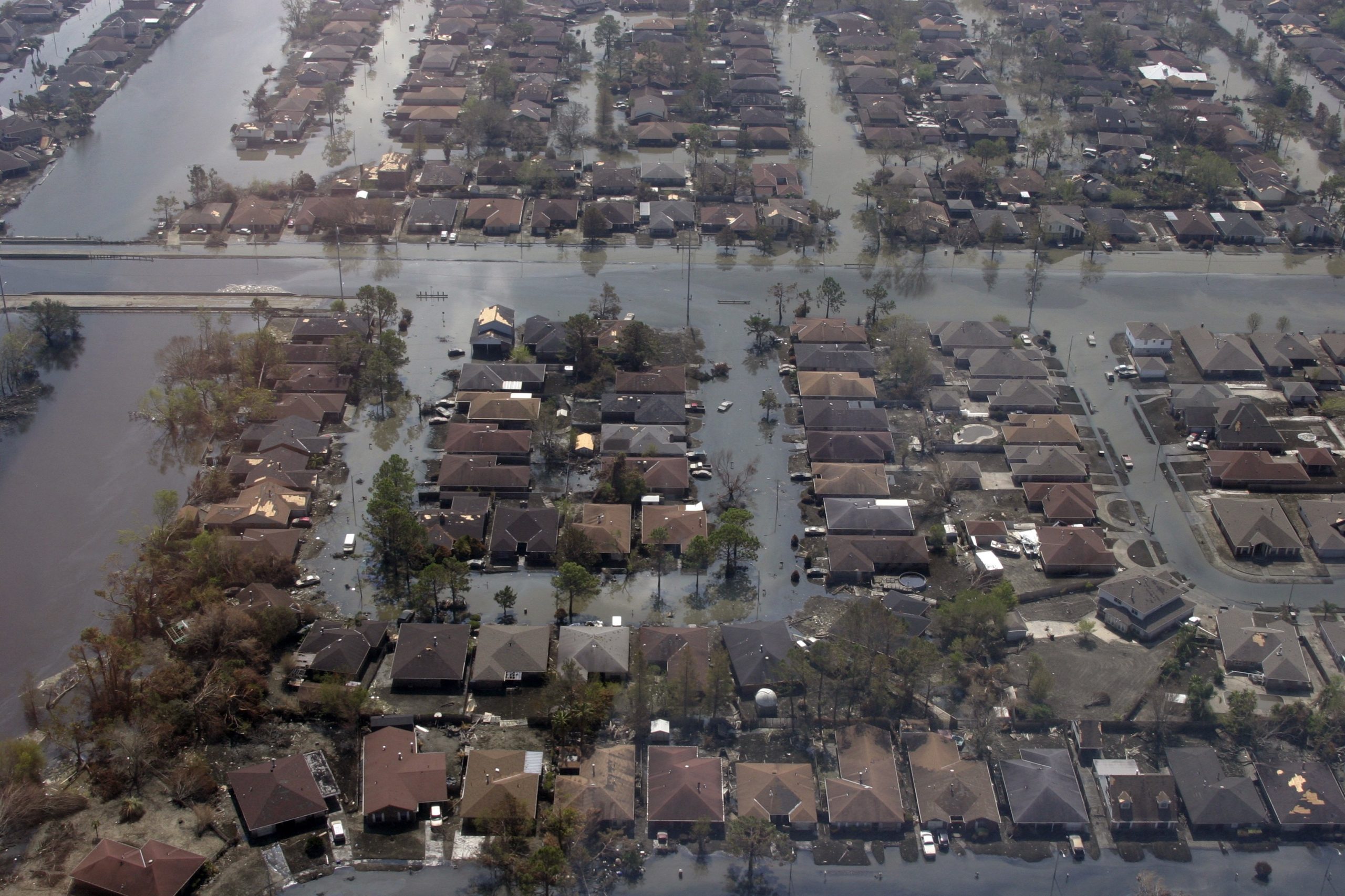
  • Hurricane Katrina Victim Finds Favor in the Louisiana Courts

    Hurricanes do not discriminate. Regardless of age, wealth, gender, health, or race, hurricanes are merciless to all they come in contact with. Such was the case for Ms. Taylor, who experienced the wrath of Hurricane Katrina in 2005. 

    Ms. Taylor had been in the care of Touro Infirmary when Hurricane Katrina struck the state of Louisiana in 2005. Taylor was 82 and had undergone radiation therapy for her lung cancer three days before Hurricane Katrina’s landfall. After radiation, Taylor complained of nausea and vomiting. Staff diagnosed her with hematemesis, nausea, vomiting, dehydration, digoxin toxicity, COPD, and lung cancer.

    When Hurricane Katrina struck, the City of New Orleans experienced severe infrastructure damage, expansive power outages, and a lack of clean water. Touro also experienced generator failure, causing the building to become unbearably hot. After 72 hours, it evacuated its patients to UT Southwestern Hospital in Dallas, TX. When the patients arrived, medical staff struggled to care for them because pieces of their medical charts were missing. 

    The morning after arrival at UT Southwestern, Taylor went to a radiological consult, where the medical staff discovered that her lung cancer had metastasized to her brain. UT staff recommended she undergo palliative radiation therapy to the brain. Fifteen days later, Taylor was discharged from UT Southwestern in “guarded” condition and was placed in a hospice facility. Twenty-eight days later, Taylor died at the hospice facility. 

    Taylor was survived by her daughter, Ms. Ainsworth, who filed a timely lawsuit against Touro. Ainsworth alleged that the conditions at Touro during Hurricane Katrina caused or contributed to the injuries Taylor sustained while under its care. The trial court granted summary judgment in favor of Touro and their insurance provider, Healthcare Casualty Insurance Limited. Ainsworth appealed this summary judgment ruling to the Fourth Circuit Court of Appeals. The parties disputed whether expert testimony was required to establish whether the conditions created by Touro contributed to or caused the death of Taylor. 

    On appeal, the Fourth Circuit used the de novo standard of review. Klutz v. New  Orleans Pub. Facility Mgmt., Inc. The court also applied  La. C.C.P. art. 966(A)(3), which required the court to give“opportunity for adequate discovery.” Once this opportunity for adequate discovery is given, “a motion for summary judgment shall be granted if the motion, memorandum, and supporting documents show that there is no genuine issue as to material fact and that the mover is entitled to judgment as a matter of law.” La. C.C.P. art. 966(A)(3)

    The Fourth Circuit Court of Appeals reversed the trial court’s summary judgment ruling because it found that expert testimony was necessary to determine whether Touro contributed to or caused the death of Taylor. Since Ainsworth had not yet had an opportunity to obtain an expert, the case was remanded back to the trial court. The Fourth Circuit Court of Appeals also noted that the circumstances surrounding Hurricane Katrina and its aftermath should be considered when determining whether a party has been given an opportunity for adequate discovery. 

    Hurricane recovery is difficult enough without adding in the loss of a loved one. Attorneys can help pick up the pieces by holding others accountable for their actions and ensuring you get what you deserve. 

    Additional Sources: Ainsworth, on behalf of Taylor v. American Home Ins. Co., Healthcare Casualty Ins. Ltd., and Touro Infirmary 

    Written by Berniard Law Firm Writer Riley Calouette

    Additional Berniard Law Firm Article on Expert Testimony: Tragic Loss: Lawsuit Highlights the Importance of Expert Testimony in Medical Malpractice Cases