 Injuries that occur while an individual is working can devastate the injured party’s life in several ways. Not only does the injured party likely earn less money due to the injury, but other damages, such as medical expenses and loss of enjoyment of life, may also result.
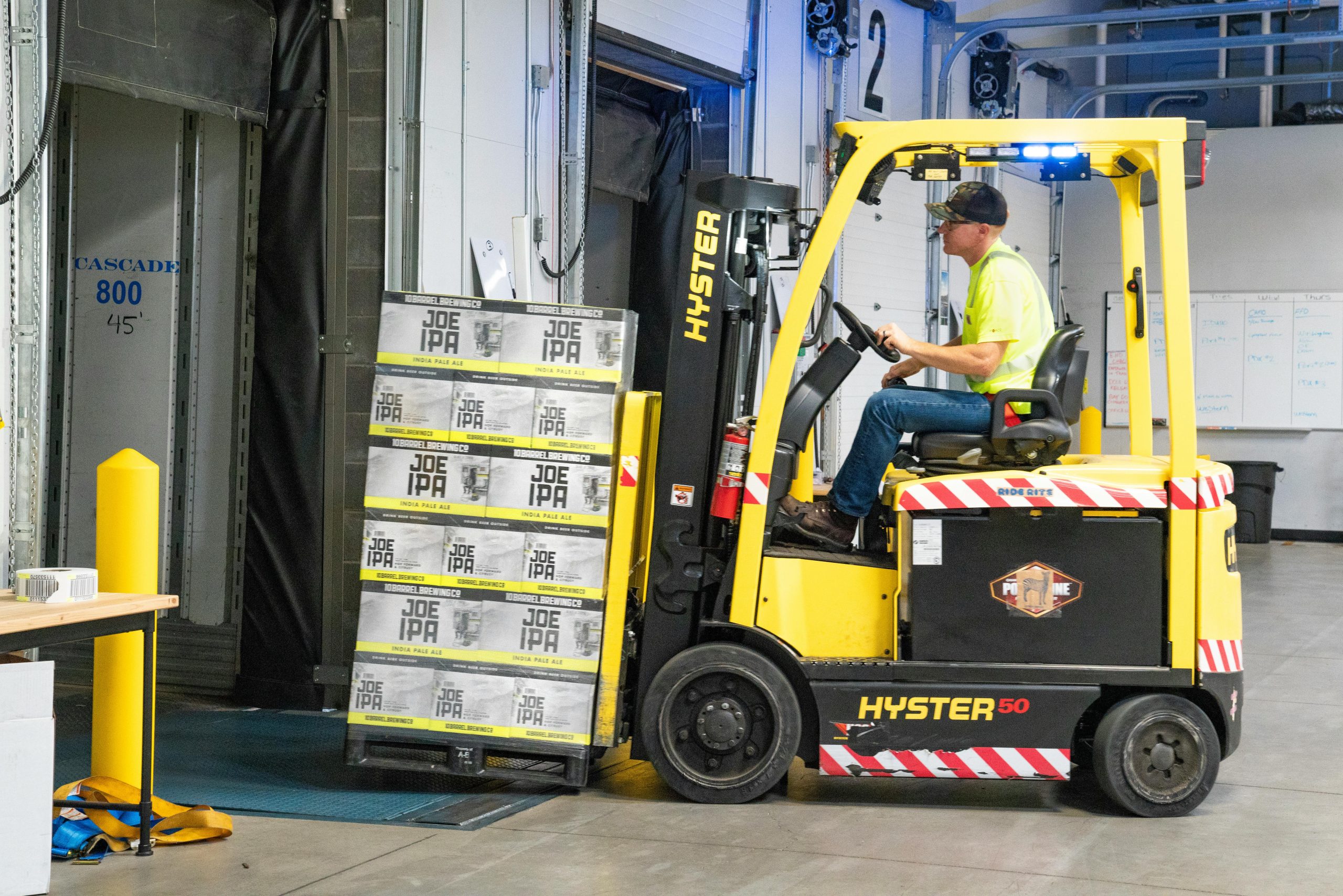
James Thomas was a forklift operator for Marsala Beverage Company (“Marsala”) in Monroe, Louisiana. In addition to operating forklifts, Thomas routinely moved cases of drinks by hand and performed janitorial duties around the facility. On one occasion, when Thomas was operating a forklift to unload pallets of drinks, the forklift fell out of the back of a delivery truck, landing several feet below onto concrete.
After the fall, Thomas visited Marsala’s company doctor, Dr. George Woods, complaining of pain in his back. Dr. Woods examined Thomas and ordered x-rays, which showed no evidence of fractures in Thomas’s spine. During the visit, Thomas explained to Dr. Woods that he wanted to return to work as soon as possible to receive bonus compensation based on the number of hours he worked that week. Dr. Woods cleared Thomas to return to work, which he did even though he continued to experience back pain.
After several months, Thomas stopped working and filed a lawsuit against Louisiana United Businesses Association Casualty Insurance Company (“LUBA”). Marsala’s insurance carrier. In the petition, Thomas sought damages for physical and mental suffering, medical expenses, inability to earn past and future wages, disability, and loss of consortium.
At trial, the jury awarded Thomas $40,000 for general damages, $34,977 for inability to obtain past wages, and $40,000 for previous medical expenses. It also awarded Thomas’s wife $10,000 for loss of consortium. Subsequently, the trial judge decreased Thomas’s total award to approximately $50,000 based on Thomas’s failure to mitigate damages.
Thomas appealed to Louisiana’s Second Circuit Court of Appeal. The first issue on appeal was whether the $40,000 award for general damages was, as Thomas argued, abusively low. The purpose of general damages is to compensate an injured party for pain and suffering that cannot be precisely calculated. Duncan v. Kansas City Southern Railway Company, 773 So.2d 670 (La. 2000). There is no definitive way to calculate general damages, Terry v. Simmons 215 So.3d 410 (La. Ct. App. 2017), but a jury should consider the severity and duration of pain and suffering that the injury caused. LeBlanc v. Stevenson, 770 So.2d 766 (La. 2000). The Court of Appeal affirmed the jury’s award of $40,000 in general damages based on the fact that the jury based the amount on evidence that the duration and the severity of Thomas’s injury were low.
Additionally, much of the evidence revealed discrepancies in Thomas’s accident description. These discrepancies likely reduced Thomas’s credibility with the jury. The Court specifically noted that Thomas’s Facebook posts following the injury were inconsistent with the level of activity that he reported to doctors and that Thomas described the details of the accident differently to six different doctors he visited throughout treatment
The second issue for the Court of Appeal was whether the jury’s decision to not award Thomas damages for future medical expenses was reasonable. Under Louisiana jurisprudence, a party must provide evidence of the need for future medical expenses through testimony from a medical expert. Terry v. Simmons 215 So.3d 410 (La. Ct. App. 2017). An appellate court must only determine if the jury’s award was reasonable. Menard v. Lafayette Ins. Co. 31 So.3d 996 (La. 2010).
Here, the Court of Appeal noted that there was no objective medical evidence to show that Thomas continued to suffer pain from the accident. Additionally, several physicians opined that Thomas’s back pain was not caused by the injury but rather by aging. In light of this evidence and Thomas’s failure to show that he would incur expenses for medically necessary future treatment, the Court of Appeal held that the jury’s decision not to award damages for future medical expenses was reasonable.
The third issue before the Court of Appeal was whether the jury’s award of $34,977 for lost wages was reasonable. A party looking to recover previously lost wages must prove the dollar amount lost and the duration of work missed due to the injury. Boyette v. USAA, 783 So.2d 1276 (La. 2001). The Court of Appeal noted that the jury miscalculated its award for lost wages because it based its figure on 12 months of missed work; Thomas, in fact, could not work for 16 months. Accordingly, given Thomas’s wages of $2,872.33 per month, the jury should have multiplied this figure by 16 months, resulting in a total award for lost wages of $45,957.
Next, the Court of Appeal examined the jury’s decision not to award Thomas damages for loss of future earnings. In Louisiana, the loss of future earnings is determined by the decrease in the injured party’s ability to work based on his experience level, type of work, and training. Young v. Marsh, 153 So.3d 1245 (La. Ct. App. 2014). The Court of Appeal affirmed the jury’s decision not to award damages for loss of future earnings based on the fact that Thomas was able to return to performing janitorial duties after the injury as well as Thomas’s failure to provide evidence of the amount of earnings he would expect to lose if he found only a light duty job.
The fifth issue for the Court of Appeal was whether Thomas failed to mitigate his damages. In Louisiana, an injured party must reduce damages using reasonable discretion, good faith, and fair dealing. Young v. Marsh (supra). The injured party must comply with whatever treatment is recommended by a healthcare professional reasonably expected to heal the injury. Flemings v. State, 19 So.3d 1220 (La. Ct. App. 2009). An injured party who unreasonably delays medical treatment, where that delay aggravates the injury, is considered to have failed to mitigate damages.
The trial record indicated that Thomas did not complete all the physical therapy that was recommended and that he did not take all the medication that was prescribed by his doctors. However, the Court of Appeal determined that these failures were the fault of LUBA, not Thomas himself. Since the evidence showed that Thomas reasonably attempted to comply with the recommended medical treatment, the Court of Appeal held that Thomas adequately mitigated damages.
The sixth issue before the Court of Appeal concerned the jury’s award of $10,000 to Mrs. Thomas for loss of consortium, which Thomas argued was abusively low. A spouse may recover monetary damages for loss of consortium when an injury to a spouse results in loss of companionship, impairment to sexual relations, decreased ability to perform material services, decreased financial support, loss of aid and assistance, and loss of fidelity. La. C.C. art. 2315(B).
Noting that Thomas was able to help around the house after the injury by performing light duties and that Thomas suffered from high blood pressure and erectile dysfunction for several years before the injury, the Court concluded that the injury did not result in a substantial decrease in the quality of the Thomas’ marriage. Therefore, the $10,000 award for loss of consortium was reasonable and not abusively low.
The seventh and final issue for the Court of Appeal concerned the trial court’s prohibition against introducing evidence about the worker’s compensation benefits that Thomas had already received before the trial. The Court determined that since the ban on introducing previously received worker’s compensation benefits is absolute under Louisiana law, the trial court did not err in excluding that evidence from the trial. See La. C.E. art. 414.
This case demonstrates the importance of retaining an experienced attorney in a workplace injury case. To cite one example, had the attorney representing Thomas failed to notice that the jury incorrectly calculated Thomas’s lost wages award and enumerated that error on appeal, Thomas’s overall recovery would have been reduced by almost $11,000.
Additional Sources: THOMAS v. BOYD ET AL.
Written by Berniard Law Firm
Additional Berniard Law Firm Articles on Workers Compensation: Injured Worker Denied Appeal in the City of New Orleans
 A picturesque pond, once teeming with life, transformed into a murky, foul-smelling mess. The culprit? Alleged sewage contamination from a neighboring apartment complex. This is the story of Cedar Lodge Plantation’s battle against Fairway View Apartments in Baton Rouge, Louisiana, a legal fight that highlights the complexities of environmental disputes and property damage claims.
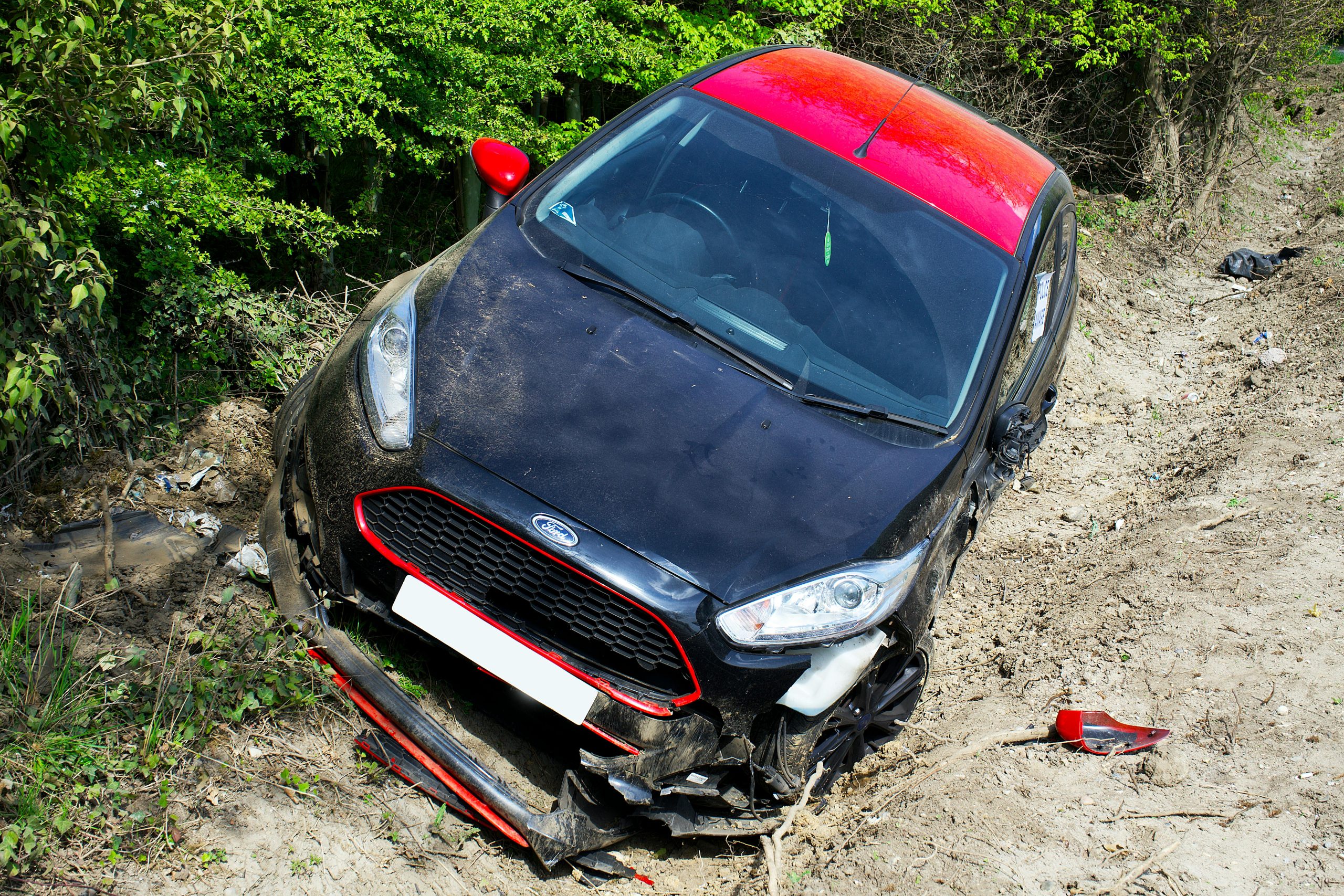 Patricia Spann’s life took a dramatic turn when she lost control of her Chevrolet Cobalt, resulting in a severe accident that left her with multiple fractures and a lengthy hospital stay. She believed the cause of the accident was a faulty power steering system, recently replaced by Gerry Lane Chevrolet as part of a recall. Spann sued Gerry Lane, alleging negligence in the repair and the hiring and training of their mechanics.
 David Cox delivered four pallets of shirk-wrapped material for his employer, Southwestern Motor Transport, in June 2012. The delivery location was the Baker Distributing Company warehouse in Shreveport, Louisiana. Baker’s delivery dock did not have a dock plate. A dock plate is a metal bridge connecting a truck’s back to the loading dock. There is an empty space between the back of the truck and the loading dock without a dock plate. In addition, Cox found that the loading dock was cluttered with several objects. Due to this clutter, Cox could not use a forklift to unload the truck.
  Sometimes, being a passenger in a car can be a frustrating and disturbing experience. This is especially true when actions beyond the passenger’s control, such as being involved in a collision, put his or her life in danger. When such a situation arises, the injured passenger will, understandably, seek compensation from the responsible party. However, if the person who caused the accident leaves the scene and is never apprehended by law enforcement, an injured person may turn their attention elsewhere for financial compensation. Such a situation arose following a car accident on a stretch of highway between Jennings and Lafayette, Louisiana.